Disaster Rally

  • Natural Disasters
    • Earthquakes
    • Hurricanes
    • Tornadoes
    • Fires
    • Floods
    • Tsunamis
    • Other
  • Man-Made Disasters
    • Nuclear
    • Pollution
    • War
    • Other
  • Prepare
    • Plan
    • Supplies
  • Disaster Resources
    • Agencies
    • Aid
    • Medical
    • Rescue
    • How To Help
    • People in need
  • Contact
  • About Us: Disasterrally

All You Need to Know about Disaster Response Services

When disasters and, generally speaking, disruptive events occur, people respond to the threat and contain it the best they can. The official terms surrounding disaster management (like disaster relief and disaster response) often vary and people confuse them or use them interchangeably, but there is actually a pretty strict delimitation when it comes to all sides of this support process.
Disaster Response Services

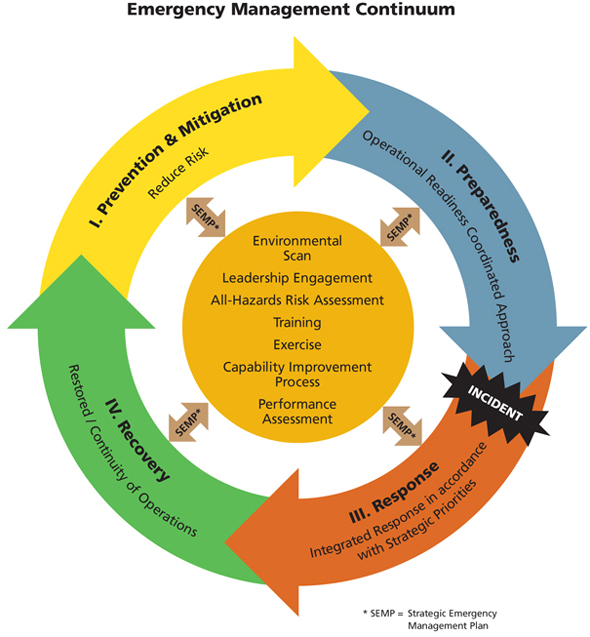
Here is a brief overview of how the various sides of disaster management work and intertwine:

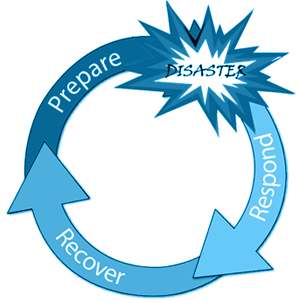
  1. Disaster Management – this is the widest aspect, referring to the entire cycle of emergency management;
    1. Emergency Planning – this phase refers to identifying risks before the disastrous event even occurs
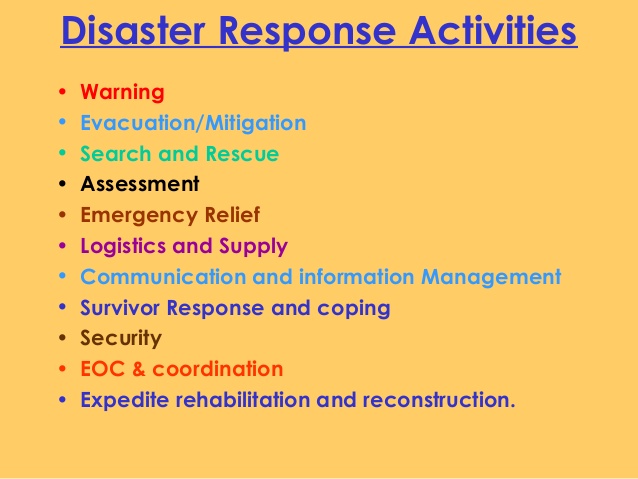
    2. Disaster Response – the second phase of the cycle, comprising immediate assistance services, such as search and rescue, distributing supplies, providing emergency medical care and so on. Also called disaster relief by some.
    3. Disaster Recovery – the last phase of disaster management, taking place after the immediate emergencies of the second phase have been dealt with. This phase focuses on making sure the affected lives return to normal as fast as possible.
  2. Business Continuity – this part focuses on disaster recovery for businesses, ensuring that companies affected by disasters can pick up their normal activity as fast as possible and that the temporary disruption doesn’t prove to be the end of the company as well.
    1. Disaster Recovery Services – a sub-set of business continuity, this part of a BCP (Business Continuity Plan) focuses mostly on IT system and the protection of virtual protocols and data.
    2. Business Contingency Management – a post-disaster set of plans and activities, destined to make businesses more resilient and able to cope with future disruptive events (preparedness training).

Disaster response, therefore, is an emergency stage of activities destined to bring some relief to those affected by a disaster, and is one of the main focuses of humanitarian actions and organizations everywhere.
Disaster Response Services

Disaster Response Jobs and How to Get Involved

If you’re tempted of getting involved more into disaster response activities, first of all we need to congratulate you for your noble intentions, and second of all, to provide you with an overview of how to start. Before looking for opportunities on how to get involved, you need to decide how much time you can dedicate to this: do you want to be involved on and off, as a volunteer, or do you want to make an actual profession out of it?

If you want to get involved as a volunteer, you can do this on a low-key mode, with your local emergency response team (every area has one, so do a quick search and you should be able to get in touch with your local emergency management force in no time). There are also the major international organizations who are always looking for more volunteers to join their operational forces. We will give you more details about what the best humanitarian action organizations are and how to get in touch with them and see what you can contribute with, in the section below.

As for disaster response jobs and careers, this side of the intervention field is also full of opportunities. Since people working in disaster response are basically super-heroes, trained to not only do their job flawlessly, but also do it under considerable time pressure and without all the usual tools and props, serious certification is required. Usually, the certification one needs in order to be a licensed emergency management team member comes from FEMA. This government agency also provides the training required for the major specializations needed. Here are just a few examples:

  • Medical emergency response staff (nurses and field doctors);
  • Bomb alert engineers;
  • Data backup scientists;
  • Communications officers;
  • Search and rescue team members (including firefighters);

You can find out more about the training offered by FEMA’s Emergency Management Institute (EMI) here.
Disaster Response Services

A Few Disaster Response Organizations

Humanitarian and disaster relief organizations are active all over the world, and the international ones usually focus more on the countries where the government lacks the resources to provide proper disaster response on its own. Since most acts of disaster response are aimed first and foremost at meeting people’s most basic needs, and therefore a central government that isn’t able to help the people affected by disaster really needs all the help it can get. The most important thing about disaster response, though, is that it’s always an organized and systematic activity, no matter who is the central authority behind the organization (either a national government or an NGO). There can be spontaneous interventions for disaster response, but they are usually on a local neighborhood scale and will either fizz out or become part of a larger scheme.

Without further ado, here are the major disaster response organizations you should know about:

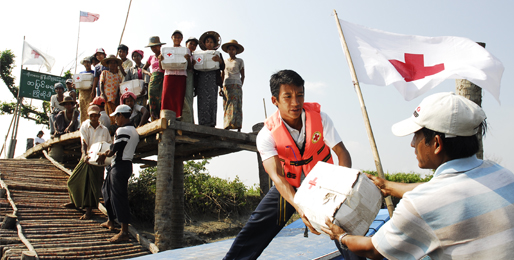
  • The Red Cross – The Red Cross is an international organization with a strong presence in its U.S. branch, so basically whenever natural disasters have struck us in the past few years (tornados, hurricanes and floods), the Red Cross has provided a huge relief for those affected. Find out more about how you can get involved here.
  • The United Nations (UN) – Another great international organization that handles very varied types of disaster response and humanitarian work, besides various other responsibilities in diplomacy and so on. The UN also has some pretty high-end emergency management jobs for those of you who already have experience with humanitarian work and emergency relief coordination.
  • The Catholic Relief Services – One of the most important Christian organizations present in the U.S., the CRS welcomes all kinds of volunteers for their wide array of humanitarian actions, beyond disaster response (donations, doing some hunger relief actions from the charity fund and so on).
  • The Lutheran Disaster Response (LDS) – The other major Christian organization that provides disaster response nationally and internationally, the LDS welcomes plenty of volunteers and professionals altogether.
  • World Renew (WD) – One of the most active organizations in the field of disaster response and humanitarian work, WD has a very complex layering of projects and activities in which you can get involved with.

Last, but not least, if you’re willing to try going abroad for a disaster relief work experience, the first step you should make is to read this guide on what skills you need and where to start. Good luck!
Image sources: 1, 2, 3.

What Is Disaster Recovery and What Can You Do Yourself?

In case of a natural or human-induced disaster striking an area, the fast recovery from the unfortunate event is a priority for everyone. The recovery must optimally be realized with as little human and financial costs possible so that the area can resume its previous state and even be better prepared and less vulnerable to similar future events. So, what is disaster recovery as officially defined and provided by various services and organizations? There are two main sides to this recovery: the humanitarian part, referring to people and communities and which is usually known as disaster relief, and the part focusing on ensuring the survival and continuity of a business, usually known as disaster recovery.

What Is Disaster Recovery

Sometimes, the two terms are used interchangeably, since they aren’t that different in meaning, but for the sake of differentiating between the two types of disaster management services, a great part of the world has started respecting this distinction between disaster relief and disaster recovery. Our present article will focus on clarifying the disaster recovery aspect for businesses, and also, address some FAQs about disaster recovery along the way.

What is Disaster Recovery?

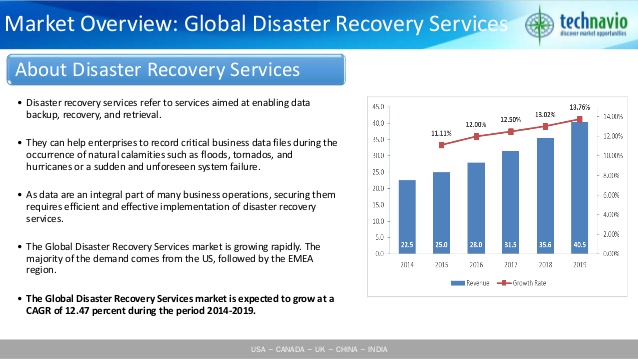
Disaster recovery can be defined as a set of procedures and policies set in place in order to ensure the continuance of infrastructure (and/ or of business activity) in the aftermath of disruptive events. The more the world came to rely on technological infrastructure, the more we started to realize how vulnerable we would be left in case this infrastructure failed, and since the 70s, disaster recovery systems have been specifically created to assist with this issue.

Since disaster recovery focuses first and foremost on ensuring the restoration of IT and technological infrastructure and data, it represents only a subset of the more general business continuity systems. These comprise of a vaster array of policies which ensure other aspects required for an activity to be resumed (finding alternate office space, financial recovery from damages and so on).

Disaster Recovery

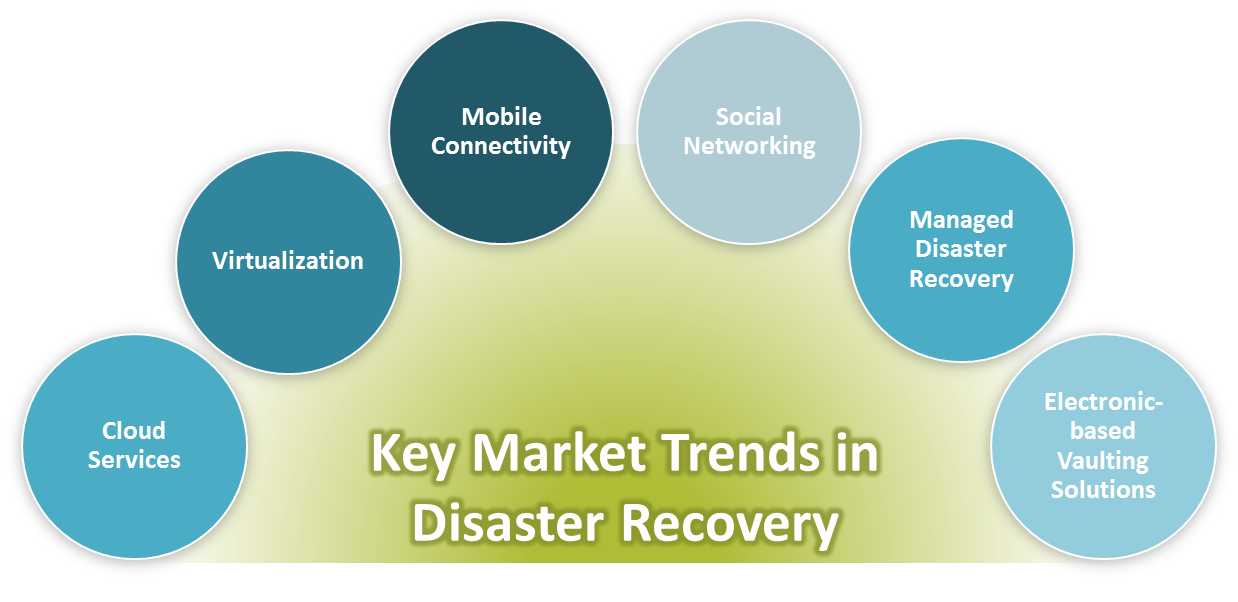
As businesses started realizing their huge dependence on IT technologies (and especially since internet speed and real-time response became an integrative part of almost any business), services which offer disaster management and recovery have become more and more popular and needed. So, what is disaster recovery from this point of view, of commercial services marketed and offered to IT-reliant businesses? Usually, all service providers specializing in disaster recovery for businesses offer this:

  • Full cloud storage and online backup for your business information, data, sensitive data like login details and company track records etc.;
  • An initial evaluation of the risk your business faces in case of disaster and tips on how to minimize that risk;
  • A disaster recovery plan to be activated in the wake of a disruptive event, prescribing the client (the business trying to protect itself from disaster) the steps to follow for continued functionality and on to a full recovery;
  • The availability of limited office space and computer systems to allow the affected business to resume its activity at least partially until their workspace is restored;
  • A cyber security diagnostic in case the disaster was not caused by a natural event (like an earthquake or a tornado and so on), but by a specific cyber-attack which led to a potentially dangerous breach;
  • Various service packs offering increasing levels of assistance with the aftermath of the disruptive event.

What Is Disaster Recovery

Disaster Recovery FAQs

1. What Is Disaster Recovery for Businesses Beyond the Backup Service?

Initially, disaster recovery service providers focused mostly on cloud storage backup, but today’s service packs offer much more than that. First, they diagnose the specifics of the business that is trying to protect itself from disaster, then they formulate some options and service packs adapted to suit the needs of that business. This can include everything IT-related, like ensuring a preservation of layers of access according to the company’s hierarchy and so on, but also non-IT services. Such non-IT services can include the provision of office space and minimal infrastructure required for the business to get back into work, even if for the time being the company is still dealing with the aftermath of disaster and its actual office space and work environment and compromised.

2. What Other Aspects of Disaster Recovery Should I Consider as a Business Leader?

You should consider disaster recovery beyond the simple aspects of cloud storage, as well as depending on the specifics of the business you are running. After all, what is disaster recovery if not a tailored approach meant to get your company back in business as soon as possible? A few general ideas useful to all businesses would be these: increasing the security and diminishing the risk of data loss, protecting both your physical and virtual assets with the help of comprehensive insurance, and creating reliable procedures for getting back on track as fast as possible.

3. What Is Disaster Recovery as Business Continuation and What Services Should I Look Into?

As mentioned above, disaster recovery confined to IT and cloud backup is but a small aspect of protecting your company and ensuring your business continuation. This second concept is a more loosely defined set of services and measures, impossible to pin down because the nature of each business can be drastically different and, therefore, the business continuation plan must be adapted to each individual case. There are usually three levels of a sound business continuation plan:

  • Resilience: the purpose of these measures is to minimize the damage and ensure that the business activity can continue up to a certain point in spite of the disruptive event;
  • Recovery: the purpose of these procedures is to ensure a fast recovery of the degree of functionality lost in the disaster and bring the activity back to full capacity;
  • Contingency: Ensuring that the people and the infrastructure of the business become more flexible and able to cope with unforeseen aspects of whatever disruptions and disasters may come. This third layer of measures and procedures is meant first and foremost to deal with the potential inadequacy of the first two (the resilience and recovery plans and measures). To increase the effectiveness of contingency, this part of the business continuation strategy must also include the thorough testing of the other parts of the plan.

What Is Disaster Recovery

What Can You Do Yourself For a Better Disaster Recovery?

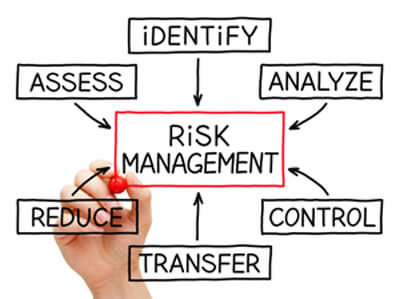
First of all, as a business owner or leader you should try to familiarize yourself as much as possible with the actual risks you are facing in case of the various types of disasters which can strike your business. Identify your potential losses and this way you will know exactly what your protection priorities should be. If you’re not sure how to identify security risks yourself, don’t worry: it’s quite common to enlist the services of a disaster recovery consultant in this stage of planning.

The bottom line is to start asking yourself not simply ‘what is disaster recovery?’, but increasingly ‘what should my business recovery plan contain?’ Consultants from the recovery service provider you will hire can only help you with the technical details you may not be aware of, but only you can intimately know the priorities and vital functions of your business, so you are in the end the most qualified planner for your business continuity.

Image sources: 1, 2, 3, 4.

Top Lutheran Disaster Response Organizations You Should Know About

Lutheran disaster response organizations are actively involved in relief missions around the world as well as in the United States. There are several non-profit Lutheran disaster relief organizations that are qualified and prepared to provide both immediate and long-term aid to survivors of disasters, refugees of war, and people suffering because of hunger or poverty.

Lutheran Disaster Response

Many Lutheran disaster response organizations are constantly striving to collect, organize, and transport essential supplies and aid to those in need. These non-profit organizations are funded by public donations made by both members and the general public. However, volunteers can also help these organizations immensely by offering their services or working on community support projects when help is needed.

List of Lutheran Disaster Response Organizations

Here are some of the top Lutheran disaster response organizations that you should know about if you are interested in supporting disaster relief efforts in the United States and around the world or if you are simply looking for more information concerning these organizations and how they operate.

1. Lutheran World Relief

The Lutheran World Relief organization aims to collaborate with local partners in order to provide lasting solutions to poverty, conduct emergency operations when they are required, and rapidly deploy aid where it is needed. In its efforts to help affected communities recover from emergencies, the Lutheran World Relief organization provides emergency kits containing essentials that survivors need in the immediate aftermath of the crisis. They also offer cash programs that support survivors and an Early Recovery and Livelihoods Rehabilitation program to help people in affected areas get back to work and become self-sufficient again as soon as possible.

As the Lutheran World Relief organization has expanded its efforts to several countries across the world, there is a country office for the organization in each of the countries in which it is active. Thus, an Emergency Preparedness Plan exists in each of these offices, detailing how and when the organization can respond to emergencies. The organization also pre-positions items such as emergency kits and quilts in warehouses that are supported by the United Nations. These U.N. Humanitarian Response Depots allow the organization to quickly ship items to where they are needed once an emergency takes place.

Lutheran Disaster Response2. The Evangelical Lutheran Church of America

The Evangelical Lutheran Church of America has set up the Lutheran Disaster Response program in order to help the people whose lives have been affected by disasters. The Lutheran Disaster Response is involved in disaster response operations both in the United States and around the world. The faith-based organization collaborates with other disaster response organizations and religious entities both in the United States and in other countries.

The community-oriented disaster response initiative that the Evangelical Lutheran Church of America has created focuses on providing immediate relief as well as long-term support to those affected by a disaster. The organization provides emotional and spiritual support for survivors of the disaster. It coordinates volunteers through its local affiliates and helps communities build their assets in an effort to promote disaster risk-reduction. The Lutheran Disaster Response program aims to not only offer immediate relief, but to also focus on providing long-term recovery efforts in the months or ever years following the disaster.

The Evangelical Lutheran Church of America has also organized a Domestic Disaster Response program that focuses its efforts on providing immediate and long-term aid to U.S. citizens affected by natural disasters such as floods, wildfires, or earthquakes.

In addition to the Lutheran Disaster Response program, the Evangelical Lutheran Church of America is also providing a Lutheran Immigration and Refugee Service. By partnering with Lutheran social ministry organizations and with Lutheran congregations, this service has been welcoming refugees to the United States since 1939, and it has helped more than 379,000 refugees throughout its years of activity.

The Lutheran Immigration and Refugee Service aims to aid people that are caught in conflict areas and that are facing persecution by helping them access resources for basic human needs. The service also advocates for their rights and needs. It is working with foster care programs to help minors affected by war and conflict, and it provides legal assistance to those in need.

3. The Lutheran Church Missouri Synod

The Lutheran Church Missouri Synod in another institution that has organized a Disaster Response initiative offering two major training programs in disaster preparedness. Mercy in Action is a program designed to help congregations train to be prepared in case of a disaster and to respond appropriately should one occur. The Lutheran Early Response Team (LERT) program is focused on training individual Lutheran volunteers in disaster relief and response.

The Lutheran Church Missouri Synod offers financial aid and people resources to help recovery efforts in the months and years following a tragedy. The Disaster Response ministry strives to provide both immediate and long-term support to those suffering because of natural or man-made disasters and can also offer Christian care, counseling, and support for those in need.

Lutheran Disaster Response4. The Lutheran Social Services of Central Ohio

The Lutheran Social Services of Central Ohio has set up a Disaster Response Services program aimed at providing disaster preparedness training courses and disaster response coordination throughout the state of Ohio and in its surrounding areas.  The system created to protect communities against disasters has a 3-step program that is followed in order to ensure that survivors receive the best possible support.

The Disaster Response Services program has three stages: first response, emergency relief, and long-term recovery. The Lutheran Social Services organization provides disaster response coordination of volunteers using the network of Lutheran churches in the area. It also offers coordination of volunteers meant to provide spiritual and emotional care. The organization manages the collection and distribution of just-in-time donations and the functionality of a disaster response database that people can use to find and access additional resources.

The Lutheran Disaster Response Services program coordinates community outreach efforts to help rebuild or refurbish affected homes. The program also organizes the collection, assembly, and distribution of flood buckets, health and personal hygiene kits, and school kits.

Image Sources: 1, 2, 3.

Disaster Recovery Planning: How to Create Your Checklist

Business continuity, disaster recovery planning and database backup should all be at the top of any business administration to-do list. For example, a network disaster recovery plan is what any company should outline in case their network suddenly crashes. A small step like finding a disaster recovery plan template and implementing it according to the details of your business can actually save your company’s vital data in case a server disaster occurs. Even if your company is not active in an IT or similar technology niche, that doesn’t mean that you shouldn’t be up to date with all the software solutions that can help you write your disaster recovery plans. This guide will provide you with all the information you need about disaster recovery planning and how to create your checklist.

We’ll go through the definition of disaster recovery planning, free examples of these document types, as well as the steps you need to go through to ensure business continuity from an IT point of view. You’ll find out why disaster recovery planning is so significant for ITIL management and how technology like VMware can save your company. Without further ado, here is the simple way to learn about disaster recovery planning.

Disaster Recovery Planning

Identify Strengths and Weaknesses

A key part of disaster recovery planning is targeting the strengths and weaknesses of your company from an IT point of view. Is your computer’s antivirus software up to date? How do you store and share your PDF, Word doc and spreadsheet files? Do you use a local center server for data storage? There are plenty of questions that you need to ask and honestly answer. Don’t be afraid to admit the weaknesses of your company; it’s almost impossible for a business to be 100% secure prior to disaster recovery planning. The important part is that you are aware of your IT weaknesses and what you need to do about them.

As an example, if you find that the main server you use tends to be faulty, you should consider an alternative method of storage for your company files. Nowadays, some of the most popular solutions are cloud based; by using this kind of technology, you won’t depend on a server for your information. The files of your company will be accessible online to those who are authorized to work with them. You can also invest in advanced security measures or consult a specialist for additional solutions.

Disaster Recovery Planning

Disaster Recovery Planning Prevention Methods

As always, it is better to prevent a problem than to deal with all of the consequences at the end. When it comes to disaster recovery planning, the situation is no different. Even though the methods of disaster prevention for a business are numerous, there are three main steps that need to be taken.

Assessment

To solve an issue, it is best if you get to the cause. A risk assessment will help you identify the weakest points of your company and see what the vulnerabilities are. Your information systems might not be well-protected, or the software you use might not be safe. Performing a risk assessment is a reliable way to see what you have to do afterwards.

Implementation

Once you identify the causes and the precautions you need to take, proceed with implementation. It might be difficult for your company to take all the necessary measures at once (due to costs), but it is highly suggested that you work on these aspects in time.

Maintenance

Even when you have your disaster recovery planning all set up, you should always carry out regular checkups. Businesses grow and change all the time, and so should disaster recovery planning strategies.

Disaster Recovery Planning Checklist

Sample Disaster Recovery Plan Checklist

Disaster recovery planning strongly depends on individual company details. You can search for templates all you want, but one rule will not apply to all. What you can do, however, is go through a series of topics that your disaster recovery plan should include. You should undergo disaster recovery planning with a team, which can include IT specialists in your company or other independent professionals.

  • Roles: establish the roles for your employees throughout a disaster.
  • Responsibilities: set the responsibilities for each employee in a case like this.
  • Task List: outline the priorities and a task schedule for emergency situations.
  • Backup: immediately check if your backup is working.
  • Relocation: establish a place that can serve your staff for relocation if it will be required.
  • Update Schedule: make sure to always update the schedule and disaster recovery planning checklist and apply any changes.

Stay safe and protect your employees and data with a proper disaster recovery planning strategy.

Useful Links

  • Ready.gov Disaster Recovery Planning Sample: https://www.ready.gov/business/implementation/IT
  • National Institute of Standards and Technology (NIST): www.nist.gov
  • Microsoft SQL Disaster Recovery: https://support.microsoft.com/en-us/kb/822400
  • RTO vs. RPO for Disaster Recovery Planning: http://www.techadvisory.org/2014/07/the-difference-between-rto-and-rpo

Image sources: 1, 2, 3.

Top 7 Disaster Recovery Services Needed

When a disaster, natural or otherwise, strikes a place, community, or business, it may very well feel like all is ended and there can be no recovery. But it is crucial that the aftermath of the disaster to be one of careful consideration and wise choices so that there can be a restoration of the highest possible degree. Recovering from a disaster or a disastrous situation is hard, but not impossible, and with the help of disaster recovery services it can now be more manageable than ever.

Disaster Recovery Services

Our overview of the top disaster recovery services will let you know exactly what type of help you should look into before the unfortunate event, for people, communities and businesses alike. We will put a special emphasis on disaster recovery services for businesses and small businesses in particular since this type of services and less well-known and the smaller companies can usually go down forever in the aftermath of a disaster.

A. What Disaster Recovery Services Are Most Needed?

In the aftermath of a natural (or artificial) disaster, emergency intervention teams are always on the move and striving to help as much as possible, but even these specialists have their limits. The cooperation, help and even the preparedness of those needing help is crucial to the success of the disaster management teams. Whether the disaster is a natural one like a tornado, big storm, flash-flood or earthquake, or an artificial one like a terrorist attack, the involvement of bystanders is vital. In most cases, the general public must truly get involved in the recovery missions if anything along those lines is to succeed.

Still, knowing when to stand aside and let the professionals do their job is also of the upmost importance. Disaster relief teams are not only well-trained on the type of challenges which come with unfortunate events, but they are also equipped with the required infrastructure and intervention kits. To get a better overview of how disaster recovery services work, here is a brief list of the top most important such services, in the areas of humanitarian help and in the area of business recovery as well.

Disaster Recovery Services for People and Communities

1. Firefighter Services

Almost all types of natural disasters also cause the occurrence of fires, but that’s not all the reason for which firefighting teams are of vital importance in disaster relief. Their main quality is that they are also trained and qualified to find people who remain trapped under rubble, which is one of the leading causes of death in the aftermath of disasters.

2. Danger Removal Intervention Teams

These experts are usually sent in to neutralize all traces of danger still looming in the aftermath of a disaster, whether the issue at hand is electric wires gone wild, a potential explosive material or a building about to collapse.

3. Humanitarian Relief Work

After the first two priority services presented above, teams handling all other aspects of disaster relief come in. This includes providing people with food and water, medical help, shelter and clothing, as well as helping family members find each other through the chaos.

4. Resilience Training Teams

When the immediate life-threatening danger has passed, another type of experts are ideally brought in, with the mission of helping the community rise back to its feet. Their areas of training include restoring a livelihood to the community and reducing further risk.

Disaster Recovery Services

Disaster Recovery Services for Businesses

How about disaster recovery service (usually abbreviated to DRS) for business owners (LTD ventures)? For preventing an unfortunate event from proving to be fatal to your enterprise, these are the most important services (we will continue the numbering of the top from where we left off above):

5. Disaster Recovery Cloud Services

Nowadays, online data are a vital part of any business activity, and the loss of that data can have handicapping consequences on all future activity of that company. That is why backup and disaster recovery services are an extremely important and increasingly popular pack for businesses worldwide.

6. Insurance for Environment Recovery

Not just your business data is important, but the work environment as well, from easily replaceable but necessary components like office space and furniture and computers and onto more specialized equipment which may take longer to replace. In order to make sure the recovery of your work environment doesn’t ruin you as a budding business, you need to be properly insured. A good disaster prevention insurance should cover as much of the expenses required for recovery as possible. Furthermore, if you opt for a comprehensive disaster recovery service pack (the kind which also provides cloud storage backup for your data), you should also have temporary access to a working space nearby, capable of hosting a limited number of people until your offices get reinstated.

7. Disaster Recovery Overseer (or Overseeing Team)

Depending on the size of your enterprise, you can assign only one person to this task or you can assign a whole team for it. The main idea is that someone should already know how to access all of the services above optimally, where to obtain the funding, what legal counselling to call, where to order replacement equipment from and so on. This person should have a very clear list of steps to be followed in case of disaster, which brings us to our main section.

B. Steps to Follow in the Disaster Aftermath (for Businesses)

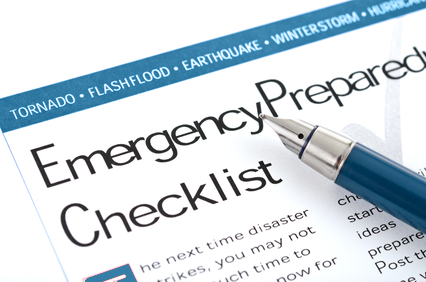
In order to be prepared for an optimal and timely recovery in case a disaster strikes, it’s crucial to have a disaster preparedness checklist created in advance. In order to create the ideal checklist, especially if you are a business, you first need to identify your recovery priorities along the aforementioned two main lines: the recovery of your environment (physical activity space) and the recovery of your data. Identifying your priorities and formulating a disaster recovery plan are ideally completed with the help of a disaster recovery consultant team (for businesses).

Disaster Recovery Services

Here is a simple example of how should this checklist look like, in order to get a better idea of how to create yours:

  • Call the required authorities in order to pronounce the disaster created, and initiate the insurance fund-accessing procedures.
  • Get in touch with the service ensuring your cloud data backup and let them know you will be needing all the info (and perhaps some office space as well) for resuming your business activity.
  • Select the employees who are qualified (and still capable) of resuming work in a low-maintenance stance so you can keep producing your services and keep in touch with your customers. Get them in the office space still available (or that provided by your disaster recovery service team) so they can start right away.
  • Have your PR specialist create a press release alerting both the general public and your clientele of the unfortunate event, your sympathies for those whose lives were affected by the disaster and your commitment to help them out (and to resume your business activity).
  • Have a legal counsellor (or your insurance agent) advise you about potential compensations that you may be needed to offer your employees if they were harmed in any way by the disaster. Your future productivity through this critical time depends on them, so it is in your best interest to keep them happy.

Image sources: 1, 2, 3.

  • « Previous Page
  • 1
  • …
  • 3
  • 4
  • 5
  • 6
  • Next Page »

5 Safety Tips You Need To Know If You Live Near A Nuclear Power Plant

image source: pixabay.com When purchasing a home, there a lot of things to consider. What area of the United States do you want to live? Do you want to be in the country or in the city? Are you going to rent or own, and will it be an apartment or a house? If you […]

Tornado Warning VS Tornado Watch: What You Need To Know

When it comes to severe weather, nothing is as devastating as a tornado when you consider the inch to inch devastation. Tornados often possess stronger winds than hurricanes, and due to the cyclone shape of a tornado, it increases the damage potential. Tornados are also especially dangerous if you are in its path. A single […]

Long Term Water Storage: The Ultimate Guide

While you hope that a calamity like a water shortage or other emergency will never befall in your lifetime, it is always important to be prepared for the worst while hoping for the best. One of the most important aspects of emergency preparedness is ensuring you have a sufficient stockpile of water to get you […]

10 Best Filter Water Bottle Brands To Use During Emergencies

If there is one thing that all hikers and outdoor enthusiasts have in common, it’s that they all agree you should never blindly drink out of a natural water source. That’s because the unfiltered water, although fresh and natural, contains harmful bacteria and waterborne parasites that would likely go undetected by taste alone. With a […]

14 Deadliest Natural Disasters of All Time

What are the deadliest natural disasters of all time by death toll? Which type of deadliest natural disasters has the greatest death count? More importantly, what are some ways the population was affected by those disasters? Were there things that people did to worsen or better the effects of mother nature angrily smashing her surroundings? […]

4 Frostbite Symptoms And How To Treat Them

With the onset of winter comes the risk of getting frostbite. With all of the outdoor recreation that’s available to us in the winter, it is important to learn how to protect ourselves. Knowing the signs of frostbite in the early stages can help you to avoid permanent damage to your skin and underlying tissues. […]

Fire Escape Plan for Your Family: Our Complete Guide

No one ever thinks a tragedy will happen to them. We see events on the news all the time such as accidents, home invasions, and house fires. We rarely plan for these things because we never think that we will be in such a situation. If you do one thing this coming year, whether you have […]

10 Tips for Living Through Power Outages

Most of us don’t think of power outages until we’re searching for flashlights or candles in the dark. Some think the light on their cellphone will be good enough to make it through power outages. That might work if power outages happen only when your phone is already fully charged. But, what about being prepared […]

How To Tell If A Snake Is Poisonous: Your Ultimate Guide

image source: Pixabay Have you ever been startled by a snake in your yard? Snakes are among the most misunderstood and feared animals on the planet, mainly because of the poisonous and potentially deadly bite a snake can inflict on its target. The truth, however, is that most snakes in the United States are non-venomous and […]

Copyright © 2026 ·Outreach Pro · Genesis Framework by StudioPress · WordPress · Log in