Disaster Rally

  • Natural Disasters
    • Earthquakes
    • Hurricanes
    • Tornadoes
    • Fires
    • Floods
    • Tsunamis
    • Other
  • Man-Made Disasters
    • Nuclear
    • Pollution
    • War
    • Other
  • Prepare
    • Plan
    • Supplies
  • Disaster Resources
    • Agencies
    • Aid
    • Medical
    • Rescue
    • How To Help
    • People in need
  • Contact
  • About Us: Disasterrally

Emergency Management and How It Works

To understand emergency management, you need to be aware that a disaster can take place at any given moment, no matter where you live on the globe. Just think about it; a misplaced match can lead to a terrible house fire or an earthquake can leave your community devastated. Even though we can’t avoid them at all times, emergencies can and should be prepared for. This is where emergency management kicks in. You’ll find an emergency management department, county authority or some sort of division in most states, all for a very good reason. Without proper planning, an emergency can result in irreparable damage, with no possible forms of recovery. What you can do to avoid this is learn about emergency management and how it works.
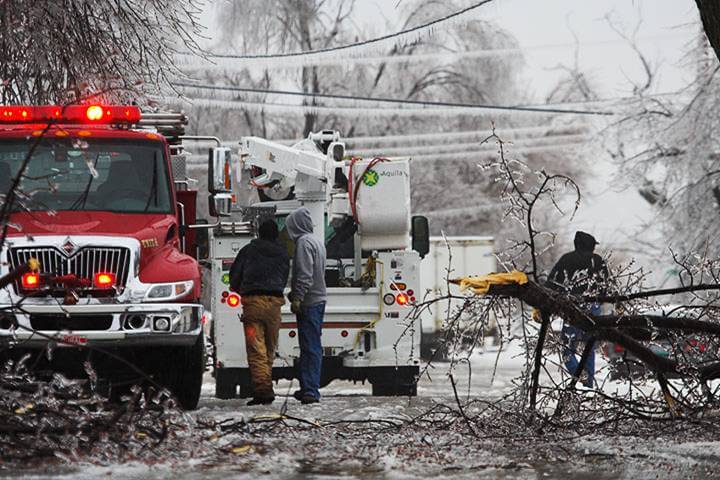
Emergency Management

Our guide will walk you through everything you need to know about being prepared for any emergency. You’ll understand why your emergency management plan is crucial, what institute you need to contact for help and even how you can undergo training, programs and online courses to become an emergency manager or get a masters degree in this field. Without further ado, learn what the deal with emergency management is and start rethinking your safety priorities.

Emergency Preparedness

When speaking of emergency management, we have to include emergency preparedness in the equation. It focuses specifically on getting ready for disaster and, frankly, being prepared for the worst. The Homeland Security Federal Emergency Management Agency (FEMA) and the National Incident Management System (NIMS) define the idea of preparedness as a permanent cycle to ensure a fast and safe response in cases of emergencies, with the following key points:

  • Plan
  • Organize
  • Train
  • Equip
  • Exercise
  • Evaluate
  • Action

To put it simply, you have to be ready at all times, from all points of view, for a tragic emergency that might take place. When planning for an emergency, you must consider the fact that disasters can be manmade or natural. In the former situation, prevention measures tend to guarantee safety more than the latter, where man is not in control. For example, you can avoid the disastrous results of an accidental fire by having an extinguisher and an evacuation plan all set up beforehand.

Emergency Management Cycle

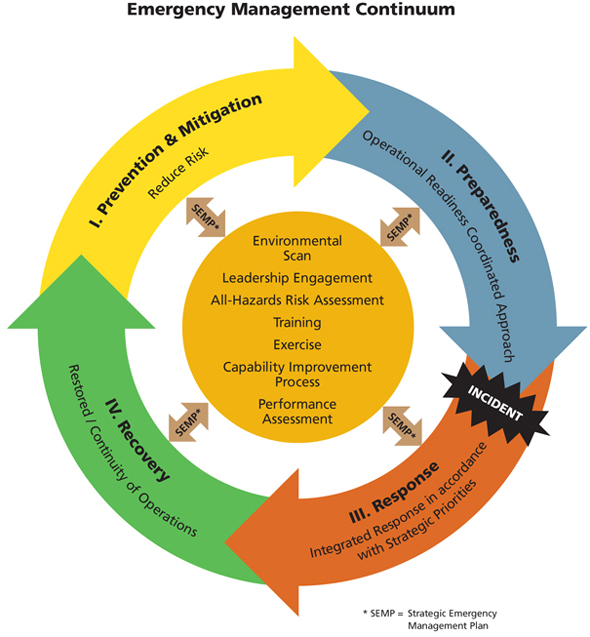
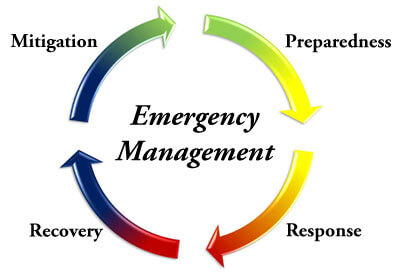
The description of emergency management also goes hand in hand with a specific cycle. Known as the ‘phases’ of emergency management, these four stages can narrow down damages to a minimum. Even more importantly, they can effectively save lives.
Emergency Management

Phase 1 – Mitigation

The first step in emergency management is mitigation. To put it in a nutshell, mitigation involves the identification of risks and doing what you can to minimize them from the beginning. This could mean building dams to avoid floods, rebuilding certain structures that are made of weak materials or identifying all the weak points in a building.

Phase 2 – Preparedness

The second phase focuses upon getting prepared for a disaster. What makes it different from mitigation is that it stresses on getting ready for the third phase, response. This phase involves outlining a plan, getting supplies together and running through drills to see if preparedness is adequate.

Phase 3 – Response

Response, the third phase of emergency management, refers to the instant actions that need to be performed when an emergency takes place. The response should unfold according to the preparedness plan, with evacuation and essential operations.

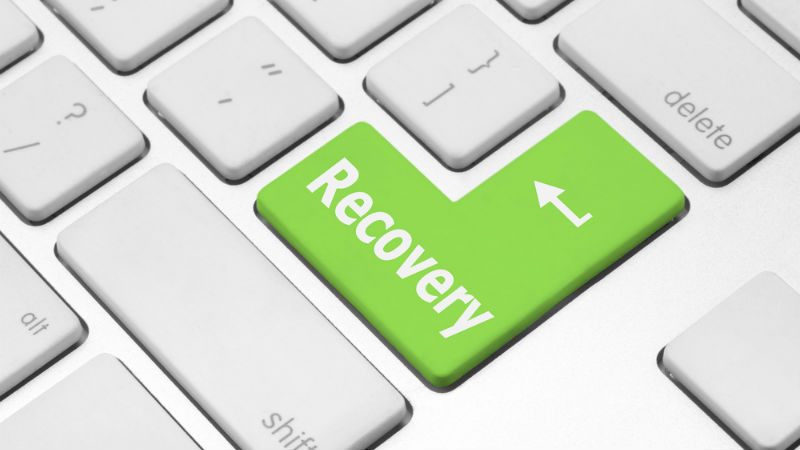
Phase 4 – Recovery

The final phase of emergency management is recovering from the disaster or emergency that took place. It usually involves reconstruction and caring for those affected by the incident. This is the phase where state authorities, international organizations and other certified sources can play a vital role in speeding up recovery.

Emergency Management Director

In addition to learning the basics about emergency management, you can also look into job opportunities or forms of certification in the field. There are various degrees or new certificate programs that can help you reach this goal and become an emergency management director or specialist. The salary for a professional in this area can range anywhere from $33,370 to $116,900, as the BLS informs us.

If you decide to pursue a career in emergency management, you’ll most likely be working for local or state governments, hospitals, universities / schools or in the electric power generation, transmission and distribution industry. The states with the highest employment level are Texas, California, New York (NYC), Virginia and New Jersey (NJ). Even though states like Colorado, Florina, North Carolina, Washington or Indiana don’t have such a high level, you can still find emergency management jobs in these areas.

Emergency Management Organization, Office and Association Examples

Thankfully, there are an abundance of organizations that can help out with emergency management in times of need. These organizations can be national or international and are willing to provide disaster victims with supplies, support and shelter.
Emergency Management

One of the most significant organizations for emergency management is FEMA, but also NIMS. All Red Cross branches can be consulted in times of emergency, as well the United Nations for large scales. A few other organizations are the International Association for Disaster Preparedness and Response (DERA), the Center for Excellence in Disaster Management and Humanitarian Assistance (COE) or the Citizen Corps.

It is best to search for emergency management organizations in the city or state that you live in for immediate help.

How to Prepare for Emergencies at Home or Work

Now that we know the fundamental aspects of emergency management, it’s time to conclude with a few ways in which you can prepare from emergencies at home or at the office.

  • Kits & Supplies – make sure you have plenty of nonperishable food and water stored, as well as basic supplies like batteries and flashlights.
  • Plan – create a plan that is clear and easy to follow. Make sure that you take all aspects of any emergency into consideration. As an alternative, you can create several plans with specific instructions for different emergencies.
  • Training – go through the plan several times to see if any aspects need to be upgraded.

Stay safe and always prepare.
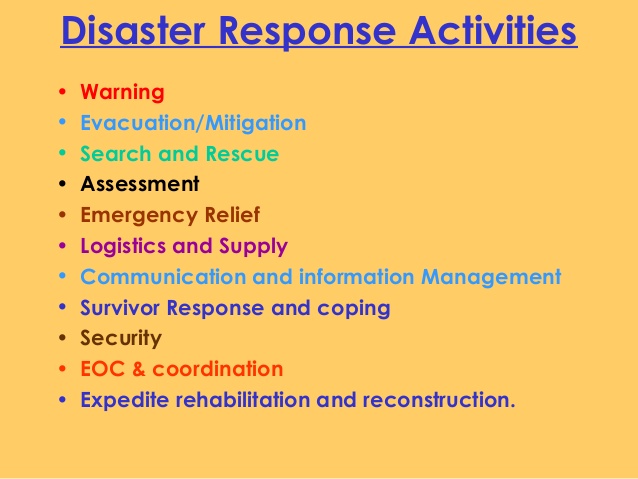
Image sources: 1, 2, 3.

All You Need to Know about Disaster Response Services

When disasters and, generally speaking, disruptive events occur, people respond to the threat and contain it the best they can. The official terms surrounding disaster management (like disaster relief and disaster response) often vary and people confuse them or use them interchangeably, but there is actually a pretty strict delimitation when it comes to all sides of this support process.

Disaster Response Services

Here is a brief overview of how the various sides of disaster management work and intertwine:

  1. Disaster Management – this is the widest aspect, referring to the entire cycle of emergency management;
    1. Emergency Planning – this phase refers to identifying risks before the disastrous event even occurs
    2. Disaster Response – the second phase of the cycle, comprising immediate assistance services, such as search and rescue, distributing supplies, providing emergency medical care and so on. Also called disaster relief by some.
    3. Disaster Recovery – the last phase of disaster management, taking place after the immediate emergencies of the second phase have been dealt with. This phase focuses on making sure the affected lives return to normal as fast as possible.
  2. Business Continuity – this part focuses on disaster recovery for businesses, ensuring that companies affected by disasters can pick up their normal activity as fast as possible and that the temporary disruption doesn’t prove to be the end of the company as well.
    1. Disaster Recovery Services – a sub-set of business continuity, this part of a BCP (Business Continuity Plan) focuses mostly on IT system and the protection of virtual protocols and data.
    2. Business Contingency Management – a post-disaster set of plans and activities, destined to make businesses more resilient and able to cope with future disruptive events (preparedness training).

Disaster response, therefore, is an emergency stage of activities destined to bring some relief to those affected by a disaster, and is one of the main focuses of humanitarian actions and organizations everywhere.

Disaster Response Services

Disaster Response Jobs and How to Get Involved

If you’re tempted of getting involved more into disaster response activities, first of all we need to congratulate you for your noble intentions, and second of all, to provide you with an overview of how to start. Before looking for opportunities on how to get involved, you need to decide how much time you can dedicate to this: do you want to be involved on and off, as a volunteer, or do you want to make an actual profession out of it?

If you want to get involved as a volunteer, you can do this on a low-key mode, with your local emergency response team (every area has one, so do a quick search and you should be able to get in touch with your local emergency management force in no time). There are also the major international organizations who are always looking for more volunteers to join their operational forces. We will give you more details about what the best humanitarian action organizations are and how to get in touch with them and see what you can contribute with, in the section below.

As for disaster response jobs and careers, this side of the intervention field is also full of opportunities. Since people working in disaster response are basically super-heroes, trained to not only do their job flawlessly, but also do it under considerable time pressure and without all the usual tools and props, serious certification is required. Usually, the certification one needs in order to be a licensed emergency management team member comes from FEMA. This government agency also provides the training required for the major specializations needed. Here are just a few examples:

  • Medical emergency response staff (nurses and field doctors);
  • Bomb alert engineers;
  • Data backup scientists;
  • Communications officers;
  • Search and rescue team members (including firefighters);

You can find out more about the training offered by FEMA’s Emergency Management Institute (EMI) here.

Disaster Response Services

A Few Disaster Response Organizations

Humanitarian and disaster relief organizations are active all over the world, and the international ones usually focus more on the countries where the government lacks the resources to provide proper disaster response on its own. Since most acts of disaster response are aimed first and foremost at meeting people’s most basic needs, and therefore a central government that isn’t able to help the people affected by disaster really needs all the help it can get. The most important thing about disaster response, though, is that it’s always an organized and systematic activity, no matter who is the central authority behind the organization (either a national government or an NGO). There can be spontaneous interventions for disaster response, but they are usually on a local neighborhood scale and will either fizz out or become part of a larger scheme.

Without further ado, here are the major disaster response organizations you should know about:

  • The Red Cross – The Red Cross is an international organization with a strong presence in its U.S. branch, so basically whenever natural disasters have struck us in the past few years (tornados, hurricanes and floods), the Red Cross has provided a huge relief for those affected. Find out more about how you can get involved here.
  • The United Nations (UN) – Another great international organization that handles very varied types of disaster response and humanitarian work, besides various other responsibilities in diplomacy and so on. The UN also has some pretty high-end emergency management jobs for those of you who already have experience with humanitarian work and emergency relief coordination.
  • The Catholic Relief Services – One of the most important Christian organizations present in the U.S., the CRS welcomes all kinds of volunteers for their wide array of humanitarian actions, beyond disaster response (donations, doing some hunger relief actions from the charity fund and so on).
  • The Lutheran Disaster Response (LDS) – The other major Christian organization that provides disaster response nationally and internationally, the LDS welcomes plenty of volunteers and professionals altogether.
  • World Renew (WD) – One of the most active organizations in the field of disaster response and humanitarian work, WD has a very complex layering of projects and activities in which you can get involved with.

Last, but not least, if you’re willing to try going abroad for a disaster relief work experience, the first step you should make is to read this guide on what skills you need and where to start. Good luck!

Image sources: 1, 2, 3.

What Is Disaster Recovery and What Can You Do Yourself?

In case of a natural or human-induced disaster striking an area, the fast recovery from the unfortunate event is a priority for everyone. The recovery must optimally be realized with as little human and financial costs possible so that the area can resume its previous state and even be better prepared and less vulnerable to similar future events. So, what is disaster recovery as officially defined and provided by various services and organizations? There are two main sides to this recovery: the humanitarian part, referring to people and communities and which is usually known as disaster relief, and the part focusing on ensuring the survival and continuity of a business, usually known as disaster recovery.

What Is Disaster Recovery

Sometimes, the two terms are used interchangeably, since they aren’t that different in meaning, but for the sake of differentiating between the two types of disaster management services, a great part of the world has started respecting this distinction between disaster relief and disaster recovery. Our present article will focus on clarifying the disaster recovery aspect for businesses, and also, address some FAQs about disaster recovery along the way.

What is Disaster Recovery?

Disaster recovery can be defined as a set of procedures and policies set in place in order to ensure the continuance of infrastructure (and/ or of business activity) in the aftermath of disruptive events. The more the world came to rely on technological infrastructure, the more we started to realize how vulnerable we would be left in case this infrastructure failed, and since the 70s, disaster recovery systems have been specifically created to assist with this issue.

Since disaster recovery focuses first and foremost on ensuring the restoration of IT and technological infrastructure and data, it represents only a subset of the more general business continuity systems. These comprise of a vaster array of policies which ensure other aspects required for an activity to be resumed (finding alternate office space, financial recovery from damages and so on).

Disaster Recovery

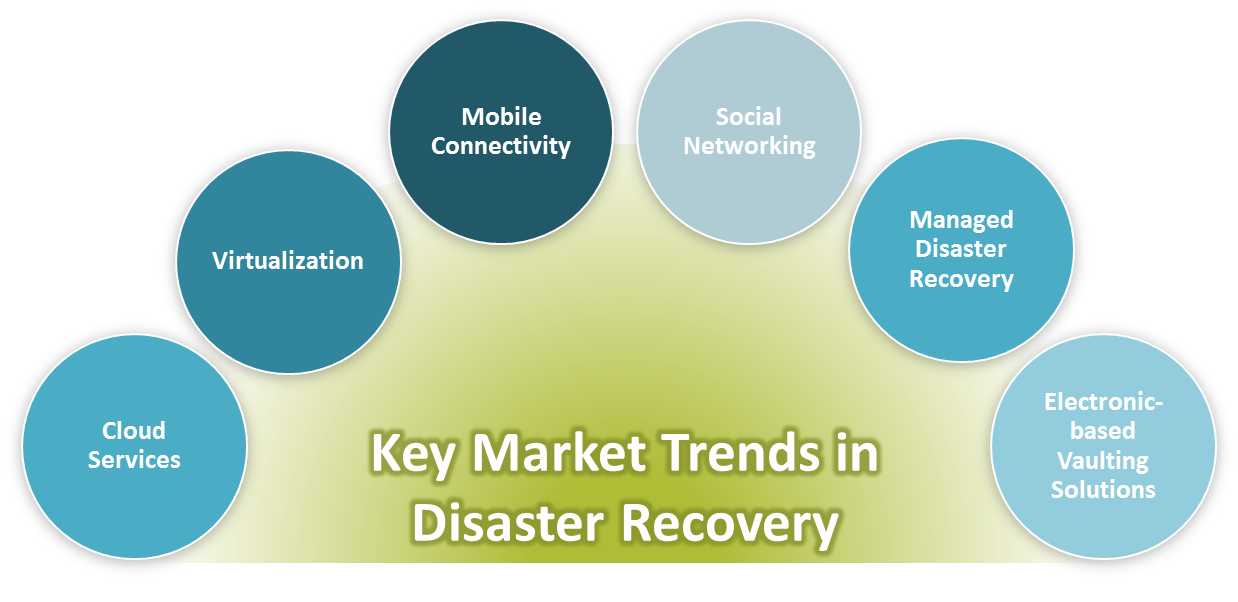
As businesses started realizing their huge dependence on IT technologies (and especially since internet speed and real-time response became an integrative part of almost any business), services which offer disaster management and recovery have become more and more popular and needed. So, what is disaster recovery from this point of view, of commercial services marketed and offered to IT-reliant businesses? Usually, all service providers specializing in disaster recovery for businesses offer this:

  • Full cloud storage and online backup for your business information, data, sensitive data like login details and company track records etc.;
  • An initial evaluation of the risk your business faces in case of disaster and tips on how to minimize that risk;
  • A disaster recovery plan to be activated in the wake of a disruptive event, prescribing the client (the business trying to protect itself from disaster) the steps to follow for continued functionality and on to a full recovery;
  • The availability of limited office space and computer systems to allow the affected business to resume its activity at least partially until their workspace is restored;
  • A cyber security diagnostic in case the disaster was not caused by a natural event (like an earthquake or a tornado and so on), but by a specific cyber-attack which led to a potentially dangerous breach;
  • Various service packs offering increasing levels of assistance with the aftermath of the disruptive event.

What Is Disaster Recovery

Disaster Recovery FAQs

1. What Is Disaster Recovery for Businesses Beyond the Backup Service?

Initially, disaster recovery service providers focused mostly on cloud storage backup, but today’s service packs offer much more than that. First, they diagnose the specifics of the business that is trying to protect itself from disaster, then they formulate some options and service packs adapted to suit the needs of that business. This can include everything IT-related, like ensuring a preservation of layers of access according to the company’s hierarchy and so on, but also non-IT services. Such non-IT services can include the provision of office space and minimal infrastructure required for the business to get back into work, even if for the time being the company is still dealing with the aftermath of disaster and its actual office space and work environment and compromised.

2. What Other Aspects of Disaster Recovery Should I Consider as a Business Leader?

You should consider disaster recovery beyond the simple aspects of cloud storage, as well as depending on the specifics of the business you are running. After all, what is disaster recovery if not a tailored approach meant to get your company back in business as soon as possible? A few general ideas useful to all businesses would be these: increasing the security and diminishing the risk of data loss, protecting both your physical and virtual assets with the help of comprehensive insurance, and creating reliable procedures for getting back on track as fast as possible.

3. What Is Disaster Recovery as Business Continuation and What Services Should I Look Into?

As mentioned above, disaster recovery confined to IT and cloud backup is but a small aspect of protecting your company and ensuring your business continuation. This second concept is a more loosely defined set of services and measures, impossible to pin down because the nature of each business can be drastically different and, therefore, the business continuation plan must be adapted to each individual case. There are usually three levels of a sound business continuation plan:

  • Resilience: the purpose of these measures is to minimize the damage and ensure that the business activity can continue up to a certain point in spite of the disruptive event;
  • Recovery: the purpose of these procedures is to ensure a fast recovery of the degree of functionality lost in the disaster and bring the activity back to full capacity;
  • Contingency: Ensuring that the people and the infrastructure of the business become more flexible and able to cope with unforeseen aspects of whatever disruptions and disasters may come. This third layer of measures and procedures is meant first and foremost to deal with the potential inadequacy of the first two (the resilience and recovery plans and measures). To increase the effectiveness of contingency, this part of the business continuation strategy must also include the thorough testing of the other parts of the plan.

What Is Disaster Recovery

What Can You Do Yourself For a Better Disaster Recovery?

First of all, as a business owner or leader you should try to familiarize yourself as much as possible with the actual risks you are facing in case of the various types of disasters which can strike your business. Identify your potential losses and this way you will know exactly what your protection priorities should be. If you’re not sure how to identify security risks yourself, don’t worry: it’s quite common to enlist the services of a disaster recovery consultant in this stage of planning.

The bottom line is to start asking yourself not simply ‘what is disaster recovery?’, but increasingly ‘what should my business recovery plan contain?’ Consultants from the recovery service provider you will hire can only help you with the technical details you may not be aware of, but only you can intimately know the priorities and vital functions of your business, so you are in the end the most qualified planner for your business continuity.

Image sources: 1, 2, 3, 4.

Top Christian Disaster Relief Organizations Active in Emergency Response

Christian disaster relief organizations are actively involved in emergency relief efforts around the world. Some focus on fighting hunger and poverty while others provide emergency aid in the case of a natural disaster. Many organizations become active in emergency situations tackling different aspects of a crisis and helping with humanitarian aid. Whether it’s medical assistance, food products and water, clothing, toiletries, or bedding, Christian disaster relief organizations help supply victims of a disaster with essentials in the aftermath of the event.

Christian Disaster Relief Organizations

Some of these organizations are active in emergency response and will typically become involved in relief efforts immediately after a disaster takes place. The vital efforts that these organizations make help survivors navigate the difficult time following a disaster. Christian disaster relief organizations rely mostly on Christian charity donations to fund their relief efforts and to carry out their activities. Beyond donating money for these organizations, people can volunteer for different actions and help support the relief efforts that they provide.

Top Christian Disaster Relief Organizations

Members and volunteers of these disaster relief organizations work around the clock to gather funds, organize support actions, and gather and distribute emergency supplies. Some of the largest Christian disaster relief organizations working at the moment provide international aid and are prepared to become active in emergency situations world-wide. Here are the top Christian disaster relief organizations that are equipped to intervene and provide aid in the aftermath of a crisis, either in the U.S. or internationally.

Christian Disaster Relief Organizations

1. The Salvation Army

The Salvation Army is perhaps most commonly known for its members’ efforts to help Americans seeking basic necessities such as food, warmth, and shelter. The organization also has disaster relief teams that are permanently prepared to intervene when a community is at risk in the wake of a disaster or a civil disorder. The Salvation Army provides food and water, bedding, shelter, and other essentials to those in need.

This Christian humanitarian aid organization was established by William Booth, and it was originally named The Christian Mission. It became known as The Salvation Army back in 1878, and it has been working to help those in need since its inception. The organization’s disaster relief services adapt to the needs of each situation, but they are primarily focused on providing warm meals and cold drinks to survivors from Salvation Army mobile kitchens.

The organization is also equipped to open disaster relief shelters and provide warmth and shelter for people who have lost their homes and have nowhere to go. It also provides direct financial aid to those in need via a network of casework specialists. During the early stages of a disaster, the Salvation Army will focus, however, on the most pressing needs that survivors have and it will strive to provide food, water, clothing, medical care, and shelter.

As the Salvation Army is a Christian disaster relief organization, it has trained staff members that also provide emotional and spiritual support to survivors via its pastors and ministry. After meeting the survivors’ most urgent needs, the organization also deploys volunteers and members to help in cleaning and rebuilding projects when these are necessary.

Christian Disaster Relief Organizations

2. Samaritan’s Purse

A nondenominational evangelical Christian organization, Samaritan’s Purse provides worldwide physical and spiritual support to victims of natural disasters, war, disease, hunger, and poverty. The organization was founded by Franklin Graham back in 1970, and it has been working to provide aid for people that are suffering in the aftermath of natural disasters or war.

The organization’s name is derived from the biblical story of the Good Samaritan. The story describes how the Samaritan rescued a hurting man that had been ignored by other passers-by. The Samaritan’s Purse organization has international crisis response units as well as U.S. disaster relief teams that are constantly ready to intervene in the wake of a disaster.

Samaritan’s Purse has a network of warehouses strategically located around the world. The organization stores emergency supplies in these locations in order to be ready to act quickly and deploy Disaster Assistance Response Teams in case aid is needed. Samaritan’s Purse provides survivors with food kits that contain staple items such as cooking oil, beans, soy meal, rice, salt, and corn. The organization also sends water purification kits to areas where the local water supplies have been contaminated because of a disaster.

Other disaster relief efforts that the organization is focused on include the deployment of fully equipped mobile medical teams on site to help people that do not have access to medical care during a crisis. Samaritan’s Purse also provides survivors with blankets, tents, and heavy-duty plastic sheeting. In addition to these efforts, the organization sends supplies such as hygiene items, cooking utensils, and other essentials to affected areas.

3. Operation Blessing

Operation Blessing International Relief and Development Corporation (OBI) is a faith-based organization that provides relief to disaster survivors both in the United States and internationally. Its core programs are centered on disaster relief, hunger relief, medical aid, children and orphan care, as well as community development. The organization is currently providing strategic relief in 37 countries around the world and in the United States to alleviate the suffering caused by poverty, hunger, and natural disasters.

Businessman and philanthropist M. G. Robertson founded OBI back in 1978. The organization is currently governed by a national board of directors which includes its founder. The disaster relief efforts that the organization makes are centered on providing victims of natural disasters and refugees in life-threatening conflict with the essentials required in each case. OBI distributes food, safe water, medicine, and other supplies to victims world-wide. The organization also becomes involved in the long-term recovery efforts that survivors need, deploying teams to assist with debris clean-up and repairs.

4 .Catholic Charities USA

Catholic Charities USA is a social service network that expands nationwide. It provides aid and financial support to those in need regardless of their religious, economic, or social backgrounds. Catholic Charities was founded in 1910 under the name National Conference of Catholic Charities, and it has been hard at work ever since providing shelter, food, and relief.

CCUSA is one of the Christian disaster relief organizations in the U.S. that has member agencies who are prepared to provide both immediate and long-term relief when a disaster occurs. CCUSA can immediately deploy food, water, personal care supplies, and financial aid to survivors.

Image Sources: 1, 2, 3.

Top 10 Disaster Relief Organizations and How They Can Help

You may have heard of disaster relief organizations and disaster recovery before, but don’t really know what these terms refer to or how they are different. Our guide on disaster relief organizations will help you understand what they do better, and then proceed to present these top organization in detail and give you extra links and resources you may need. This way, you can find out more about how you can maybe become a volunteer within these organizations, or find out more about your options and how to call for emergency help whenever disaster strikes your community. First of all, let’s take a deeper look at what disaster relief is.

When disasters occur, either from natural causes (hurricanes, tornados, floods, and so on) or human-engineered ones (like terrorist attacks, disastrous cyber-attacks, etc.), specialized teams are ready to intervene and help people come back from these disruptions. There are two main sides to organized response to disastrous events: disaster relief and disaster recovery. Disaster relief refers mainly to interventions from authorities and humanitarian organizations, in order to help the people and communities get medical care, food and shelter, as well as return to their previous state as fast as possible.

Disaster Relief Organizations

What Does a Disaster Relief Organization Do?

Disaster relief work, also known as emergency management, refers to the work and interventions required to help communities recover from disasters. This type of activity requires two main lines of work:

  • Creating plans through which a community can reduce their vulnerability to disasters, plus making some prevention and preparedness work;
  • Intervening in communities hit by disaster and handing out disaster relief help according to the main priorities which occur, plus helping the community get back on its feet and preserving its livelihood post the unfortunate event.

A small part of emergency management work also targets the protection of businesses, although there are also disaster recovery companies which specialize in this, on a smaller scale. Emergency management services for businesses target especially those vital businesses that contribute to a country or area’s overall infrastructure, the kind of companies which, if they fail, could also negatively impact the life of the community. In this broad sense, some disaster relief organizations who deal with helping businesses get back on their feet include the UN (United Nations), the WB (World Bank) and even some governmental macro-organizations like the EU (European Union).

Up until that very high level, though, there is a myriad of small and medium level disaster relief organizations, some of them governmental and some of them non-governmental. In many of these, there are professionals working within them (usually at a management level), and there are also plenty of volunteer workers activating as well. A large part of sustenance for these organizations resides in donations from supporters, as well as this large chunk of volunteering work.

Disaster Relief Organizations

Top 10 Disaster Relief Organizations

Now that we covered a bit more about what disaster relief organizations are and the type of work they do, the best way to further this understanding is to present a few of the top organizations. Here are our top choices in this field and why.

1. FEMA’s Emergency Management Institute

The Emergency Management Institute from FEMA (the Federal Emergency Management Agency) is one of the most important institutions in the U.S., when it comes to disaster relief organizations. While FEMA itself is the agency that activates within disaster relief and organized well-coordinated and governmental backed actions, its institute is the one that trains the best experts and professionals in the field. Basically, most of the successful disaster relief organizations in the U.S. are probably being operated by professionals who have been trained at this institute. They are responsible for preparing the absolute pros for saving the day when things take a wrong turn; what could be more impressive than this? Therefore, FEMA’s Emergency Management Institute definitely deserves the first place in our top of disaster relief organizations.

2. The Red Cross

Everyone heard of the Red Cross, and few other disaster relief organizations are probably as widely spread across the world as the Red Cross is. The American Red Cross benefits from both governmental support and a wide presence of volunteers enrolled in its ranks. In addition to disaster relief work, the organization also handles other areas of activity like collecting and distributing blood from donors, educational programs to promote safety and preparedness, support and comfort for military members and their families, etc. international development and training programs for disaster relief work etc.

Considering the large size of the Red Cross, it’s worth noting that there are plenty of volunteering opportunities within it, as well as actual jobs for people who want to get involved with this line of work on the longer run. We will detail this matter more below, in the ‘How to Get Involved’ section.

3. The Salvation Army

The Salvation Army is one of the disaster relief organizations with a religious background, in this case, a Christian one. Originally founded in the United Kingdom, London, the Salvation Army is highly active in the United States as well, actually being one of the most responsive disaster relief organization in the country. Their fast response times are owed to their large number of members and volunteers, so mobilizing some people to assist with any emergency in almost any area of the country isn’t difficult at all.

4. The Southern Baptist Convention

Another one of the religiously-influenced disaster relief organizations active in the U.S., the Southern Baptist Convention is also distinguished by its large number of members and volunteers, and therefore high responsiveness. One of their special focus areas is the preparation and distribution of food to those in need, so if you do have a penchant for cooking and helping out, maybe check out how you can get involved. They have over 65,000 trained volunteers all over the country, and officially one of the largest disaster relief organizations in the U.S.

5. All Hands Volunteers

A relatively new disaster relief organization, at least when compared to those who can truly be considered historical (like the Red Cross), the All Hands Volunteers (usually known as Hands) surely deserves the 5th place if only for its enthusiasm and energy alone. Its official tagline is ‘Rebuilding Hope’ and considering their emphasis on helping communities not only recover from disasters but also grow stronger and more self-reliant. If that’s not enough to rekindle hope among those who just took a bad hit from events, we don’t know what is. The All Hands Volunteers organization has completed 62 large projects in its 10 years of activity, with the help of 32,000 volunteers for 94 countries.

Disaster Relief Organizations

6. The Lions Club International

The Lions Club is one of the largest humanitarian organizations in the world, with active fronts in multiple areas of community help. It’s not really one of the disaster relief organizations per se, for the simple reason that they activate in many other fields other than disaster relief. They also handle environmental programs, international health programs, children and youth programs, and international relations programs and so on. Their disaster relief organizations are mostly focused on natural disasters, and they are also distinguished for their Foundation which offers other disaster relief organizations grants and funds (over 50 million dollars granted so far).

7. Citizen Corps

The Citizen Corps organization is actually a national program developed by the Department of Homeland Security. It’s one of the disaster relief organizations that most emphasize the importance of citizen participation for preparedness and intervention in bad events. It handles intervention and disaster relief with major citizen volunteer participation, but it also runs plenty of training programs for preparedness, intervention frames and tools, survival and rebuilding etc.

8. UNICEF

You may know of UNICEF (the United Nations Children’s Emergency Fund) as mainly an international organizations that raises funds for kids and helps them, but you may have missed out on the ‘emergency’ part. That means that while many of the organization’s programs are indeed meant to tackle non-emergency issues like literacy of abuse prevention programs, study grants and so on, there is another large part of their activity that targets emergency management. In case of disaster strikes, UNICEF intervenes to help the kids but also the families and the communities of those kids, which makes UNICEF one of the leading international disaster relief organizations.

9. The American Radio Relay League

Among all disaster relief organizations active in the U.S., the ARRL is probably the most useful in case of major disasters. It employs radio operating volunteers that can help people not only ask for the assistance they need, but also to coordinate better for all sorts of community interventions. Considering that we live in a world more and more connected to emergencies and that radio broadcasts can be accessed on any type of device currently in use, from radios to smartphones and computers and even walkie-talkies.

10. The BGCO Disaster Relief

The BGC Oklahoma is one of the most nationally active Baptist disaster relief organizations. Whatever the most recent national emergency, the BGCO volunteers successfully handle the aftermath and get involved in order to restore people’s livelihoods to the state of before. The recent Louisiana floods, for example, have received the intervention of BGCO teams equipped for getting mud out of homes, as well as volunteers who handed out supplies and food to the affected communities.

Disaster Relief Organizations

How to Get Involved

If you’re tempted to lend your spare time and energy to a good cause every now and then, there are plenty of opportunities to do so. You can first do a search for disaster relief organizations in your local area if you want to bolster the emergency management responsiveness of your own community, or look up the big players in this field in order to contribute to something greater. Both approaches are fine and admirable: one makes your own community less reliant on outside help should anything go amiss, while the second one gives you the opportunity of really making an impact.

For the second path, there are lists of major disaster relief organizations who could use every volunteer help they can get. Feel free to browse through this list or this list and make your decision based on the types of causes or activities they support, as well as by the local area in which they mainly run their activities. Also, don’t forget to honestly think about your main skills and what you could truly help with best: perhaps you could make a better trainer than an actual doer, if you’re good at teaching but not in the best physical form, for example. Or the other way around, you’ll figure it out. If you need help with that, the counsellors from the disaster relief organizations you can contact will also be more than happy to describe in greater detail the type of skills they need.

Disaster Relief Organizations

How to Get Help

For the unfortunate situation in which you will be affected by a disaster event, you can get prepared to be able to cope a little better and recover more quickly. This is what you can do in order to be better equipped for facing a disastrous event, or in order to get help to come to you faster.

First of all, you can get trained in preparedness before anything bad happens. Most disaster relief organizations offer courses and seminars on preparedness, including anything from basic medical care from survival lessons. There are even government-backed preparedness lessons for children, too, so the earlier one starts, the better.

Second of all, you will of course still require help from the authorities and whatever disaster relief organizations can reach the area you are in. In order to get help, beyond calling 911, take a look at the governmental Disaster Assistance portal and see how you can apply for receiving humanitarian assistance. You will be surprised of how people can pull through and help people in need, as well as to teach them to help themselves. Good luck, and hopefully you will never really need this info, but it’s better to be safe than sorry.

Image sources: 1, 2, 3, 4, 5.

  • « Previous Page
  • 1
  • 2
  • 3
  • Next Page »

5 Safety Tips You Need To Know If You Live Near A Nuclear Power Plant

image source: pixabay.com When purchasing a home, there a lot of things to consider. What area of the United States do you want to live? Do you want to be in the country or in the city? Are you going to rent or own, and will it be an apartment or a house? If you […]

Tornado Warning VS Tornado Watch: What You Need To Know

When it comes to severe weather, nothing is as devastating as a tornado when you consider the inch to inch devastation. Tornados often possess stronger winds than hurricanes, and due to the cyclone shape of a tornado, it increases the damage potential. Tornados are also especially dangerous if you are in its path. A single […]

Long Term Water Storage: The Ultimate Guide

While you hope that a calamity like a water shortage or other emergency will never befall in your lifetime, it is always important to be prepared for the worst while hoping for the best. One of the most important aspects of emergency preparedness is ensuring you have a sufficient stockpile of water to get you […]

10 Best Filter Water Bottle Brands To Use During Emergencies

If there is one thing that all hikers and outdoor enthusiasts have in common, it’s that they all agree you should never blindly drink out of a natural water source. That’s because the unfiltered water, although fresh and natural, contains harmful bacteria and waterborne parasites that would likely go undetected by taste alone. With a […]

14 Deadliest Natural Disasters of All Time

What are the deadliest natural disasters of all time by death toll? Which type of deadliest natural disasters has the greatest death count? More importantly, what are some ways the population was affected by those disasters? Were there things that people did to worsen or better the effects of mother nature angrily smashing her surroundings? […]

4 Frostbite Symptoms And How To Treat Them

With the onset of winter comes the risk of getting frostbite. With all of the outdoor recreation that’s available to us in the winter, it is important to learn how to protect ourselves. Knowing the signs of frostbite in the early stages can help you to avoid permanent damage to your skin and underlying tissues. […]

Fire Escape Plan for Your Family: Our Complete Guide

No one ever thinks a tragedy will happen to them. We see events on the news all the time such as accidents, home invasions, and house fires. We rarely plan for these things because we never think that we will be in such a situation. If you do one thing this coming year, whether you have […]

10 Tips for Living Through Power Outages

Most of us don’t think of power outages until we’re searching for flashlights or candles in the dark. Some think the light on their cellphone will be good enough to make it through power outages. That might work if power outages happen only when your phone is already fully charged. But, what about being prepared […]

How To Tell If A Snake Is Poisonous: Your Ultimate Guide

image source: Pixabay Have you ever been startled by a snake in your yard? Snakes are among the most misunderstood and feared animals on the planet, mainly because of the poisonous and potentially deadly bite a snake can inflict on its target. The truth, however, is that most snakes in the United States are non-venomous and […]

Copyright © 2026 ·Outreach Pro · Genesis Framework by StudioPress · WordPress · Log in