Disaster Rally

  • Natural Disasters
    • Earthquakes
    • Hurricanes
    • Tornadoes
    • Fires
    • Floods
    • Tsunamis
    • Other
  • Man-Made Disasters
    • Nuclear
    • Pollution
    • War
    • Other
  • Prepare
    • Plan
    • Supplies
  • Disaster Resources
    • Agencies
    • Aid
    • Medical
    • Rescue
    • How To Help
    • People in need
  • Contact
  • About Us: Disasterrally

What Do Emergency Medical Services Consist Of?

Emergency medical services, also known as EMS, are responsible for providing out-of-hospital medical care and transportation to definitive care. There are different types of emergency medical services, as they vary from state to state. It is an intricate system that is integrated with other services to keep and to enhance the health and safety of the community. Let’s take a closer look at the components and the types of EMS there are.
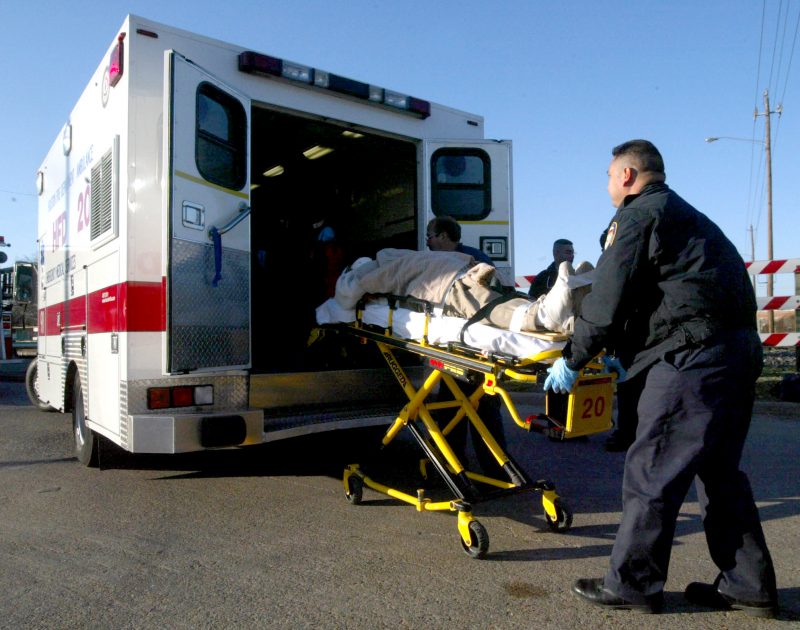
emergency medical services ambulance transporting a patient

What Is EMS?

Emergency medical services are one of the multiple types of emergency services that are dedicated to providing transport to patients that have illnesses and injuries which don’t allow for self-transportation. Furthermore, EMS provides out-of-hospital acute medical care. They are also known as ambulance services, ambulance squad, ambulance corps, first aid squad, FAST squad, rescue squad, emergency squat, life squad, or paramedic services.

An EMS system encompasses the following sub-systems, services, and professionals:

  • Agencies.
  • Organizations.
  • Communication networks.
  • Transportation networks.
  • Rehabilitation facilities.
  • Trauma centers and systems.
  • Hospitals.
  • Specialty care centers.
  • Physicians, nurses, volunteers, therapists.
  • Administrators, government officials.

Types of Emergency Medical Services
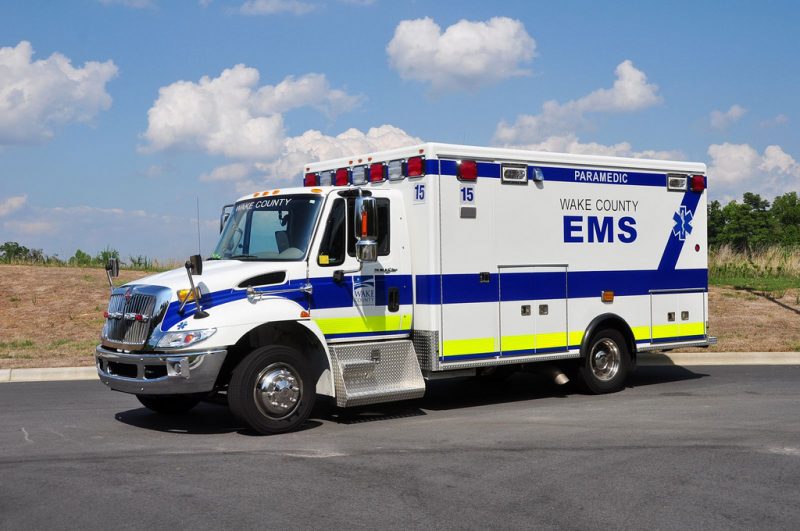
wake county EMS vehicle

There are five EMS systems that communities are providing to their citizens:

  • Ambulance organizations.
  • Fire department.
  • Voluntary EMS.
  • Combined emergency service agencies.
  • Hospital-based services.

The U.S. emergency medical services network copies the Anglo-American model. This means that they provide means to bring the patient to the hospital.  This is different from the Franco-German one, where medical care is being brought to the patient. It is extremely uncommon to have a physician respond to the emergency scene.

The delivery of emergency medical services in the United States is based on multiple models. Some are publicly funded while others are offered by a third-party such as a private company. The standard emergency medical services are operated by the municipality. It can either be provided by the local government or the state government. In most cases, the EMS is part of another municipal department. More often, it is integrated into the Public Health department.

In a different operating mode, the EMS is organized as a separate department within the municipality. It is viewed as a third emergency service, separate from the fire or police departments.

The emergency medical services system can also be integrated into fire or the police department, either partially or fully integrated. When it is partially integrated into another municipal EMS, the staff may share several services and quarters. When it is fully integrated, the staff can be cross-trained to perform other emergency services, either firefighting or policing.

As for the private ambulance service, there are currently only a few remaining private companies. Thousands of private ambulance companies have been merged into regional companies over the year. There are only two multinational companies that dominate the private ambulance industry at the moment.

Air ambulances are operated by various sources in the United States. Some are hospital-operators, others are operated by the federal, local, or state government, and others can be operated through multiple departments such as the United States Park Service, state police, or fire departments. They are either offered by these EMS systems or contracted to an aircraft charter company or a similar third-party company. Air ambulances include a mix of personnel, such as nurses, paramedics, physicians.

There’s also voluntary EMS, where charities and non-profit companies can operate ambulances and provide patient transport services. These are either run by the community or privately owned. It is not uncommon for them to be linked to voluntary fire services. The Red Cross is usually the main provider of this type of EMS in most countries across the globe. In some countries, these ambulances work alongside the full-time ambulances during emergency times.

Some hospital can also provide their own ambulance service. However, the use of this service is dependent on using the providing hospital’s services.

EMS Vehicles
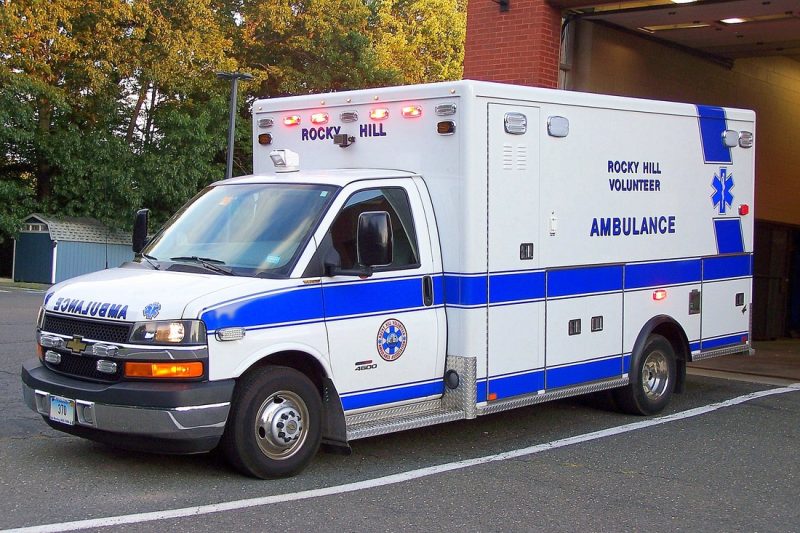
rocky hill ambulance EMS 2011 chevy

There are multiple categories of ambulances in the United States. They are defined by Federal Specification for the Star-of-Life Ambulance, and they are classified as type:

  • I – based on the chassis-cabs of light duty pickup trucks.
  • II – also known as Vanbulances, based on modern passenger vans.
  • III – based on chassis-cabs of light duty vans.
  • III – AD – a cutaway van with an inbuilt modular body and increased gross vehicle weight rating, payload, and storage.

Large cities in the United States have multiple ambulance services that use all of the types listed above. Most ambulances that are certified for emergency response are marked with the symbol designed and controlled by the U.S. National Highway Traffic Safety Administration – the Star of Life.

EMS Staff

In the United States, the ambulances must provide a minimum of two personnel – an EMT and an EMR. This is a called a Basic Life Support Unit because it cannot provide Advanced Life Support interventions. If the patient’s condition justifies the need of an ALS provider, it can be summoned to aid the ambulance staff during transport to the hospital.

There are several certifications in EMS. The emergency medical responder, or first responder, is the member of the staff that can perform immediate care until a higher trained provider reaches the scene. Some of the life-saving skills they must provide include CPR, hemorrhage control, and spinal stabilization.

The emergency medical technician (EMT) is usually in charge of performing a broad range of skills, such as oxygen therapy, spinal care, and defibrillation. The emergency medical technician – intermediate (EMT-I) is a certification that allows the technician to perform IVs and IO cannulation, more advanced airway procedures, limited cardiac monitoring, manual defibrillation, and to administer a limited number of medications and analgesic.  A new certification level also includes the advanced emergency medical technician (AEMT). An AEMT possesses the skills to perform advanced airway procedures, start IVs, and administer certain medications.
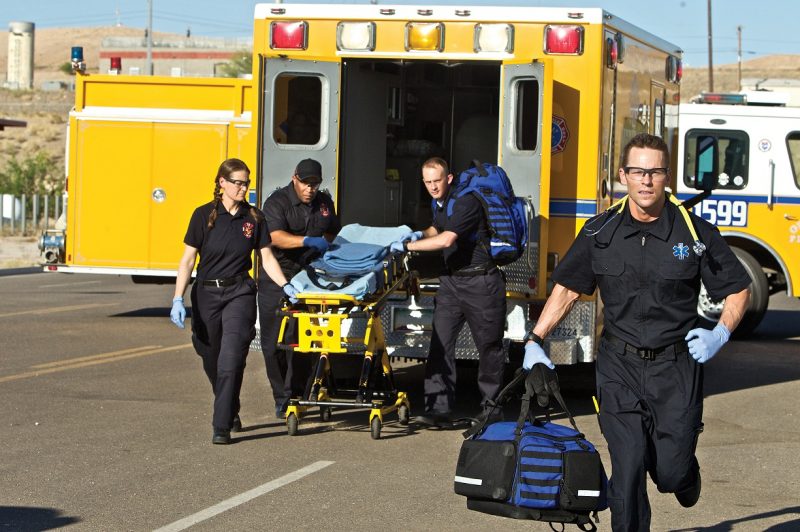
tactical gear EMS

The paramedic is highly trained, and their skills usually involve those that are not performed by technicians. This includes cannulation, the administration of a broader range of drugs (morphine, for example), intubation, cardiac monitoring, and more. Paramedics constitute the highest level of pre-hospital care in most parts of the United States. There are several certifications for paramedics: Critical Care EMT-Paramedic, Flight Paramedic Certification, and Wilderness ALS Care.

IMAGE SOURCE: 1 , 2, 3, 4

How to Create a Good Network Disaster Recovery Plan

You may have heard of companies which invest in a network disaster recovery plan (often abbreviated to network DRS or simply NDRS), and wonder what that is. As mentioned in our main guide on disaster management, there are two main sides to disaster recovery and management. First of all, there is the human side of handling an emergency or disaster, focused on helping the people in need meet their basic needs (food, water, shelter, emergency medical care, safety and so on). Usually, this side of disaster relief work is handled by both governmental agencies (like FEMA) and non-governmental organizations.

Network disaster recovery plan

The second side to handling a disaster or disruptive event, whether it is a natural one or a man-made one, is meant for protecting businesses, companies or institutions and allowing them to continue their activity. For institutions and state infrastructure, the FEMA (Federal Emergency Management Agency) handles the steps involved for emergency management and disaster recovery. For private companies and businesses, a blend of state services and private services acts to protect their activity and help them recover faster. This is known as a Business Continuity Plan (usually offered by companies specializing in this), and disaster recovery is a smaller part of that, dealing specifically with the recovery of the IT systems of the company.

Even more specifically, the part of disaster recovery services that deals with networks and getting them back online is called network disaster recovery. The main thing you need to know about a NDRS is that no matter the size of the company you work in (or have), you probably need one. Nowadays, there are probably very few business activities (if there are any) which don’t rely heavily on information systems. This means that most of your activity logs and sensitive data, not to mention your entire collection of company records, policies, procedures and know-how are stored within your company’s network, and when a disaster strikes and damages it, your entire operation is threatened.

Network disaster recovery plan

Services which offer you a network disaster recovery plan and help insure your data and systems (through cloud storage backup and through expert assistance on resuming activity) are more and more popular. But signing up for one of these service packs isn’t enough to protect your IT systems: first, you need to assess by yourself (maybe with some external assistance, though), and set the foundation for your network disaster recovery plan. Here is how.

How to Create a Network Disaster Recovery Plan

In order to end up with the perfect network disaster recovery plan, you need to follow these basic steps:

  • Get a consultant from a disaster recovery service to help you identify your main vulnerabilities in your IT system;
  • Write down the main assets or priorities that need to be protected first and foremost. The few features without which your business’s whole activity could not function (or could not be streamlined). No external specialist can do this for you, since you are the one who knows your activity best;
  • Take a look at an example of a network disaster recovery plan template for inspiration, any sample you can usually find online goes. Most likely, your disaster recovery firm will handle the creation of the official version of the plan for you, but you need to have an idea of how one looks beforehand. This will allow you to revise the first two points of this checklist of steps, if you’ll realize it’s necessary (the part with the main priorities of your particular business activity, and the part with your main vulnerabilities);
  • With the help of your network disaster recovery consultant, create the actual version of your final network disaster recovery plan. Set the protections in motion and rest better at night from now on, considering that no matter what may come your way, your business continuity is insured in its most important aspect.

The Main Services You Should Consider for Your Network Disaster Recovery

There are plenty of services which provide companies small and large with disaster recovery for their IT systems. This type of service is actually becoming more and more popular, with the biggest software and cloud storage companies competing for the attention of business owners who are looking for the best network disaster recovery plan for their business.

Network disaster recovery plan

Here a very brief list of the main service providers in this niche. Take a look into their offers, if only to get a better idea of what to expect from the actual provider you will eventually opt for.

1. Microsoft Azure

The Azure service from Microsoft is considered by many to be the ultimate network disaster recovery plan, provided by some of the best specialists in the field. Few backup infrastructures match the highly advanced preparedness of Microsoft, and their personalized plans for each client offer targeted and immediate response to any cyber-threat or disruptive event. You can find out more about their services here.

2. Bluelock Recovery Solutions

The network disaster recovery plan from Bluelock promises an almost seamless resuming of your activity in case anything happens to your IT systems. Few other service providers can make – and hold – a similar promise, and based on how their popularity, they seem to be keeping their promise pretty well. You can read up more about their service here.

3. VEEAM

This next service on out top 5 list is provided from VEEAM. Official reviews for VEEAM praise it for their instant fixes and affordable rates, and their special self-restore portal for application owners is also highly appreciated. See more about their range of services here.

4. SunGard’s Disaster Recovery Service

One of the best things about SunGard is that they offer many kinds of different network disaster recovery plans and service packs. Their case studies and extra resources and data which back their figures and claims are also impressive. You can see more about their multiple service packs here.

5. Acronis Disaster Recovery

The full service from Acronis has a few impressive features that convince many business owners to sign up for their network disaster recovery plan. They use a hybrid cloud backup system so that your data stays safe even if a disaster were to hit both you and them at the same time, and they also offer wider business continuity solutions beyond the disaster recovery side. You can read up more about the Acronis services here.

Image sources: 1, 2, 3.

The IT Disaster Recovery Plan: Everything You Need to Know

You may have heard of business recovery or business continuity plans, or of the IT disaster recovery plan as mandatory forms of planning ahead for businesses everywhere. As more companies, businesses and institutions are becoming more and more reliant on information technology (IT) systems and the virtual environment, this reliance makes them both more potent and more vulnerable. While computer use has dramatically enhanced the productivity of businesses everywhere, especially as computers themselves have become more and more powerful over the years, this reliance on IT systems also means that minor disasters can lead to major halts in activity. Lack of access to IT systems, or, even more dramatically, a permanent loss of data due to a disruptive event can mean the termination of all activity for many businesses, organizations and institutions alike.

IT Disaster Recovery Plan

That is why procedures and back-up plans such as the Business Continuity Plan (BCP) and the IT Disaster Recovery Plan (DRP) are crucial forms of insurance for any organization, company or business, no matter how large or small. We will walk you through everything you need to know about the difference between a BCP and a DRP, as well as how to start planning in order to outline the recovery plans your company should have and develop them in no time.

1. What Exactly Is an IT Disaster Recovery Plan and Business Continuity in General?

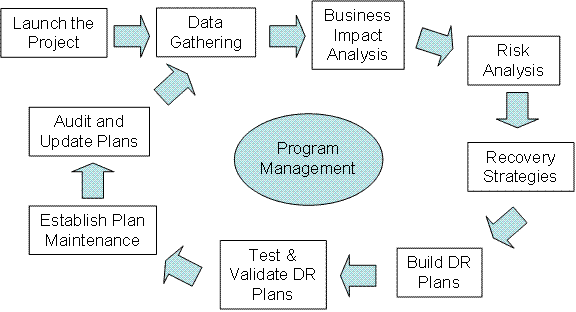
Many people who are just starting to hear of an IT disaster recovery plan or backup procedures for disaster recovery think all the terms involved are more or less referring to the same thing. In order to help your understanding of these terms and the difference between them better, first we should define them. According to its official definition, a Business Continuity Plan is the wider aspect of this type of insuring process, containing all the backup plans for the management and restoration of the types of activity necessary for the functioning of a business or organization, from manufacturing to quality control and so on. These components may include a Business Resumption Plan, an Incident Management Plan and so on; in short, everything which the organization may need for its post-disaster reconstruction and the resuming of its activity.

For example, a hospital will of course rely on computer systems for managing their patient database and documentation, but they will also need to manage the disruptive event, get supplies delivered to vulnerable patients in due time, restore the entire area’s security and so on. All institutions and organizations dealing with human lives (basically any company whose employees work in an office) will have first and foremost the concern and responsibility of dealing with their living assets (the human resources) and only then handle the IT system and activate its disaster contingency management plan, the network recovery protocol and so on.

This means that out of all the aspects of a BCP, the IT Disaster Recovery Plan is only a small part of the entire planning involved, and refers strictly to the recovery of technology, as opposed to the whole of BCP who deals with the recovery of business operations. Some online resources propose a debate regarding the use of a BCP vs. the use of an IT disaster recovery plan, but it is an issue falsely put, since the latter is just a smaller part of the first.

IT Disaster Recovery Plan

2. Developing an IT Disaster Recovery Plan Template for Your (Small) Business

According to official data provided by FEMA and by the Disaster Recovery Institute, the businesses and organizations which have developed a proper IT Disaster Recovery Plan have survived unfortunate events much easier than the ones who postponed it. These disasters which can strike may not even be news-worthy, but prove to be quite fatal to your business, and therefore they prove to fully merit the name of disasters. A natural disruptive event like a small flood or a power strike at precisely the wrong moment can have fatal consequences for your server or servers, for your highly specialized software, or even for your physical technology infrastructure.

Since all businesses and organizations are unique, you need to come up with your own personal plan of insuring your company against the occurrence of disruptive events. A personalized IT Disaster Recovery Plan can be better developed with the help of professionals who offer the recovery service itself, but you can also take a look at various free samples found online in order to get a better idea of how most templates for an IT DRP look like. As far as a good DRP sample goes, we like this template best, but you can find similar examples online, in various formats (Word document or PDF). Don’t worry, all the steps are explained as if for dummies, so going through them will be quite simple.

3. Getting Help from a Disaster Recovery Company

After you get a better idea of what an IT disaster recovery plan is supposed to be, it’s time to start creating it. Your end purpose should be to write a main doc which will then be integrated as part of the company’s policy, and applied to every step of your company’s backup actions. It’s easier to save up on data if you make frequent saves and so on; the same principle applies here, only for the much wider scale and purpose of macro IT disaster recovery. After you finish writing this document which, for the most part, will highlight your company’s priorities and things which are most crucial to protect, you will then show it to the service firm that will handle your disaster recovery and backup.

IT Disaster Recovery Plan

Usually, such companies provide more than just server backup on their info center and the protection this ensues, but they will explain more in the walkthrough you will schedule. The main vulnerabilities of your IT system and technological operations will be identified, and you will create together a checklist of simple steps for your IT disaster recovery plan. Then, you will probably also proceed with the application of a test that will identify how your system will react in case of a threat, so you can protect it further.

Some suggestions of services you can start looking into are these:

  • VMWare disaster recovery;
  • Oracle’s IT disaster recovery plan;
  • Dilbert disaster recovery;
  • HIPAA;
  • ITIL;
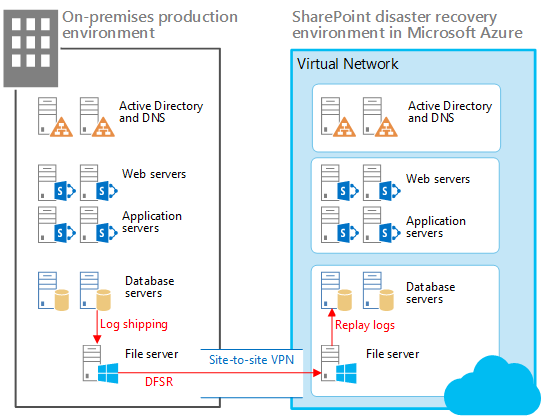
  • SharePoint Disaster Recovery (developed by Microsoft);
  • NIST;
  • SQL disaster recovery.

Last, but not least, don’t forget to check out the Department of Homeland Security’s own guide on creating an IT disaster recovery plan.

Image sources: 1, 2, 3.

How to Organize a Community Emergency Response Team for Disasters

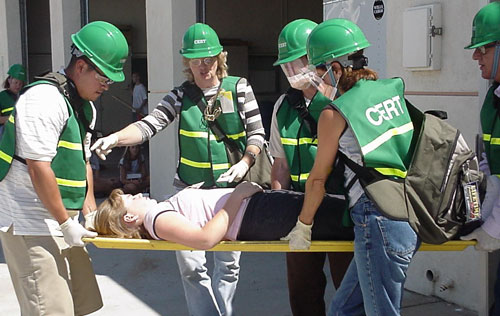
In this post we will detail the basics of how an emergency response team (ERT) functions, the components of such a team and how you can organize one in your community as a prevention and preparedness technique. In case of emergencies of any kind, putting together a response team as fast as possible is crucial to the community’s ability of moving past the crisis. There are, on one hand, professional disaster management services which specialize in providing urgent intervention and relief to the affected communities. Such services are usually summoned in case of large scale accidents, earthquakes, tornados, floods and other natural disasters, or in case of artificial or man-made disasters such as bombings, attacks and other disruptive events.

Emergency Response Team

On the other hand, there are the less official intervention agents coming from one of the multiple non-governmental organizations specializing in humanitarian relief actions, charity work and so on. Disaster management and emergency management are one of the most important areas of work for such NGOs, and therefore many of these organizations have an emergency response team on standby and ready to be sent on the field. The active focus of each may differ according to the organization’s main field of activity, of course, and many times the services of several emergency response teams are necessary for a crisis to be successfully handled.

For example, there can be an emergency response team responsible with psychiatric intervention, or a correctional emergency response team (in league with the police or local sheriff department) when the threat currently handled is coming from a human attack, or a team comprised of computer security experts when dealing with a cyber-attack or cyber-threat, etc. Most emergency response teams must involve (at least partially) members which work within official state infrastructure services (police staff, hospital staff, a corrections officer). In case of a major national threat, the dispatched emergency response team even involves some members of the secret service, in coordination with the civilian teams.

To keep a long story short, the exact duties and responsibilities (and, hence, the exact componence) of an emergency response team depends on the type of threat or disaster being handled. The only thing which remains the same is the unwritten rule that no matter what the threat handled is, the official intervention teams stand a much better chance of averting further threat if they benefit from the help and involvement of local citizens. Therefore, one of the best things you can do for the safety and well-being of your town or neighbourhood is to be ready of putting together a local citizen emergency response team.

Emergency Response Team

How a Community Emergency Response Team (CERT) Should Look Like

First of all, check with your local office for emergency response and see what forms of emergency response are already put in place and how you can get involved. As far as we know, local emergency management, even of coordinated by official infrastructure services (police and hospital staff and so on), could always use more volunteers. You can inquire about what roles are currently most needed and see if you already have the required skills, or, if not, if you can obtain those skills through a training session. Most local authorities organize such seminars and workshops for training citizens to fulfil a particular role in order to be able to assist within an emergency response team. If you check out the available seminars, you may end up with an extra skill set or two in the end.

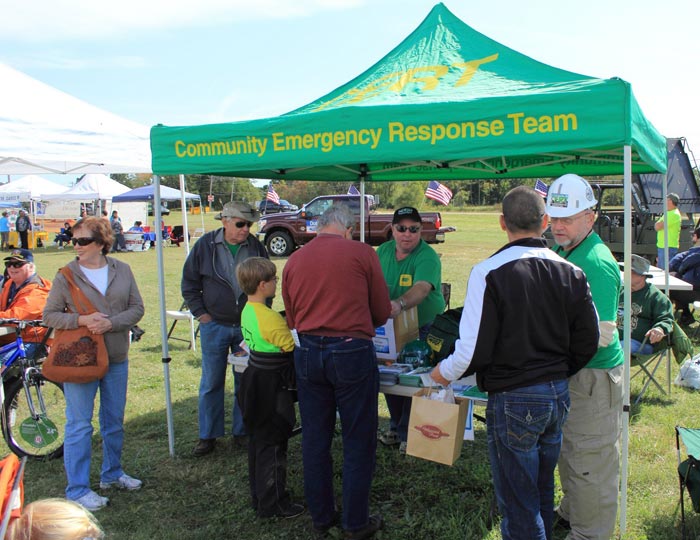
But in order to organize your own emergency response team for your local area (a suburban neighborhood, or for your campus, etc.), you need to consider these particular steps. Such a team, comprised from citizens who usually hold unrelated jobs and take on their emergency roles only when the need arises, is usually called an incident response team. Here are the requirements (laid out as steps) for it:

  • Write down the layout of a basic emergency response team. You will need your team to contain the following: at least 3 certified medical volunteers (able to perform emergency help until the actual medical teams arrive), 1 or 2 organizing members (the unified command system), 1 person specialized in recruiting (for enlisting more ad hoc volunteers), and 1 person in charge of the supplies and their distribution.
  • After you put together a chart with these required roles and make sure there are people to fill them out, you can start thinking further. You will need some emergency supplies (blankets, non-perishable food enough to feed a few dozen people, 10-20 first aid kits etc.) and a main storage space, which will also serve as your organizing center.
  • If you have new volunteers joining your emergency response team in addition to the basic members (outlined above), you should ask them to obtain a certification in an extra area of intervention (volunteer firefighting, nursing, management of hazardous substances, hostage situation management and so on). The more different roles are fulfilled by your team, the better prepared you will be to tackle on whatever may come your way.
  • Last, but not least, you should also create a protocol for each major type of emergency situation, so that your team members know exactly what to do and how to proceed with their tasks, even when central organization may not be available (due to phone lines being off and so on).

Emergency Response Team

Emergency Response Team Training and Jobs

Since we mentioned above the necessity for your team to obtain certifications in various intervention areas, let’s take a brief look at what these main intervention areas are and how you can obtain some further training (and maybe even a job in the field).

First of all, you need to know that while you may find a company which offers emergency management training, the best such trainings are still offered by state infrastructure services. In order to make sure a certain certificate is indeed officially recognized by national or local authorities, you need to make sure the workshop or course offered bears the official logo of a state service. Of course, one of the best sources of training for members of a CERT (community emergency response team) is the government’s own special programs. You can find more about each branch of governmental training for CERTs by visiting their main portal here.

Second of all, don’t forget that once you become certified in the field and gain some experience in organizing a community emergency response team, you can start considering an actual job in emergency management. There’s no reason why you shouldn’t get paid for your expertise, especially if your activity becomes a full-time involvement. You can look up opportunities for an emergency response team coordinator here, or for more general members of such a team here. Of course, these are just starting points: there are plenty of other portals which host employment opportunities for emergency response team specialists. To look for more, simply browse regular job engines, in a similar way as you would start your searches if this was any other job. Local teams who are just starting their activity could benefit from your experience, so maybe the greater good would be to spread your knowledge.

Image sources: 1, 2, 3.

Emergency Management and How It Works

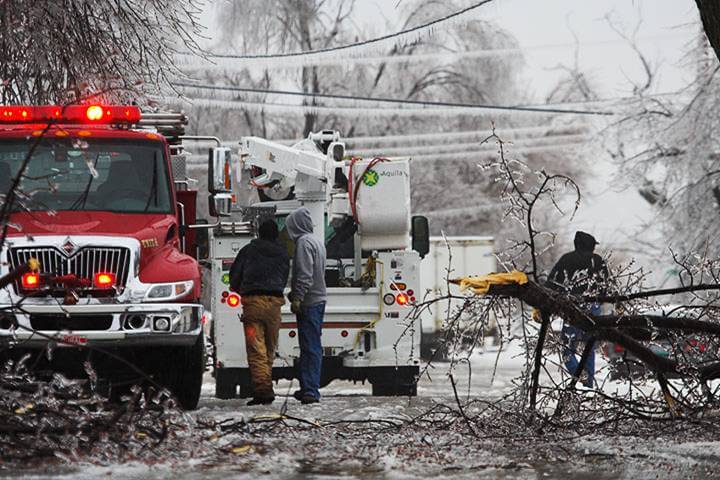
To understand emergency management, you need to be aware that a disaster can take place at any given moment, no matter where you live on the globe. Just think about it; a misplaced match can lead to a terrible house fire or an earthquake can leave your community devastated. Even though we can’t avoid them at all times, emergencies can and should be prepared for. This is where emergency management kicks in. You’ll find an emergency management department, county authority or some sort of division in most states, all for a very good reason. Without proper planning, an emergency can result in irreparable damage, with no possible forms of recovery. What you can do to avoid this is learn about emergency management and how it works.

Emergency Management

Our guide will walk you through everything you need to know about being prepared for any emergency. You’ll understand why your emergency management plan is crucial, what institute you need to contact for help and even how you can undergo training, programs and online courses to become an emergency manager or get a masters degree in this field. Without further ado, learn what the deal with emergency management is and start rethinking your safety priorities.

Emergency Preparedness

When speaking of emergency management, we have to include emergency preparedness in the equation. It focuses specifically on getting ready for disaster and, frankly, being prepared for the worst. The Homeland Security Federal Emergency Management Agency (FEMA) and the National Incident Management System (NIMS) define the idea of preparedness as a permanent cycle to ensure a fast and safe response in cases of emergencies, with the following key points:

  • Plan
  • Organize
  • Train
  • Equip
  • Exercise
  • Evaluate
  • Action

To put it simply, you have to be ready at all times, from all points of view, for a tragic emergency that might take place. When planning for an emergency, you must consider the fact that disasters can be manmade or natural. In the former situation, prevention measures tend to guarantee safety more than the latter, where man is not in control. For example, you can avoid the disastrous results of an accidental fire by having an extinguisher and an evacuation plan all set up beforehand.

Emergency Management Cycle

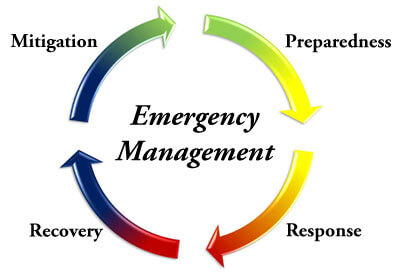
The description of emergency management also goes hand in hand with a specific cycle. Known as the ‘phases’ of emergency management, these four stages can narrow down damages to a minimum. Even more importantly, they can effectively save lives.

Emergency Management

Phase 1 – Mitigation

The first step in emergency management is mitigation. To put it in a nutshell, mitigation involves the identification of risks and doing what you can to minimize them from the beginning. This could mean building dams to avoid floods, rebuilding certain structures that are made of weak materials or identifying all the weak points in a building.

Phase 2 – Preparedness

The second phase focuses upon getting prepared for a disaster. What makes it different from mitigation is that it stresses on getting ready for the third phase, response. This phase involves outlining a plan, getting supplies together and running through drills to see if preparedness is adequate.

Phase 3 – Response

Response, the third phase of emergency management, refers to the instant actions that need to be performed when an emergency takes place. The response should unfold according to the preparedness plan, with evacuation and essential operations.

Phase 4 – Recovery

The final phase of emergency management is recovering from the disaster or emergency that took place. It usually involves reconstruction and caring for those affected by the incident. This is the phase where state authorities, international organizations and other certified sources can play a vital role in speeding up recovery.

Emergency Management Director

In addition to learning the basics about emergency management, you can also look into job opportunities or forms of certification in the field. There are various degrees or new certificate programs that can help you reach this goal and become an emergency management director or specialist. The salary for a professional in this area can range anywhere from $33,370 to $116,900, as the BLS informs us.

If you decide to pursue a career in emergency management, you’ll most likely be working for local or state governments, hospitals, universities / schools or in the electric power generation, transmission and distribution industry. The states with the highest employment level are Texas, California, New York (NYC), Virginia and New Jersey (NJ). Even though states like Colorado, Florina, North Carolina, Washington or Indiana don’t have such a high level, you can still find emergency management jobs in these areas.

Emergency Management Organization, Office and Association Examples

Thankfully, there are an abundance of organizations that can help out with emergency management in times of need. These organizations can be national or international and are willing to provide disaster victims with supplies, support and shelter.

Emergency Management

One of the most significant organizations for emergency management is FEMA, but also NIMS. All Red Cross branches can be consulted in times of emergency, as well the United Nations for large scales. A few other organizations are the International Association for Disaster Preparedness and Response (DERA), the Center for Excellence in Disaster Management and Humanitarian Assistance (COE) or the Citizen Corps.

It is best to search for emergency management organizations in the city or state that you live in for immediate help.

How to Prepare for Emergencies at Home or Work

Now that we know the fundamental aspects of emergency management, it’s time to conclude with a few ways in which you can prepare from emergencies at home or at the office.

  • Kits & Supplies – make sure you have plenty of nonperishable food and water stored, as well as basic supplies like batteries and flashlights.
  • Plan – create a plan that is clear and easy to follow. Make sure that you take all aspects of any emergency into consideration. As an alternative, you can create several plans with specific instructions for different emergencies.
  • Training – go through the plan several times to see if any aspects need to be upgraded.

Stay safe and always prepare.

Image sources: 1, 2, 3.

  • « Previous Page
  • 1
  • 2
  • 3
  • 4
  • 5
  • 6
  • Next Page »

5 Safety Tips You Need To Know If You Live Near A Nuclear Power Plant

image source: pixabay.com When purchasing a home, there a lot of things to consider. What area of the United States do you want to live? Do you want to be in the country or in the city? Are you going to rent or own, and will it be an apartment or a house? If you […]

Tornado Warning VS Tornado Watch: What You Need To Know

When it comes to severe weather, nothing is as devastating as a tornado when you consider the inch to inch devastation. Tornados often possess stronger winds than hurricanes, and due to the cyclone shape of a tornado, it increases the damage potential. Tornados are also especially dangerous if you are in its path. A single […]

Long Term Water Storage: The Ultimate Guide

While you hope that a calamity like a water shortage or other emergency will never befall in your lifetime, it is always important to be prepared for the worst while hoping for the best. One of the most important aspects of emergency preparedness is ensuring you have a sufficient stockpile of water to get you […]

10 Best Filter Water Bottle Brands To Use During Emergencies

If there is one thing that all hikers and outdoor enthusiasts have in common, it’s that they all agree you should never blindly drink out of a natural water source. That’s because the unfiltered water, although fresh and natural, contains harmful bacteria and waterborne parasites that would likely go undetected by taste alone. With a […]

14 Deadliest Natural Disasters of All Time

What are the deadliest natural disasters of all time by death toll? Which type of deadliest natural disasters has the greatest death count? More importantly, what are some ways the population was affected by those disasters? Were there things that people did to worsen or better the effects of mother nature angrily smashing her surroundings? […]

4 Frostbite Symptoms And How To Treat Them

With the onset of winter comes the risk of getting frostbite. With all of the outdoor recreation that’s available to us in the winter, it is important to learn how to protect ourselves. Knowing the signs of frostbite in the early stages can help you to avoid permanent damage to your skin and underlying tissues. […]

Fire Escape Plan for Your Family: Our Complete Guide

No one ever thinks a tragedy will happen to them. We see events on the news all the time such as accidents, home invasions, and house fires. We rarely plan for these things because we never think that we will be in such a situation. If you do one thing this coming year, whether you have […]

10 Tips for Living Through Power Outages

Most of us don’t think of power outages until we’re searching for flashlights or candles in the dark. Some think the light on their cellphone will be good enough to make it through power outages. That might work if power outages happen only when your phone is already fully charged. But, what about being prepared […]

How To Tell If A Snake Is Poisonous: Your Ultimate Guide

image source: Pixabay Have you ever been startled by a snake in your yard? Snakes are among the most misunderstood and feared animals on the planet, mainly because of the poisonous and potentially deadly bite a snake can inflict on its target. The truth, however, is that most snakes in the United States are non-venomous and […]

Copyright © 2026 ·Outreach Pro · Genesis Framework by StudioPress · WordPress · Log in