Disaster Rally

  • Natural Disasters
    • Earthquakes
    • Hurricanes
    • Tornadoes
    • Fires
    • Floods
    • Tsunamis
    • Other
  • Man-Made Disasters
    • Nuclear
    • Pollution
    • War
    • Other
  • Prepare
    • Plan
    • Supplies
  • Disaster Resources
    • Agencies
    • Aid
    • Medical
    • Rescue
    • How To Help
    • People in need
  • Contact
  • About Us: Disasterrally

Top 5 Risk Mitigation Strategies to Reduce Threats

There are multiple possible threats to civilization including natural disasters and human-made calamities. One of the most likely threats is a complete economic meltdown. A total US economic collapse can be brought on by a wide range of factors including:

  • Hyperinflation brought on by a rapid and unprecedented decrease of the dollar value.
  • A major terrorist attack that completely destroys infrastructure and impedes the free movement of people and goods.
  • A large scale civil war that renders the government useless in exercising its mandate and carrying out its responsibilities.

It is worth noting that there isn’t a widely accepted definition of what constitutes a complete economic collapse. There have been rare notable instances where the US economy has come close to complete annihilation, including:

  • The Great Crash of 1929 which was a result of a natural disaster (devastating storms) in the Great Lakes Region.
  • The OPEC Embargo of 1973 which increased the price of crude oil by more than four-fold.
  • The Great Recession of 2008 commonly attributed to the collapse of the housing market.

This article will explore the possibility of a complete US economy collapse and offer some practical tips on how to cushion yourself and survive in such an event.

man trying to avoid collapse

5 Risk Mitigation Strategies for a Total Economic Collapse

First, it is very unlikely that the US economy could completely collapse to the point where it is irreparable. Part of the reasons for this point of view includes:

  • The Federal Reserve has measures in place to prevent or mitigate the collapse of the dollar value. The Contractionary Monetary Policy contains these implements for prevention.
  • The US military can quell a large scale civil war. An all out enemy land invasion is out of the question for the same reason.
  • Homeland Security is well equipped to deal with a large-scale terrorist attack. Such an attack is also very unlikely especially considering post 9/11 security measures. Furthermore, the first role Missile Defense Agency is to prevent a nuclear missile attack.

It is for these reasons that the worst plausible scenario would be another recession or economic crisis. The following risk mitigation strategies should help you to survive such an eventuality. These strategies also work in a complete economic collapse scenario.

1. Prepare for a Stock Market Crash

A stock market crash is tough to predict. A crash is, however, a likely scenario, and you can prepare yourself for by diversifying your investment portfolio. Keep commodities, bonds, and stocks.

The instinct for most people in the event of an uncertain economy or impending crash is to sell stock as quickly as possible. In this case; sell some of your bonds and commodities and use the proceeds to buy stock which is now at rock bottom prices. The economy will eventually recover, and your stocks will see returns many times over. An economic downturn can prove to be lucrative if you remain calm and clearheaded.

2. Keep a Significant Number of Liquid Assets

Liquid assets simply mean assets that can be converted into hard, cold cash in a short time, usually in less than a week. Holding these assets is among the best risk mitigation strategies that you could employ because it means having cash to buy essentials or bribe if necessary.

Among the best liquid assets include cash stored in a safe and discreet location (preferably in small bills), money market accounts, and savings accounts. Gold bars are cumbersome to transport and may not be of much value in case of a market crash or economic failure. Gold coins are far more useful as they are easy to carry around and easy to trade.

3. Learn Basic Survival Skills

Learning basic survival skills is a two-fold process. Firstly, it is important to acquire skills considered as valuable in a traditional or cashless economy. These include repair, cooking, and farming. The idea is that you can trade your skills for basic needs such as food, shelter, and clothing. These practical skills will be in high demand in an economic collapse. Cash may be useless, but useful skills are great risk mitigation strategies as they can always be exchanged for something.

Secondly, learn basic survival skills. These should help you to survive in the unlikely event that the economy has collapsed beyond repair. In this case, survival will be the preserve of the fittest. Your continuing existence will depend on your level of physical fitness and to have basic survival skills including hunting, farming, foraging, and self-defense.

4. Keep a Stockpile of Food and Water

A worst case scenario means you only need two things; enough food and water until you can come up with a long-term solution. Reserve enough food and water to last you and your family for at least two weeks. The supplies should give you time to assess the situation and come up with a long-term survival strategy. Opt for canned and non-perishable foods that are high in nutrition value. Store clean water in plastic containers and ration accordingly.

Beware of looters because survival mode brings out the worst in human nature. Keep your stockpile in a secret location, preferably in a location other than your home. A complete economic collapse will likely follow a breakdown of law and order. Secrecy, self-defense skills, and weapons will be your best allies in this case.

5. Keep a Current Passport

Assuming that the United States is the only country facing a complete economic meltdown, your best chance of survival may be to leave the country. A US economic collapse will likely trigger the collapse of the global economy. Other countries may, however, have their risk mitigation strategies to protect themselves and may be willing to take in refugees. A current passport that is easily accessible may be your ticket to survival.

Summing Up

A complete US economic collapse is unlikely but not impossible. These risk mitigation strategies can be applied now to give you peace of mind should the worst happen. Above all else, avoid making rash or emotional decisions as these could seriously impact your chances of survival. Remain calm and maintain hope that the economy will eventually repair itself even in a worst case scenario. Your primary job is to survive long enough to see this happen.

 IMAGE SOURCE: 1
6 Disaster Preparedness Tips to Keep You Safe

The top disaster scenarios that kill people in the United Sates are floods, storms and earthquakes, wildfires and even epidemics. In disasters, most people killed – 63 percent – are due to storms. Most people affected by disaster at one time are those who are experiencing flooding. From natural disasters to terrorist attacks, there are things you can do to help keep you and your family safe. Here are six disaster preparedness tips to help you safely survive.

Disaster Preparedness Tips

road sign for disaster preparedness

1. Always Have Three Ways Out

No matter where you find yourself, you should keep three ways of escape in the back of your mind. Disasters of all types often come with little to no warning, and getting trapped is a major risk. Whether you are at home in your living room, at a meeting at work on the 30th floor of an office building, or at a concert to see your favorite band, you should always have three ways out. This is known as tertiary redundancy and is one of the most valuable disaster preparedness tips you can learn.

You have a primary, secondary and tertiary means of escape. Apply this idea indoors and out to prevent being trapped. If you find yourself in a situation with only one way out, your threat risk has elevated to unacceptable.

2. Fortifications

The reasons forts were popular during military engagements are because they provided protections and safety from the enemy. Fortifications provide protection during disasters. It is why fallout shelters were popular during the height of the cold war. It is why families have tornado shelters in Kansas.

Fortifications need to be designed according to your disaster risk profile. If you are in an area prone to earthquakes, you want to be in a building fortified to withstand a quake. If you are in a crime risk area, you want a safe room in your dwelling to be able to retreat to. In flood-prone areas, you need quick access to a shelter on higher ground, and a fortification that floats (a boat) would be beneficial. Overall, disaster preparedness tips often fail to mention how fortifications make you a hard target, which increases your chances of surviving disaster.

3. Skills Training

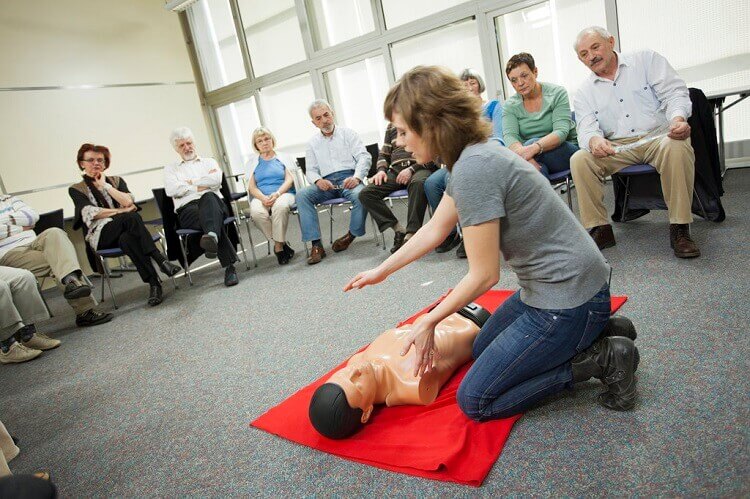
trainer showing the trainees how to do CPR. Medical training is one of the best disaster preparedness tips.

If you only remember one of these disaster preparedness tips, it should be this one. Skills training imparts to you knowledge that can be called upon in any disaster scenario or situation. A lot of skills training teaches you how to respond quickly and without having to waste valuable time considering what-if questions.

Probably the most valuable skills that can be used in every disaster situation are medical skills. Knowing how to maintain the ABCs (Airway, Breathing and Circulation) of life when doctors, hospitals and emergency services are overwhelmed or incapacitated can save your life as well as family members’ lives. Begin with Red Cross first aid and CPR training, and build your skill sets from there.

4. Redundant GO Bags

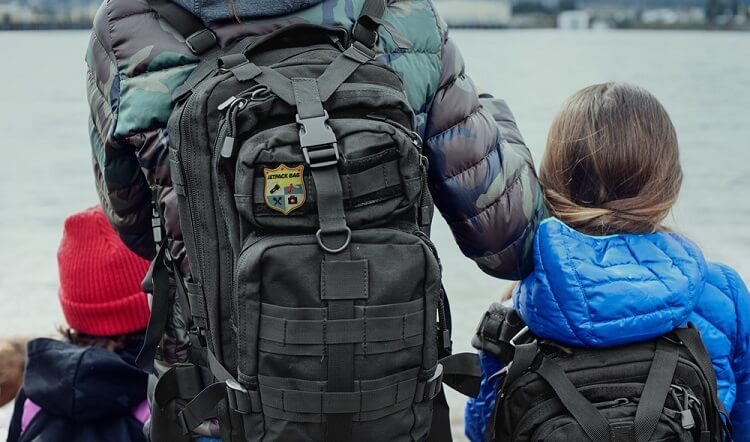
Whether you call them bug-out bags or GO bags, they are just a collection of necessary items in an easy-to-transport container kept in convenient locations. They contain basic survival items needed for your situation and location.

Your GO bag at work may contain, in addition to other items, sweats and pair of boots to be able to evacuate on foot without trying to do it in heels and a skirt. A GO bag in your car should contain clothing and footwear for the climate and terrain as well as a temperature-stable calorie source and potable water. Home GO bags should contain enough items to survive three days with minimal shelter and public grid sources. If you rely on medications, find a way to keep backups close by and safe. Do not forget to cycle them out for a fresh supply before expiration.

father and daughters prepared for a disaster

5. Carry a Light

On September 11, 2001 when the planes hit the World Trade Center and the Pentagon, how much value do you think could have been placed on a tiny flashlight to help survivors navigate through the blackness, debris and smoke? Tiny, yet powerful, LED flashlights are reliable, bright and run a long time on a set of batteries. This makes them them one of the easiest disaster preparedness tips to carry out. There are even military grade tactical models that are battle tested. However, instead of plunking down all your money on one fancy light you might forget at home, a bunch of cheaper ones located in all the places you may find yourself in makes more sense.

Keep them in your car, at your desk at work, in your backpack, briefcase or purse, and maybe stow one in your pocket. Penlights that are actual pens and lights are still available and extremely valuable in a disaster situation. Alternate safe lighting for sheltering in place at home is beneficial too.

6. Maintain Emergency Backups

Professional operators, whether they be international spies or just savvy moms who want to have all their ducks in a row, have backups of important things available in case primary sources fail. You should have backup copies of everything from your banking information to insurance policies and birth certificates available off site from where your primary originals are stored. Some cash and other supplies kept off site from your dwelling can help you too.

If you keep important papers in a safe at home, then you should have copies at a trusted location outside of your geographic disaster zone. For example, if you live in a wildfire area, you do not want your backups kept at your neighbor’s house that is equally as vulnerable to fire as your house is. If you rely on medications, health equipment or other such things, maintain backups off site as well. Do not rely on medical services being available during a time of disaster.

Summing Up

These are fundamental disaster preparedness tips that deal with planning and skills more than gadgets. Disaster gear can be compromised in a moment. Your stored up supply of food and water can be instantly wiped out in a disaster. In conclusion, being able to move quickly away from a disaster area with just the basics is most helpful in most disaster situations.

Share your own thoughts and experiences with disaster situations. What do you think will get you through a disaster? Do you think you should rely more on gear or skills? Share your best disaster preparedness tips to help others survive.

IMAGE SOURCE: 1, 2, 3

Zombie Survival Gear: 15 Life-Saving Items for Your Kit

Picture this. You’re happily relaxing at home one day when all of a sudden you see a pack of hungry zombies approaching from the street. You may laugh now, but when you’re the only one without a go-bag, about to be eaten alive with nothing to defend yourself from the not-so-playful horde, it won’t be so funny. While it’s true that none of this may actually happen, it’s better to be safe than sorry. Plus, this list of zombie survival gear can easily double as a kit for nearly any emergency — check it out!

15 Zombie Survival Gear Essentials

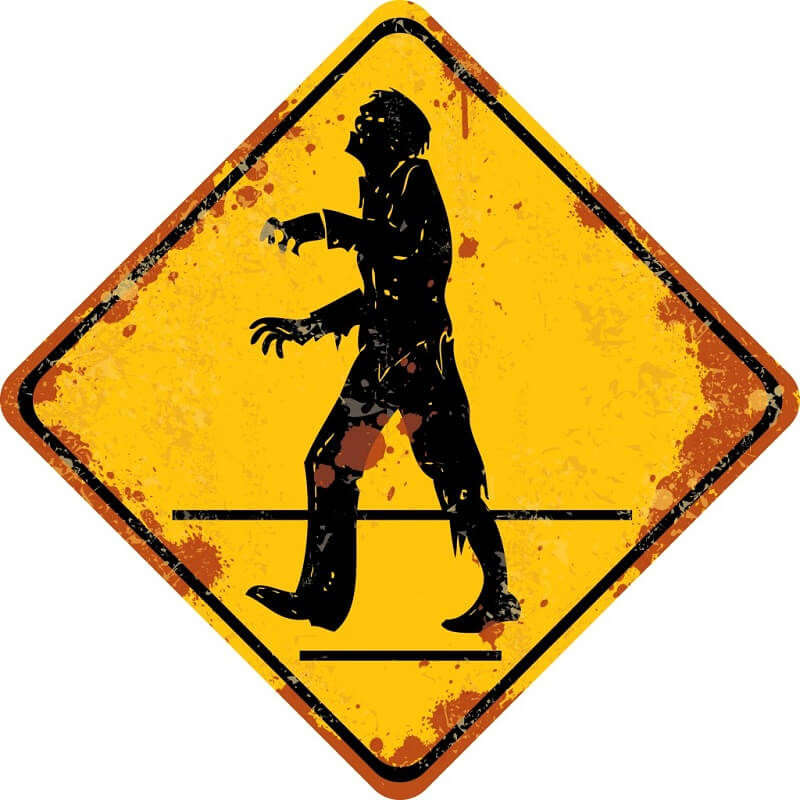
zombie road sign

Backpack

A backpack is essential for storing all of your zombie survival gear, especially while on the move. It must be sturdy enough to take a beating but comfortable enough to wear for extended periods of time. A military or hiking backpack will easily do the trick.

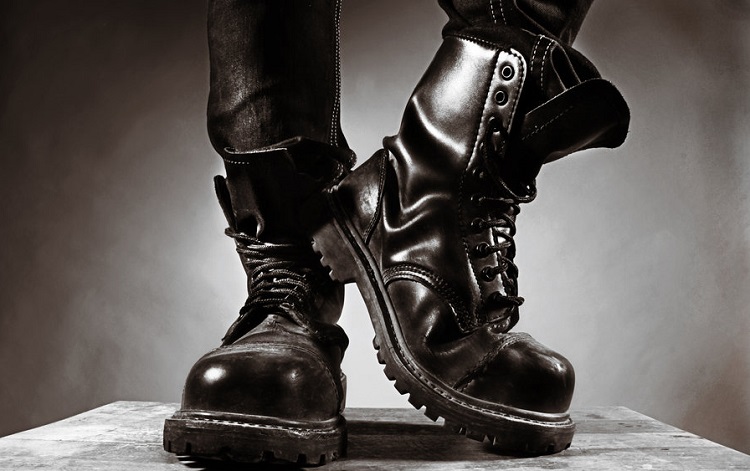
Steel Toe Boots

Don’t go anywhere without a quality pair of steel toe boots. Any hiking or combat boots could suffice but it’s ideal to get ones that are waterproof, puncture-resistant, and Electric Hazard rated. Be prepared to face the most treacherous of conditions.

First Aid Kit

Once the zombies have set up shop, you’ll likely find yourself fighting to stay alive in the strangest of ways. A first aid kit will be essential for any non-zombie wounds. Get a compact, lightweight kit packed with things like various bandages, gauze, splints, and antiseptic.

Ultra-Filtration Water Bottle

You can’t survive without water. But what to do when there’s no accessible fresh water, and you must survive on natural resources alone? This ultra-filtration water bottle is a literal lifesaver, capable of filtering out bacteria, parasites, cysts, and viruses from 750 ml in just under 60 seconds.

Emergency Rations and Survival Tabs

You might be on your own with no other means of sustenance for days, weeks, maybe months at a time — here’s where emergency rations, or any other food with an extended shelf life, comes in. Survival tabs are also an option and have a 25-year shelf life. The tabs provide essential vitamins and minerals that will help you do your best zombie fighting.

drawing of humans fighting zombies

Crossbow

Although guns are valuable in their own right, being that zombies are drawn to sound, a crossbow is the better option during an attack. Look for one that has a draw weight of around 175 pounds and a lighted scope with dual illumination (red/green) for varying conditions, guaranteeing that perfect shot.

Zombie Apocalypse Kit

Grab an apocalypse kit that provides various knives, machetes, ax, and more. Usually packaged in a type of compact carrying case, these tools transport nicely with all of your other zombie survival gear. This kit is perfect for killing zombies but will be useful in a variety of situations.

Multi-Tool

In any emergency, a multi-tool is essential. If you find yourself in need of wire cutters, pliers (needle nose and regular), a saw, a hammer, or some other tool, no worries. Plus, the cleaning rod and brush adapters are particularly useful for the inevitable assault rifle you will acquire during your apocalyptic trek.

Respirator

Pretty or not, your nose will thank you. A respirator is a great item to have on hand, especially for those wonderful times when you find yourself slicing your way through a hungry horde of zombies. It will also help combat against airborne viruses which could otherwise be deadly.

Emergency Fire Starter

Make sure to have a quality fire starter in your zombie survival gear arsenal, particularly one that is weatherproof, cold resistant, and windproof. The configuration linked above includes a compass, which will prove to be very useful during your travails through the wilderness.

Shovel

A good shovel is essential when you’re in the midst of the apocalypse. You’ll likely spend a decent amount of time burying corpses, so it’s best to invest in a quality steel shovel that won’t bend or break. Not to mention that it has multiple uses, doubling as an effective weapon and a hammer.

drawing of a girl fighting a group of zombies

Flashlight

No matter what, you’re going to need a flashlight. Your best bet is a tactical LED flashlight that has separate lighting modes (for example, high, low, and strobe) and a heavy duty, water-resistant design. Although not much in the way of fighting off zombies, its brightness will indeed stun them momentarily, giving you a head start in your race to safety.

Binoculars and Night Vision Goggles

Get a pair of quality binoculars so you can easily spot the zombies before they spot you. Make sure that the pair you choose is waterproof because you never know where you’ll find yourself on a stormy night — attempting to keep all of your body parts intact, perhaps? Night vision goggles ensure that you’ll have an eye on your target even in pitch darkness.

Crowbar

The need to bust through a door in order to escape an incoming horde is a good possibility, if not inevitable. So, rather than wasting ammunition or shattering any necessary bones, a quality crowbar is a must-have for your zombie survival gear, and can also serve as a weapon in a pinch.

Gorilla Tape

You could go the duct tape route but for extreme cases like a zombie outbreak, gorilla tape is the way to go. Gorilla tape is completely weatherproof, super strong and sticky, and easy to rip by hand – in other words, an absolute necessity for your zombie survival gear.

So, as you can see, this list consists of items that are readily available to the general public. If you’d like to go the less expensive route but still be prepared, it can be done; being crafty is key. Not only is your zombie go-bag easy to put together but it’s also a vital part of helping you to stay alive during the apocalypse. Let us know what kind of zombie survival gear you already have stashed away for when it’s time to hit the road and fill us in on any other precautions you have in place!

IMAGE SOURCE: 1, 2, 3

Urban Survival Gear – Top 10 Items to Add on Your List

Urban survival gear – that’s the sort of thing that most of us aren’t thinking about on a daily basis. As a matter of fact, the thought isn’t likely to cross our mind till we need it. Maybe it seems unrealistic that such a disaster will occur. Nonetheless, history is rife with examples of everyday activities such as taking a drive or hiking leading to sudden life-or-death survival situations. It happens more often than we think. Thus, it never hurts to prepare for it, and it may even save your life.

10 Urban Survival Gear Items You Should Own

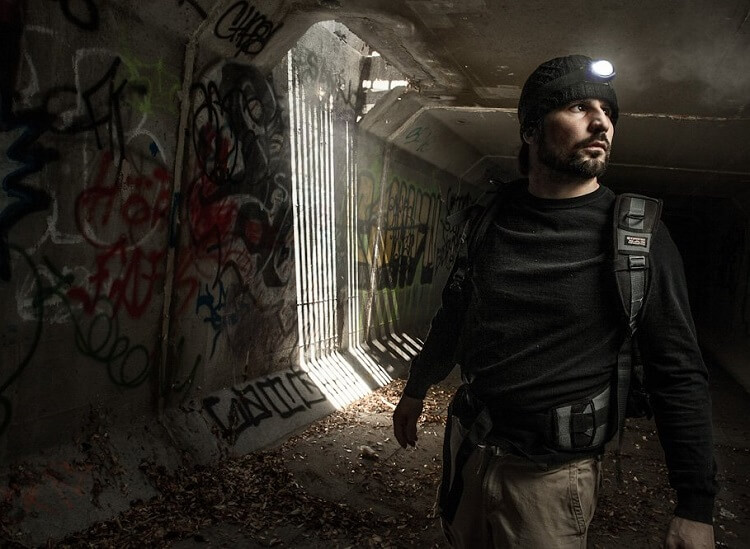
urban explorer exploring the underground

Foraging Guides

Did you know that your backyard is likely full of edible foods? Many of the things that we consider weeds are actually foods and medicines brought here from overseas. Since they didn’t have any natural predators so they took off like crazy. Mallow is a good example. This cousin of the marsh mallow plant can be seen growing invasively just about everywhere, and every part of the plant is not only edible but flat-out delicious.

Learning what plants are edible and not edible in your environment can be a lifesaver if you find yourself stranded without food. This free full-color foraging guide is a great add to your urban survival gear: Wild Food School It was produced for England, but almost all of the plants can be found in the U.S. and other parts of the world. The Forager’s Harvest goes into even greater detail. It provides not only tips for finding edible plants but preparation guidelines as well. Heck, you might even save a little on your grocery bill.

Salt or Salt Tablets

Once you are foraging for food, you’ll discover that you are probably not getting enough sodium in your diet. You may become light-headed from low blood pressure. You may also find yourself urinating too much and dehydrating. We need salt to survive. Other spices help too, but if you only have room for one, make it salt.

Antibiotics

Neosporin will come in handy if you get a cut or scrape (which is guaranteed), and systemic antibiotics will be lifesaving if you contract a deadly bug. The truth is that most people die from starvation and infection after a disaster, not from the disaster itself. So, in this case, the pound of cure will come in handy for your urban survival kit when the ounce of prevention didn’t work.

Boots

heavy duty black boots

Natural disasters are the most common cause for needing urban survival gear, and they almost always cause broken glass in an urban environment. Whether it’s an earthquake, hurricane or tornado, public enemy number one is the vagrant sharp object.

The only way to protect yourself from cuts and punctures as you move to a safe area is to wear sturdy shoes. If you find yourself in situations where you frequently have to wear less-than-practical shoes, keep a pair of boots with very strong soles on hand just in case. Keep a pair of heavy gloves on hand too for the same reason.

Ka-Bar

Ka-Bars are just about one of the most useful tools you can possess. They can be used to pry, hit, hammer or cut, and even as a self-defense tool. It will work as an ax for small branches for firewood as well. This extremely sturdy tool is used by members of the military as part of their urban survival gear, and only weighs about one and a half pounds, so it won’t take up too much room in your kit.

Pepper Spray

You may need this for dogs every bit as much as you need it for humans. Stray dogs tend to go feral and run in packs the longer they are left alone. While one stray dog may not be much of a threat, a pack of ten can be deadly.

Shut-Off Wrench

If you are in an urban disaster situation, it’s almost certain that broken gas lines are going to present a hazard. A shut-off wrench will take up very little weight in your kit considering it’s importance.

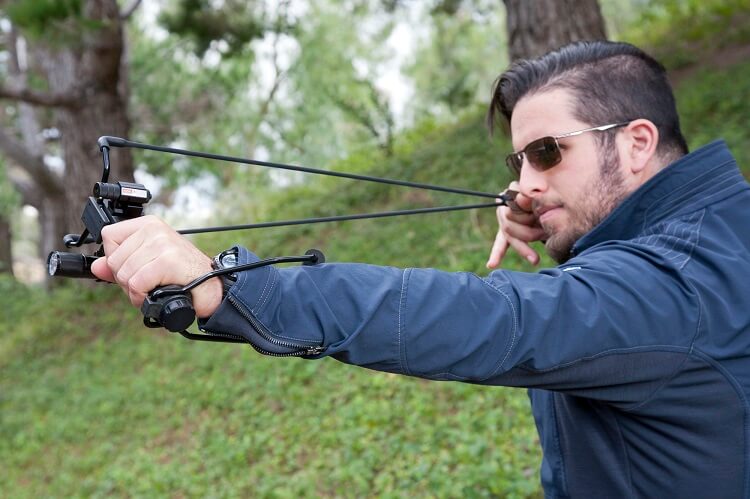
Slingshot

man using a slingshot, part of an urban survival gear

Eventually, everyone is going to run out of ammo. When that happens, a slingshot will ensure you can still find meat, as long as you are willing to learn how to use it to hunt. They are perfect for the type of small game you will find close to a city such as rabbits, squirrels, and birds. Also, unlike guns they are silent, so you will be able to hunt without fear of giving away your location.

A Multi-tool

The Ka-Bar comes in handy for big jobs, but sometimes you just have to have a tiny screwdriver to repair electronics or a nail file to keep a fingernail from getting ripped off and infected. Enter the SOG PowerAssist S66. This nifty piece of urban survival gear will just about replace an entire toolkit and is so handy you might find yourself using it every single day.

The Encyclopedia of Country Living

The author’s intention for this book was to show homesteaders how to care for their farms, with advice for everything from animal husbandry to canning to field medicine. Over the years, is has become so much more. This is because The Encyclopedia of Country Living doesn’t just explain how to take care of a farm – it’s literally Survival 101 for dummies. Carla Emery has a brilliant talent for explaining basic survival tips so clearly that it takes the fear out of doing things the old-fashioned way.

Let’s face it. Most of us aren’t just clueless about how to survive the way our great-great grandparents did, we are afraid of trying those skills because we think we might hurt ourselves. Take canning for instance. How many people do you know who refuse to eat home-canned food for fear of contracting salmonella or botulism? Yet, every year more than 48 million people get sick from food poisoning.

Most will agree that our food has become LESS healthy with industrialization, not more. Carla Emory shows us how to harvest and preserve our own food, make butter, build a cabin and so on. Some skills taught in the encyclopedia are useful right away in a disaster while others are useful for the long run. This is probably the most essential part of your urban survival gear next to the water filter we hope you already have.

Of course, there are other things that you might want to consider adding to your bug out bag. Do you have a tip to share? What is your favorite urban survival gear? Please tell us below.

IMAGE SOURCE: 1, 2, 3

Key Wilderness Survival Skills That Could Save Your Life

Have you ever watched television shows like “Naked and Afraid” or “Man vs. Wild” and wondered if it would be possible to survive if you were trapped in the wild? Well, it is possible if you know how. But if you are in an emergency situation you aren’t likely to have a guidebook to show you what to do. You need to know ahead of time how to take care of yourself and your loved ones if you are trapped in the wild. Here are just a few of the wilderness survival skills you should know.

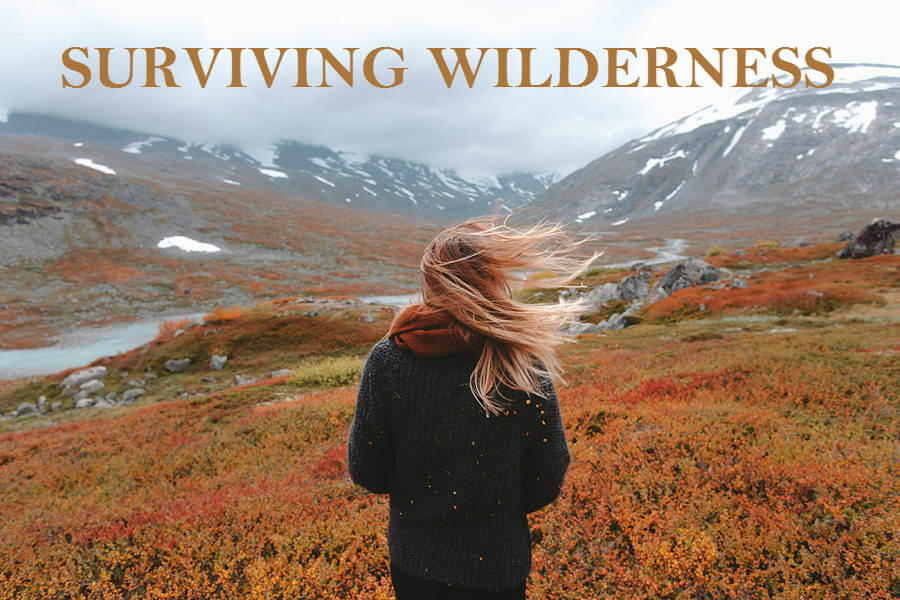
woman with her back at the cameraman looks at the landscape ahead

5 Wilderness Survival Skills You Need to Know

How to Find Clean Water

You have a maximum of three days to survive without water, so this is your first of your wilderness survival skills you need to learn. How you find your water will depend on where you are and what supplies you have.

Desert or Arid Region

  • If you have plastic bags or tarps: collect water by building a solar still. There are many optional pieces of equipment needed, but all you really need are a few rocks and a large amount of clear plastic.
  • If you have no tools: Look for wildlife. Wildlife congregates near pools of water. Swarms of mosquitoes, animal tracks and circling birds can all lead you to sources of open water.
  • Extract water from a cactus.

Forest, Jungle or Mountains

  • If you have plastic bags: collect dew and condensation by tying plastic bags around tree branches. This technique is called using transpiration bags.
  • If you have open containers or large tarps: collect rainwater.
  • If you have no tools: dig a seep. You can collect and drink water from streams but there is no way to know if it is safe. You can improve safety by filtering it a bit with a seep to remove some bacteria and pollutants.

Of course, the best tool you can carry in any survival situation is a water filter or purifying equipment that is rated to remove dangerous bacteria and chemicals. All of the wilderness survival skills in the world won’t matter if you are suffering from dehydration due to bacterial poisoning.

How to Find Safe Food

list of the most common wild edibles

Learning how to forage for food when you run out of supplies is among the most important wilderness survival skills. In most places –  even the desert – we are surrounded by edible plants and food sources. Just because we usually turn our noses up at them for not being the tastiest doesn’t mean they aren’t nutritious.

You can find nutrition in everything from mushrooms, wild greens, berries, nuts, fruit, fish, game, and even bugs. But you must be very careful when learning how to forage for food though because some things that look good and even taste good are quite poisonous. This is especially true for mushrooms, berries, and certain greens.

In addition, certain game needs to be carefully prepared to prevent contamination. Some game can harbor dangerous pathogens as well. Rabbits can carry tularemia for instance. There are many online resources that can help you learn more about how to forage for wild edibles.

How to Make a Fire

A fire can help you to purify water, cook food, help you stay warm, keep wild animals away and even signal that you need help. Learning how to build a fire no matter what is available is one of the must useful wilderness survival skills available. It can and will save your life and even make you comfortable in the worst situation.

There are many creative ways to start fires without using traditional tools. You can even do it using a bar of chocolate and the bottom of a soda can. Basically, you just polish the bottom of the can until it’s nice and shiny, point the concave surface toward the sun and hold dry tinder in the focal point. Voila! Nonetheless, there are plenty of other methods to try.

How to Stay Warm

This is literally one of the most vital wilderness survival skills. Hypothermia is a leading cause of death for those who are caught in the wild. Staying warm is staying alive, but sometimes it isn’t possible to make a fire even with the skills you learned above. So, it’s important to learn other ways to stay warm.

To start, don’t get cold in the first place! It is much harder to return your body temperature to normal if you let it fall. This means starting out with the right clothing. You should always have these things with you, either in your car or a backpack or stored where you can easily access them:

  • Warm, waterproof, well-fitting boots.
  • Long underwear.
  • A very warm, preferably long coat.
  • Warm, waterproof gloves.
  • Poncho.

Make sure all of these supplies are loose fitting. Loose fitting clothes help to trap air between layers, which will keep you warmer.

But what if you don’t have any of these supplies? Make a debris bed. This can help you to stay warm with nothing more than the clothes on your back even if you don’t have a shelter. If you are caught in the snow, building a snow cave can provide warmth. However, snow caves can save or kill. Using a structure like this is dangerous without the proper know-how, so you need to learn what is the safest way to use this survival tool.

man sitting on a debris bed

How to Find Your Way Home (or Anywhere You Need to Go)

Navigating the wilderness has become one of the lost wilderness survival skills. People no longer learn placement of the constellations during the seasons or how to use a compass because they have phones equipped with GPS.

If you can’t see the sun during the day or the stars at night, which is the simplest way to find north (or northish), there are other methods you can use. One of the niftiest is to make an improvised compass. Basically, you stroke a needle of ferrous metal against silk, or even your hair, in one direction only until it’s magnetized. Then, when hung (horizontally of course) from a piece of string or floated on water on a thin piece of wood to insulate it, it will align itself with the north and south poles. Then just use what little light is coming through the clouds and the time of day to judge which of the directions is north. You can now be sure you will not be wandering in circles and can navigate in a basic direction, if not precisely where you need to go.

Now you know what you need to learn, but gaining all of the wilderness survival skills you need is a work in progress. It’s best to know how to do these things before you need to do them because it’s too late to learn when you are in an emergency situation. Start with this guide, but continue learning as you go. This short article is just a beginning towards a journey to learn the ultimate skills in self-sufficiency and survival. Remember, knowledge is the most important survival skill of all.

IMAGE SOURCE: 1, 2, 3

  • « Previous Page
  • 1
  • …
  • 4
  • 5
  • 6
  • 7
  • 8
  • 9
  • Next Page »

5 Safety Tips You Need To Know If You Live Near A Nuclear Power Plant

image source: pixabay.com When purchasing a home, there a lot of things to consider. What area of the United States do you want to live? Do you want to be in the country or in the city? Are you going to rent or own, and will it be an apartment or a house? If you […]

Tornado Warning VS Tornado Watch: What You Need To Know

When it comes to severe weather, nothing is as devastating as a tornado when you consider the inch to inch devastation. Tornados often possess stronger winds than hurricanes, and due to the cyclone shape of a tornado, it increases the damage potential. Tornados are also especially dangerous if you are in its path. A single […]

Long Term Water Storage: The Ultimate Guide

While you hope that a calamity like a water shortage or other emergency will never befall in your lifetime, it is always important to be prepared for the worst while hoping for the best. One of the most important aspects of emergency preparedness is ensuring you have a sufficient stockpile of water to get you […]

10 Best Filter Water Bottle Brands To Use During Emergencies

If there is one thing that all hikers and outdoor enthusiasts have in common, it’s that they all agree you should never blindly drink out of a natural water source. That’s because the unfiltered water, although fresh and natural, contains harmful bacteria and waterborne parasites that would likely go undetected by taste alone. With a […]

14 Deadliest Natural Disasters of All Time

What are the deadliest natural disasters of all time by death toll? Which type of deadliest natural disasters has the greatest death count? More importantly, what are some ways the population was affected by those disasters? Were there things that people did to worsen or better the effects of mother nature angrily smashing her surroundings? […]

4 Frostbite Symptoms And How To Treat Them

With the onset of winter comes the risk of getting frostbite. With all of the outdoor recreation that’s available to us in the winter, it is important to learn how to protect ourselves. Knowing the signs of frostbite in the early stages can help you to avoid permanent damage to your skin and underlying tissues. […]

Fire Escape Plan for Your Family: Our Complete Guide

No one ever thinks a tragedy will happen to them. We see events on the news all the time such as accidents, home invasions, and house fires. We rarely plan for these things because we never think that we will be in such a situation. If you do one thing this coming year, whether you have […]

10 Tips for Living Through Power Outages

Most of us don’t think of power outages until we’re searching for flashlights or candles in the dark. Some think the light on their cellphone will be good enough to make it through power outages. That might work if power outages happen only when your phone is already fully charged. But, what about being prepared […]

How To Tell If A Snake Is Poisonous: Your Ultimate Guide

image source: Pixabay Have you ever been startled by a snake in your yard? Snakes are among the most misunderstood and feared animals on the planet, mainly because of the poisonous and potentially deadly bite a snake can inflict on its target. The truth, however, is that most snakes in the United States are non-venomous and […]

Copyright © 2026 ·Outreach Pro · Genesis Framework by StudioPress · WordPress · Log in