Disaster Rally

  • Natural Disasters
    • Earthquakes
    • Hurricanes
    • Tornadoes
    • Fires
    • Floods
    • Tsunamis
    • Other
  • Man-Made Disasters
    • Nuclear
    • Pollution
    • War
    • Other
  • Prepare
    • Plan
    • Supplies
  • Disaster Resources
    • Agencies
    • Aid
    • Medical
    • Rescue
    • How To Help
    • People in need
  • Contact
  • About Us: Disasterrally

Be Prepared: Have a Disaster Preparedness Checklist

You never know when disaster will strike. But you can be ready. A disaster preparedness checklist can help keep you organized so that when trouble strikes, you won’t have to think twice. You’ll know exactly what to do.

How to Assemble a Disaster Preparedness Checklist

Things are calm, now. You have time to think. Take this time to think about what you will need most in the event of an emergency. Make a list. Go over it with everyone in your household. Your disaster preparedness checklist needs to cover all the members of your household. That includes adults, children, and pets.

Disaster Preparedness Checklist Item #1: Stay or Go?

Your first decision — and the first item on your checklist — should be knowing whether you should escape your house or shelter in place. You should have plans for both contingencies.

Make this plan together. If your family members have a part in making the plan, they will remember it better. And practice regularly, so that if the time ever comes, your response will be automatic.

Escape Plan
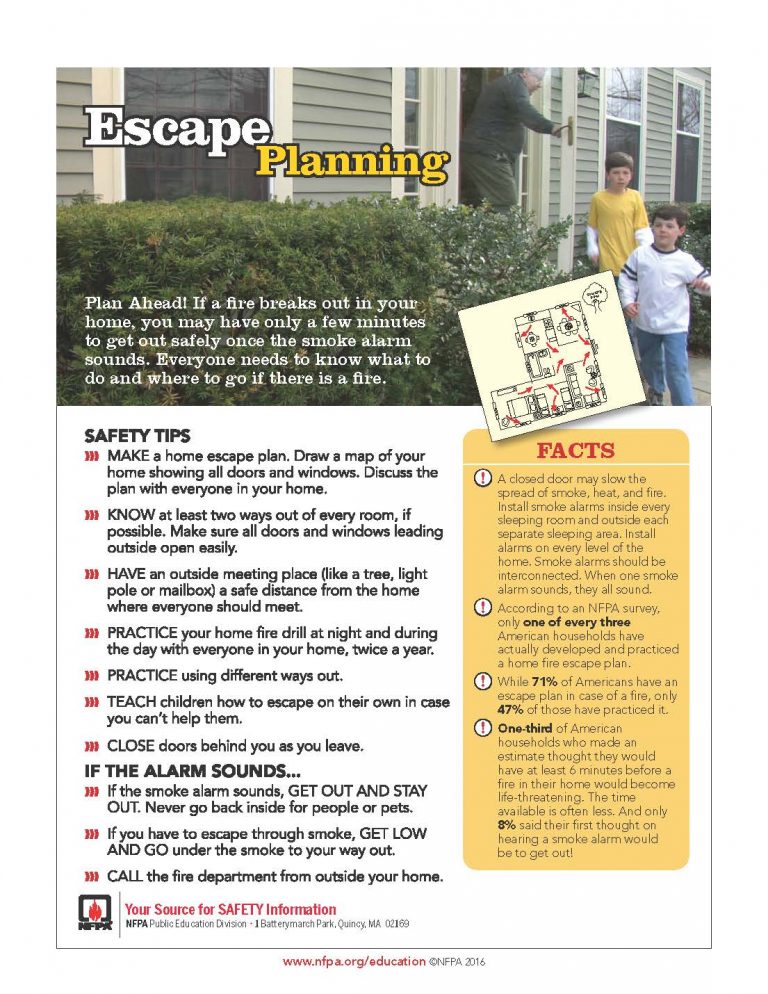
Add Escape Plan to your disaster preparedness checklist.
Image: CC0 Public Domain, by NFPA, via Joint Base San Antonio.

In the event of an earthquake, fire, or flood, you may have to flee your home. The members of your household will have a greater chance of doing this successfully if you have a plan.

First, know your exits. Know several different ways to get out of your house, including from the top floors and the basement, if possible. Next, agree on a meeting place outside the house. Make sure everyone knows where that is. Your family should also have a signal that tells everyone that it’s time to leave the house now.

If your plan includes relocating to a municipal shelter, know the nearby shelter locations, and have a plan for getting there. The Red Cross has an interactive map at its website to help you locate a shelter near you.

Make sure everyone knows the plan and practice it regularly.

Shelter Plan

In other situations, such as a tornado or civil unrest, your family will need to shelter in place. So you will need a place to shelter. Ideally, this place will be secure. It will have a heavy, locking door. It should also be physically sound and not likely to collapse. In addition, it should have adequate ventilation. It should also have a place for supplies, such as water and non-perishable food, in case you have to stay a while.
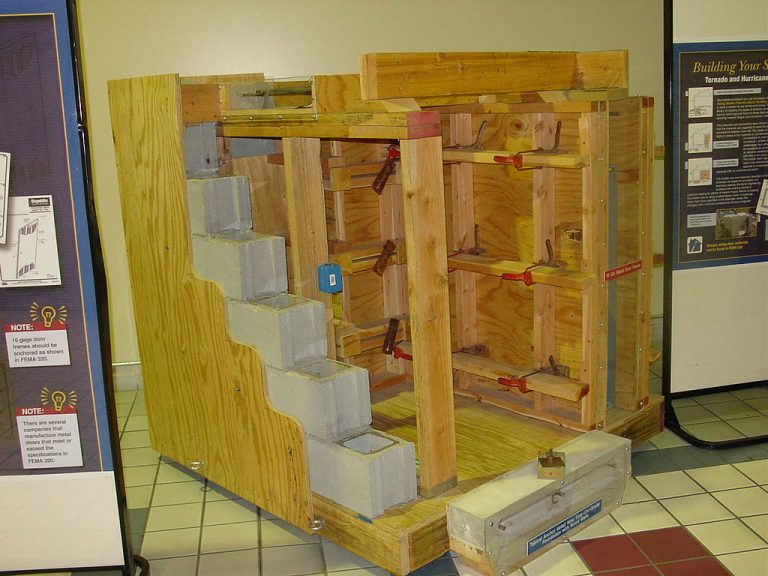
Store non-perishable food and non-prescription drugs in your shelter.
Image: CC0 Public Domain, by Kent Baxter for FEMA, via Wikimedia Commons.

Many houses in the midwestern United States have storm cellars. Additionally, some people build fortified panic rooms in their homes. If your house has a basement, you can convert it into a shelter as well. The FEMA website has information about safe rooms and shelters, including specifications, how to build one, and even how to apply for funding to help pay the building costs. When constructing your Disaster Preparedness Checklist, make sure you take any such structure into account.

Here are some different kinds of shelters you might consider, depending on where you live:

  • Tornado or Hurricane Shelter
  • Safe Room / Panic Room
  • Flood Shelter

Signals

Your family should have a series of signals that everyone will hear and understand immediately. A whistle or air horn works well. Make sure everyone has one in their personal disaster kit. Make sure all members of your household know the signals and can produce them. Some signals you might include are:

  • Get out of the house and to the meeting point
  • I am in danger
  • All clear

Disaster Preparedness Checklist Item #2: Vulnerable Family Members

Add sanitary supply and ways to help vulnerable family members in your Disaster Preparedness Checklist
Image: CC by A-SA 4.0 International, by Hawkeye7, via Wikimedia Commons

In the event of a disaster, some family members will be able to get themselves to safety unassisted. Others will need help. If one of your household members has a physical or mental limitation, how can you help them get to safety and who will do that? If there is an infant, who will take them? What about the dog or cat? You need to have a plan that covers the following questions:

  • Which family members will need help?
  • What are their specific needs?
  • Who will be responsible for making sure that each vulnerable family member is safe and accounted for?

Disaster Preparedness Checklist Item #3: Kits, Supplies, and Survival Tools
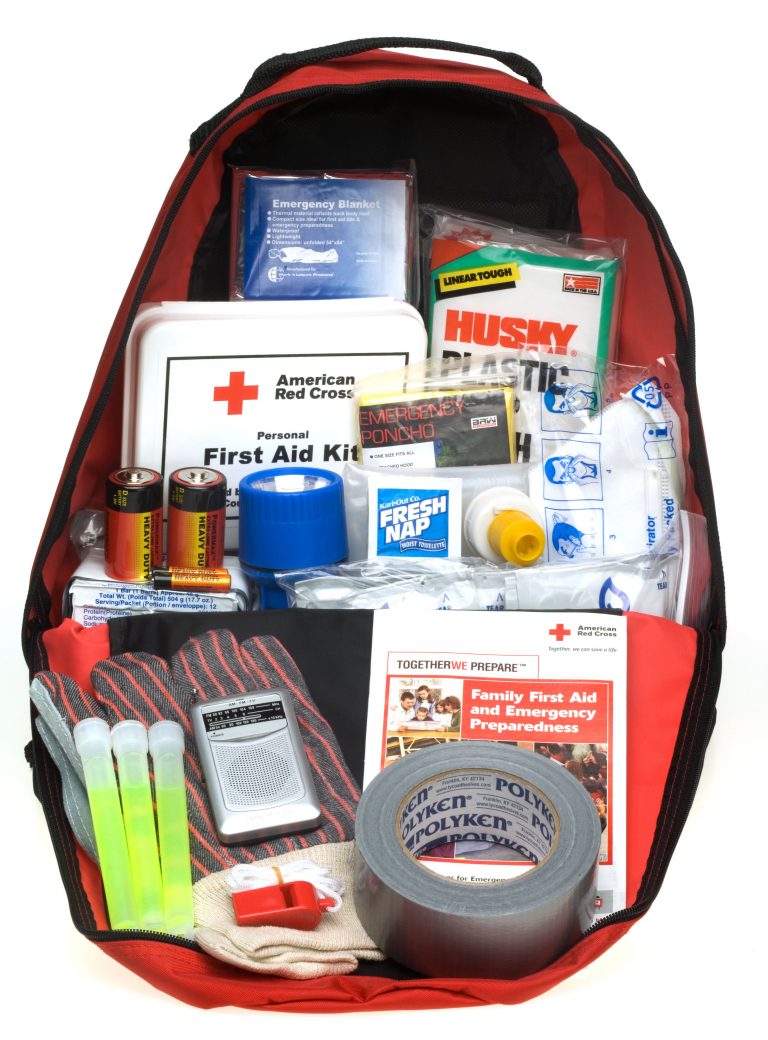
Image: CC0 Public Domain, by FEMA Photo Library, via Wikimedia Commons

Ideally, you will have more than one disaster preparedness kit. You will have one in your shelter area for the group, and every group member should have their own kit close to hand in case disaster strikes at night. These kits will contain some of the same things, and some things that are different. Check out the Red Cross website for more information about putting together a disaster preparedness kit.

Personal Disaster Preparedness Kit

People who grow up in earthquake-prone areas are familiar with the under-the-bed earthquake kit. A general personal disaster kit will contain the same sorts of things to help every family member to get themselves to safety in the event of a disaster. This kit should be kept under the bed, or somewhere else where you can get to it easily in the middle of the night. These kits should include:

  • Your signaling device: a whistle, air horn, etc.
  • A flashlight.
  • Your phone and a charger. You might consider a solar charger, in case the electricity fails.
  • Shoes and socks, in case you have to walk over broken glass.
  • Any medications you may need.
  • An extra pair of glasses or contact lenses if you wear them.
  • A spare hearing aid and batteries if you use one.
  • Sanitary supply items, like tampons, if you use them.
  • A bottle of water. Also consider a Lifestraw or other personal water purifier.
  • A small non-perishable food item, like an energy bar.
  • A small amount of cash.
  • A utility knife.
  • If you have an infant, an infant “go bag” is a good idea. It should contain diapers, wipes, formula, water, a blanket, and anything else your infant needs.

After making your disaster preparedness checklist, keep these things close at hand. In addition, keep them organized, in a bag or backpack that you can grab and go.

Family Disaster Preparedness Kit
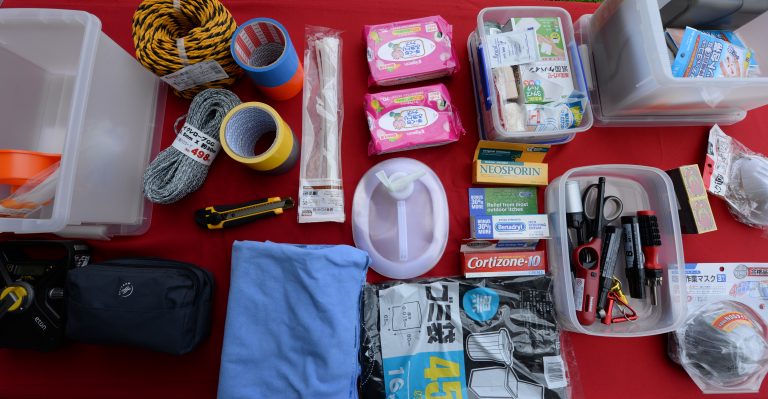
Make sure you have the right survival tools in your Disaster Preparedness Checklist
Image: CC0 Public Domain, by Senior Airman Omari Bernard, via Kadena Air Base, Japan.

In addition to a personal go bag, you should have a family disaster preparedness kit. Important documents, communications equipment, and medical supplies should be kept together in a centralized place. If disaster strikes, you don’t want to trust that your four-year-old can find his birth certificate, or that your eight-year-old knows where the walkie-talkies are.

Communications Equipment

A good family disaster preparedness checklist will lead to a kit that should include multiple means of communication. Everyone will, hopefully, have their personal phones. However, if cell phone service is out, walkie-talkies can help you to communicate with each other and with the outside world. A battery operated or crank powered radio can also help you to keep abreast of what’s happening.

Make a communications plan — not just with your household members, but also with people outside of your immediate area. Keep a list of important phone numbers and email addresses. In the event of a disaster, it’s important to stay in touch with the outside world.

Money and Documents
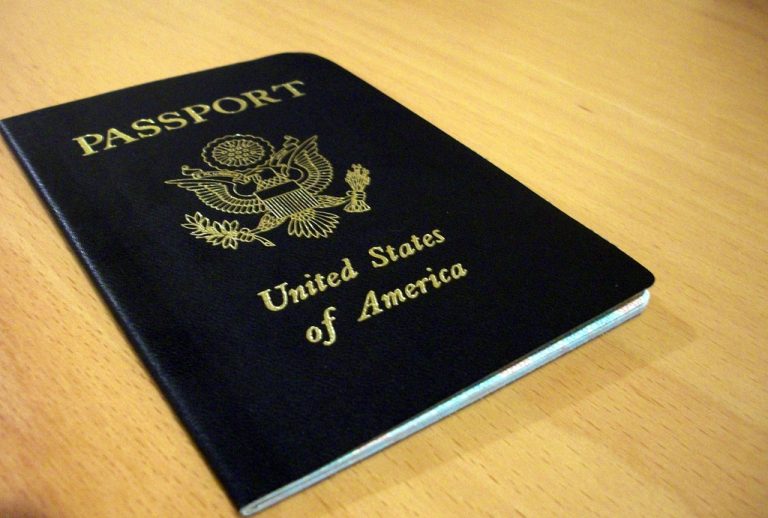
Your Disaster Preparedness Checklist should include important documents.
Image: Attribution 2.0 Generic (CC BY 2.0), by Damien Bariexca, via Flickr.

In the event of a disaster, it’s important to have cash on hand in small denominations. If the electricity fails, credit cards and ATMs will fail as well. Some sources recommend a minimum of $100 to $150 per person.

You should also have important documents secured safely and together. These may include passports, birth certificates, marriage, divorce papers, immigration documents, social security cards, bank account information, pet microchip numbers, and more. Consider making photocopies of important cards in your wallet: drivers license, credit cards, immigration cards, and so on.

Water and non-perishable food

Keep some non-perishable food items on hand. Items such as canned food and energy bars work well. Also, make sure that you have water. Many sources recommend one gallon of drinking water per person per day.
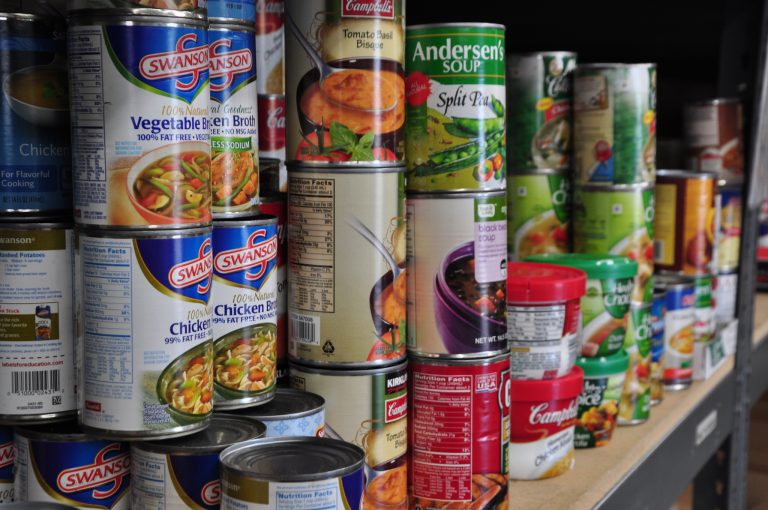
Stock up on non-perishable food in case of disaster.
Image: Attribution 2.0 Generic (CC BY 2.0), by Salvation Army USA West, via Flickr.

Non-prescription drugs

In addition to any prescribed medication, you should have a first aid kit. Your first aid kit should include non-prescription drugs like pain relievers (aspirin, ibuprofen, acetaminophen), antihistamine pills and creams, and antibiotic salves. In addition, a first aid kit should contain medical tape, gauze bandages, bandages, disposable gloves, scissors, tweezers, and other essential items.

Sanitary supply items

Sanitary supply items like tampons and sanitary pads are essential for people who use them. However, even if you don’t regularly use these products, you should have them in your disaster kit. Why? Because tampons and sanitary pads are valuable, multi-purpose survival tools. They are sterile and can be used as bandages, to stop a bloody nose, to start a fire, and even to filter (but not purify) water. You can read more about survival uses of sanitary supply items at The Art of Manliness.

Pet supplies

Pets are family members. Plan for their needs as well. Your family disaster preparedness kit should contain pet food, water, and any medications your pet may need.

Survival tools

Image is CC0, by StephenPB, via Pixabay..

Here are a few essential tools you should always have in your kit.

Gas turn-off lever. In the event of an earthquake or natural disaster, being able to turn off your home’s gas will prevent an explosion. (You might also consider installing an automatic gas shutoff valve if you live in an earthquake zone.)

Multi-tool. A good, well-made multi-tool that contains a knife, pliers, and other tools will serve you well.

Fire Starters. Sometimes you won’t have matches or a lighter. Time for some homemade fire starters. These are easy, cheap, and fun to put together. It can also be a fun, and educational family activity. Check out a few homemade fire starters here.

Keeping It All Together: Disaster Preparedness Checklist

To survive a disaster, you need a plan. That plan needs to cover all of the members of your household. Everyone needs to understand the plan, and everyone needs to practice. A checklist can help you stay organized. And staying organized can help you stay in control.

For more information about disaster preparedness, check out the U.S. government resources at Ready.gov.


Featured Image: CC BY 2.0, by Global X, via Flickr.

Financial Emergency Preparedness: Plan for Recovery Before the Disaster

When is the time to consider a financial emergency preparedness plan? When disaster strikes, your immediate concern is for the safety of your family. Money is the last thing on your mind if a wildfire or hurricane is heading your way. After the danger passes you will put the pieces of your life back together. That’s when a financial emergency preparedness plan becomes priceless.

Natural disasters often come with unexpected expenses, as it is hard to budget in a tornado next week. You’ll need to stock up on supplies at the very least, not to mention money to evacuate to safer ground. Then once you’re safe, you may need to replace necessities like clothing, hygiene items, and other personal belongings. Without a financial emergency preparedness plan in place, you could find yourself far from home, and without the cash you need to get back. Or even just to get by.

Once you get the all clear to return home, will you then be prepared to put your life, and home, back together? You’ll need ready access to your bank accounts and important papers. And don’t forget the phone call you’ll need to make to your insurance company; they’ll have a lot of questions you need to answer. After a traumatic experience, you’ll want the recovery process to be as smooth and comfortable as possible.

To answer the first question posed, the time to create that plan is now. You don’t want to end up like the family in this hilarious PSA from FEMA:

So, let’s take a look at what you’ll need in the case of a natural disaster or another emergency. By planning ahead, you’ll be able to ease back into normalcy so much faster. We’ll walk you through setting up your financial emergency preparedness plan, step by step, for that extra sense of security.

Critical Items for Your Financial Emergency Preparedness Plan

The first step in devising a preparedness plan is taking stock of the items you already have and organizing them for a quick bug-out. Find an easy to access place accessible to any member of the family in case you need to evacuate in a hurry.

Gather financial documents

Put together all your necessary personal financial information, such as your home or renter’s insurance, banking information, passports, and vehicle titles. Purchase a waterproof envelope or other container and keep these items stored where you can find them quickly as you need to head out the door.

Find identification papers

Although you can replace them, it’s inconvenient to lose documents like birth and marriage certificates. Keep these, and similar documents like social security cards, immunization records, and medical records with your financial information and take them with you. Should any disaster destroy your dwelling, this step can save you a lot of time and trouble in the aftermath.

For items that you usually carry, such as ID cards, driver’s licenses, and social security cards, make copies of these to store with your financial information and other records. Be sure you have copies of ID for all members of the household, including pets.

Passport and personal financial information should be in your emergency plan
Image: CC0, by cytis, via Pixabay

Cash and valuables

Put aside the amount of money that you’ll need for three to five days in case you need to evacuate. The amount will depend on how much cash you feel comfortable holding, the size of your family, and your needs. Keep this money in the waterproof container along with your papers. It’s sometimes hard to do this as a lump sum, so consider adding a $20 to your disaster “piggy bank” every pay period to build it up slowly.

You may also want to make sure you have a container for valuables to take during an evacuation. These include bearer bonds, family jewelry, or other small, irreplaceable items. Add a spare set of car keys for each of your vehicles, as well.

Cash roll for Financial Emergency Preparedness
Image: CC0, by pasja1000, via Pixabay

Evaluate Your Current Emergency Recovery Systems

The second step for a financial emergency preparedness during a disaster is evaluating the systems you already have in place. Sure, you have home insurance, but when was the last time you examined the policy to make sure it met your current needs?

Property insurance

Evaluate your homeowner’s or renter’s insurance before disaster strikes. If you don’t have one of these plans, speak to your broker to put one in place. Should a natural disaster hit your home, you’ll need coverage to restore it to livable conditions. Most mortgage companies require you to keep an active homeowner’s plan during the life of the loan but make sure that it’s up to date. If your home has appreciated considerably since purchasing the policy, you may need to upgrade.

If you already have a policy, check the terms to ensure that it covers any likely calamities. For example, although your mortgage lender doesn’t always require flood insurance, if your home floods without coverage, you’ll be left to pay the cost of repairs out of your own wallet.

What is natural disaster insurance?

Although standard homeowner’s insurance covers many natural disasters, such as wind from tornadoes or damage from forest fires, it doesn’t cover all incidents. For example, if a hurricane damages your house, it’s probably covered by your policy.

However, if the hurricane causes flooding from a storm surge, your policy probably won’t cover the damage. Natural disaster insurance is additional coverage in case of uncovered natural events. These plans provide flood coverage for properties on lakes, rivers, or oceans. They can also cover damage from earth movement, such as earthquakes or sinkholes. You can even purchase a policy for active volcano coverage. If you live in an area subject to these hazards, talk to your agent about natural disaster insurance in addition to your homeowner’s plan.

What is the National Flood Insurance Program?

The National Flood Insurance Program (NFIP) is a federally managed resource for homeowners created and administered by the Federal Emergency Manage Agency (FEMA). Flood insurance is expensive, and with climate change causing an increase in major storms and flooding, the cost can often price families right out of their homes. At the very least, the high cost can mean they have no resources should they lose their home to a flood.

Participating communities can take part in the NFIP by agreeing to adopt floodplain management ordinances. These ordinances work to prevent flood damage in the future. In exchange, the NFIP provides lower-cost, government-backed flood insurance. As well as being less expensive than other flood insurance programs, it also means families don’t have to wait for disaster assistance to get their homes repaired after a flood. FEMA provides this insurance in high and moderate-to-low risk areas. Most importantly, it also helps homeowners meet the requirements of their mortgage lender, which may require extra coverage if they live in a flood zone.

If you think you may live in a flood zone, you can verify your suspicions at the FEMA Flood Map Service Center. Just enter your address to find the appropriate map. Insurance agents write NFIP policies across the country, so contact your agent for coverage.

Create an emergency fund savings account

Having an emergency fund is always a good way to meet the future and anything that it brings. Along with a small stash of cash to take on the road, start saving an emergency fund earmarked just for unhappy surprises. Like your cash reserve, the amount needed will depend on your financial means, the size of your family, and your needs. However, most experts suggest saving as much as six months of income.

Should a disaster put you out of work, you’ll have something to fall back on during the recovery period. It can also help cover deductibles for home repairs or the cost of relocation. Remember to replace any spent funds at the first opportunity, so your emergency fund savings account is always ready for anything.

Document Your Vital Information

The next step in your financial emergency preparedness plan is to document all the vital details of your life. Although we usually hesitate to imagine the worst, it helps to have all the details handy should the worst ever happen.

Use the EFFAK download package

FEMA provides a comprehensive downloadable packet so you can document your life’s details. It includes everything from contact information for your financial institutions to your children’s names and the schools they attend. By downloading and completing the Emergency Financial First Aid Kit (EFFAK) provided, you’ll have all the necessary information close to hand, whether you’re a victim of identity theft or have a missing family pet.

The EFFAK breaks down the types of information and documentation you’ll need by four areas:

  • Household information and identification
  • Legal and financial documents
  • Medical records
  • Contact information

The packet walks you through the steps you need to take to make sure you have a complete plan in place.

Document your property and assets

Along with all the vital information about your family, make sure you create a home inventory of your possessions should you need to file a claim after a disaster.

One way to get started on your inventory is by recording a video as you walk through your home. This video can serve as proof of ownership and the condition of the contents of your home. As you record, describe the items you’re documenting. Don’t forget to record a tour of your attic, basement, garage, and any outbuildings you have.

To back up your video, take photos of items you’d need to replace, including appliances and furniture. If possible, include pictures of any manufacturer’s label or serial numbers on your belongings.

Do you own collectibles, artwork, or other high-end items of value? Make sure to photograph these as well, along with any receipts or certificates of authenticity. If you haven’t had them appraised, you might want to take care of that as part of your financial emergency preparedness plan. Make sure your homeowner’s insurance covers such items, or talk to your agent about adding a rider for these high-value items.

If you’re not sure exactly how to get started, try downloading one of these free home inventory apps.

  • Home Manage
  • Collectify Home Inventory

Once you have your home inventory prepared, store a copy in your personal financial information envelope. It might also be a good idea to keep one copy on your smartphone and another filed with your insurance agent.

Plan for Recovery Before the Disaster

Although we always hope for the best when an emergency occurs, sometimes nature throws us a curveball. Natural disasters cause fear and panic, and it’s not surprising that many people fail to think of all the little details in the middle of the chaos. That’s why it’s so important to plan ahead by creating a financial emergency preparedness plan with everything you need to get back to normal as soon as possible.

Take the time to put together an escape plan along with the documents and cash you need in case of emergency. Use these financial emergency preparedness tools to create a comprehensive plan that covers every contingency. And if you’ve found other great tools, like the EFFAK or home inventory apps, please share them in the comments below. We’d love to hear how others stay prepared in case of disaster.


Featured Image: CC0, by 12019, via Pixabay

What to Do in Case of Tsunami Before, During, and After

Tsunamis are devastating phenomena that have the potential to ravage any coastline. The phenomenon also referred to as a seismic sea wave typically occurs as a series of large waves resulting from a disturbance emanating from beneath the ocean. The disturbance could occur due to an earthquake, meteorite, volcanic eruption, or landslide. Often, if a major earthquake or landslide happens close to the shore, the initial wave gets to the beach in minutes. Further, a tsunami can take hours to subside.

In most cases, tsunamis come onshore in the form of rapidly rising gushes of water filled with debris. While it is true that not all tsunamis cause damage to coastlines, it is important to note that all tsunamis have the potential cause danger. Frequently, the main cause of fatalities associated with tsunamis is drowning. Other forms of danger include risks associated with flooding, fire from ruptured gas lines, or contamination of drinking water. This article delves into knowledge on what to do in case of tsunami.

Before the Tsunami

Learning About the Risk of Tsunamis in an Area

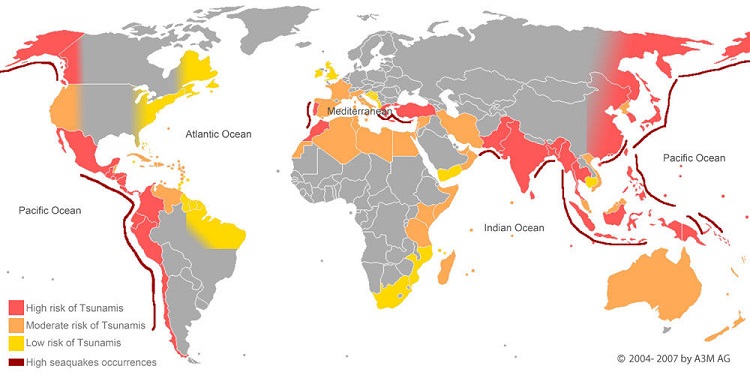
tsunami risk map

It is crucial to contact the local emergency agency or Red Cross in a specific area to identify the regions that are most susceptible to tsunamis. Essentially, one should ascertain the vulnerable motels, workplaces, hotels, schools, campsites, or homes. Additionally, it is crucial to find out the height above sea level of the street one is located, and the approximate distance from the coast, to stay prepared for any eventuality.

Learning the Signs and Paying Attention to Warnings

While communication lines may offer a lifeline to save lives during emergencies, telephone lines tend to become overloaded during tsunamis. Further, evacuation routes may become overcrowded and one may not know what to do in case of tsunami. Consequently, it is critical to understand the warning systems, as well as disaster plans in place during an evacuation.

The first and most important warning sign is shaking or tremors caused by an earthquake. After shaking, it typically takes minutes before a tsunami arrives. Waiting for an official warning is oftentimes risky. Subsequently, it is crucial to access higher ground and to stay alert to warnings from the local radio or television.

Tsunami warnings are issued when tsunamis have the potential to cause widespread damage. The warnings are issued to alert emergency agencies to evacuate low-lying coastal regions and usually follow seismic related information. Following such warnings, some of the beaches may be closed and ships may be repositioned in deep waters. It is critical to pay attention to local radio channels to be up-to-date on any warnings. In tourist areas, some beaches may have sirens and such signs serve as warnings to evacuate.

Developing an Evacuation Plan

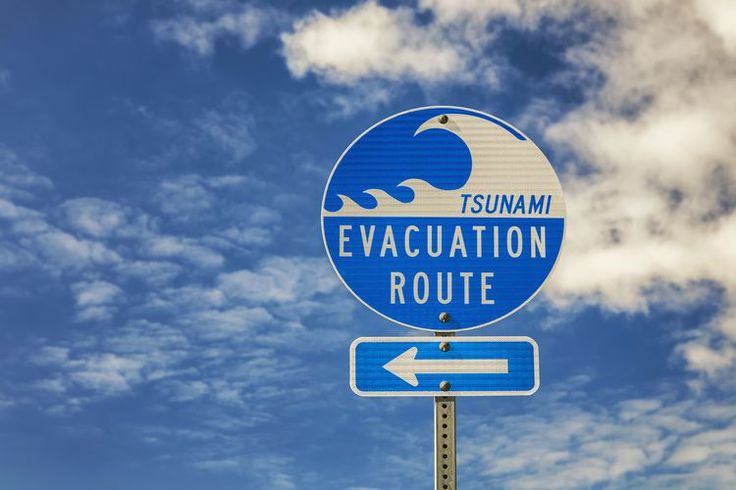
Being prepared is part of the safety when dealing with tsunamis. Planning an evacuation route from one’s location to a safe location ahead of time is advisable. Ideally, one should plan to escape two miles inland or to an area located 100 feet above sea level. Further, the safe area should take one at least fifteen minutes to arrive on foot; because in some cases, traveling by car can be impossible.

In addition, familiarity saves lives; practicing to get the safe location through the chosen evacuation route both day and night can make it easier to react quickly in case of emergencies. Also, it is vital to communicate with every member of the household on the possible actions to take if a tsunami occurs. Also, one of the crucial tools to use when preparing for what to do in case of tsunami is an emergency kit for both family members and pets.

During a Tsunami

tsunami evacuation route sign

Taking Cover

As previously mentioned, earthquakes may be among the first warning signs of a tsunami. During an earthquake, the first action should be to drop and take cover. Next, it is advisable to hold on to a firmly rooted object. After the shaking subsides, the members of the household should be ready to evacuate at a moment’s notice because the tsunami may take minutes to get to the shoreline. Research shows that it is not wise to approach the shore to watch the tsunami. Typically, if one can see the tsunami waves, it could probably be too late to make an escape.

Listen to Authorities

It is imperative to follow instructions that may have been issued by the local emergency agencies and official weather radio such as the National Oceanic and Atmospheric Administration. In some cases, evacuation routes change or one may be advised to go to higher ground than expected. Local officials also give information on when it is safe to move around. It is perilous to drive anywhere before rescue officials give the go ahead.

Staying Away From Hazards

It is highly likely that one could encounter various hazards and wonder what to do in case of tsunami. For example, some power lines may have fallen and pose high risks. Also, some buildings or bridges may be weakened; which is yet another form of danger. The cold water may also present health risks such as hypothermia or even result in drowning incidents caused by running water.

It is only logical to stay away from water and keep warm. Also, tsunamis occur in waves; it is possible that the subsequent waves may be more dangerous than the initial waves. Therefore, assuming that the danger is over can expose one to further risks.

After the Tsunami

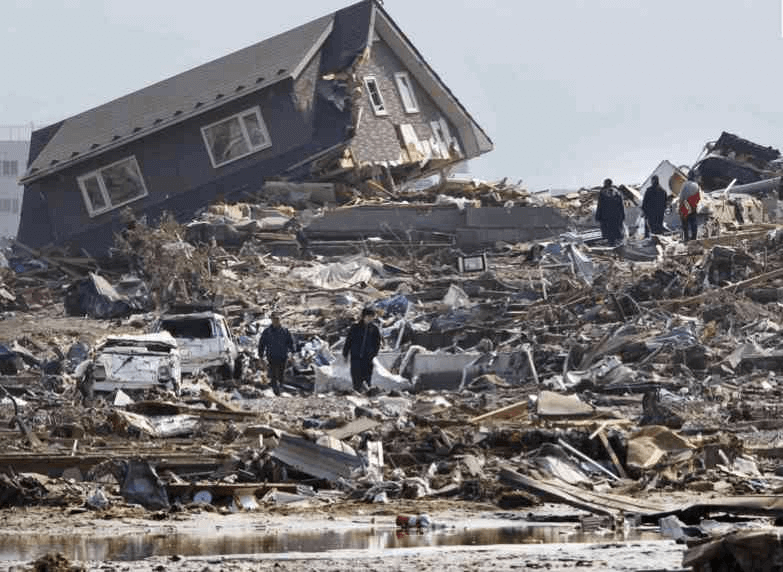
House devastated by a tsunami

Stay Alert to News

It is recommended that one continues listening to the radio or other reliable sources of information for news on the tsunami. Such information is crucial because it gives an idea about the roads, bridges, or places that may be unsafe. Residual effects such as mudflows, contaminated water, and landslides present danger. Avoiding disaster areas is not only safer, but it is also important because it prevents people from interfering with rescue efforts.

Offer Help Where Needed

Following a tsunami, one should be helpful to other victims who may be hurt. Essentially, it is advisable to provide first aid if one has the skills, and also call for help from emergency responders. The elderly, infants, disabled, or those without means of transport may need help in such situations. Also, paying attention to how others are handling stress is vital because they may need moral support.

Re-Entering Buildings

Tsunamis cause damage to areas least expected. Observing caution when re-entering buildings is vital. Injuries on the feet arising from sharp objects are a common occurrence. Therefore, sturdy shoes are a must-have after a tsunami. When examining buildings, it is preferable to use battery powered lanterns as they are sage. Battery powered lanterns are void of fire hazards or electric shocks.

Gas leaks can also be detected by listening to hissing noises. Further, electrical systems can be turned off from the main fuse box until the entire system is fully dry. Other dangers may lurk due to animals such as poisonous snakes. Flood waters from tsunamis tend to displace animals from their habitats and such animals may end up in homes.

The Bottom Line

In conclusion, getting through a tsunami is all about preparedness. Having accurate information can be beneficial for people wondering what to do in case of tsunami.

Before a tsunami, having comprehensive information is an important step in saving lives. During a tsunami, fast reaction times and having the essential tools is also critical. After the tsunami, it is vital to offer help where it is needed and to also to observe caution when re-entering buildings. Evidently, it is possible to mitigate the possible damage or loss of lives following a tsunami.

Image Source: 1, 2, 3

What to Do in Case of a Fire: How to Keep Yourself Safe

Fires can start in seconds and engulf entire buildings within minutes. According to the U.S. Fire Administration, there are nearly 400,000 residential fires reported in the country each year. They can start from a variety of causes, like cooking, heating/electrical malfunctions, or simple carelessness. A person could only have minutes to escape to safety, so it’s essential to know what to do in case of a fire. With the proper knowledge and prevention, you can keep yourself and your loved ones safe.

What to Do in Case of a Fire

In the event of a house fire, you may only have seconds to act. Fires are unpredictable and extremely dangerous, so knowing what do in case of a fire could save not only your life, but the lives of your loved ones. We will provide you with some in-depth information that will ensure you know what to do in case of a fire. The most important thing to remember however, can be stated perfectly (and simply) by the American Red Cross: “GET OUT, STAY OUT and CALL FOR HELP.”

Learn How to Work a Fire Extinguisher

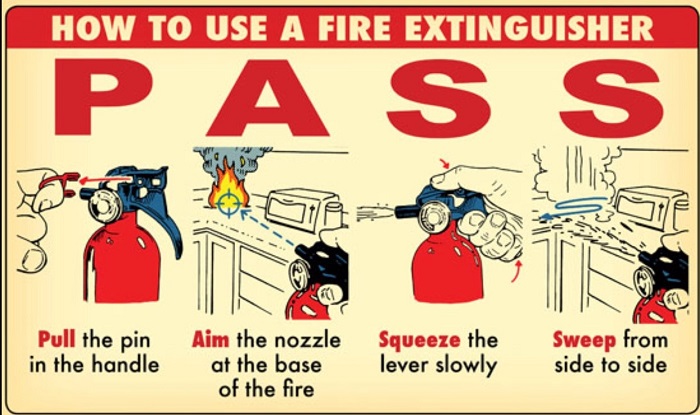
how to use a fire extinguisher

If you don’t have a fire extinguisher, go get one. For smaller fires, these tools can be extremely effective. You should familiarize yourself with how to work one and remember that they should only be used on small fires that have not spread.

Fire extinguishers should be used on contained fires, and it is important to read all of the instructions and warnings. Certain types of extinguishers may only be designed for specific materials. Using the fire extinguisher is easy enough, if you remember the P.A.S.S. method. You perform the P.A.S.S. method by:

  • Pulling the pin.
  • Aiming the nozzle at the base of the fire (from a safe distance).
  • Squeezing the lever (to release the extinguishing material).
  • Sweeping the nozzle from side-to-side until the entire fire is extinguished.

ESCAPE

When fires cannot be extinguished easily, it is important not to take any risks. You should get yourself and other family members out as soon as possible. This is when practicing your escape plan comes in handy, because each member of the family should find their nearest, and safest exit point. Getting out safely can be easier with practice, but fires can make factors change in an instant.

Having an exit strategy means nothing if you cannot get there safely. In the event of a fire, remember to follow these safety tips.

  • Move quickly but safely. If there is smoke, you should always crawl on your hand and knees. Smoke rises first along the ceiling, so you’ll want to crawl quickly to any exit.
  • Test doors and doorknobs. Before you open any door, you should check the doorknob first. Carefully use the back of your hand or clothing to see if the doorknob is hot. If the door or doorknob is hot, or you see smoke coming from the other side, use a secondary exit. If you do open a door, do so slowly.
  • Get out. If you can reach members of the family or pets without risking your safety, do it quickly and get out. Once you have reached the outside, never go back in. Take a headcount and alert firefighters of any missing people or pets.
  • Call for help. Once you are safely outside, call 9-1-1 for help. You should also enlist the help of neighbors if possible.

When You Can’t Escape

In the event that you cannot escape a room safely, this is when your prior preparation could save your life. It is absolutely essential that every person in the family (including children) know what to do in case of a fire that leaves them left in the house. Even children should be able to escape or follow the plan.

  • Ensure children know not to be scared of firefighters. Let them know how they are dressed, what they do, and that they are there to keep them safe. No one should ever hide from a firefighter.
  • Close door(s) to the room you stuck in and cover any vents, cracks, or holes surrounding the door. You can use cloth, tape, or anything you can find around the room. This will help keep the smoke from entering the room. Remember to stay low to the floor while you do this.
  • Use a window, phone, or even just your voice to call 9-1-1, and alert everyone where you are in the house. You can signal firefighters using clothing, a flashlight, or by yelling.
  • Have a backup plan, especially for rooms that are not on the first level. Rooms not on the first floor should have access to fire ladders, etc.
  • STOP, DROP, AND ROLL. If yourself or your clothing ever catch on fire, remember to stop where you are, drop to the floor, and repeatedly roll until the fire is extinguished.

kids performing stop, drop, and roll

Preventing a Fire

Now that you know what to do in case of fire, you should also get the basics on how to prevent a fire from happening in the first place. Simple behaviors, actions, and tips like the ones you’ll find below can help prevent a fire that could cause property damage, personal injury, and even death.

Ensure You Have Working Smoke Alarms

In your home, there should be at least one smoke alarm on every level of the house. They should be installed inside and outside of areas where people sleep. FEMA recommends testing batteries monthly, replacing batteries at least once a year, and replacing the alarm every 8-10 years. Smoke alarms can alert yourself and your family of a possible fire and save lives. There are even smoke alarms designed for people with access or functional needs.

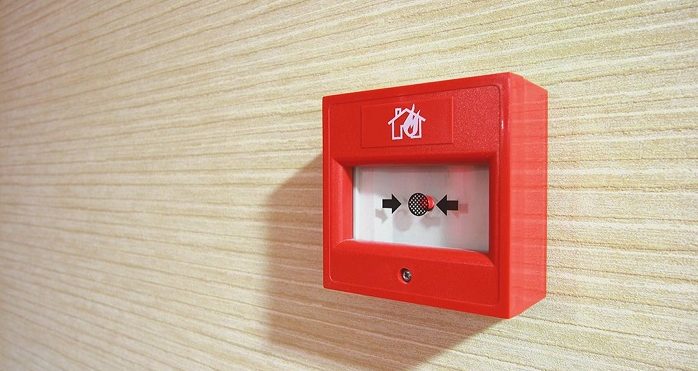
fire alarm system


Make (and Practice) a Fire Escape Plan

Fire drills shouldn’t just occur in schools. You should make plans for escaping the house, and every member of the family should be included. If a fire does happen, you’ll only have seconds to act. Your plan should involve getting yourself and other members out as quickly as possible.

A fire escape plan should involve multiple exits. Every member of the household should have knowledge of multiple exit strategies for every room. Things don’t go as planned during an emergency, so it is important to have multiple escape paths. Always ensure you think of and create multiple routes for escaping every level of the home.

Every member of the household should know what to do in case of a fire. This means that your escape plans should be practiced. Practicing the escape plan helps avoid panic and plan for possible contingencies. It is recommended that every member of the household practices (and changes, when necessary) these plans twice a year.

Other Tips

  • Sleep with bedroom doors closed. This can keep fires contained if they do start. The fire receives less oxygen when the doors are closed and it can give you a safer exit path.
  • Do not leave unnecessary devices plugged in.
  • Perform regularly scheduled maintenance on heating/electrical elements in your home.

The Bottom Line

Fires are unpredictable and dangerous, but you can still prepare for them. With proper prevention, education, and action, fires don’t have to be life-threatening. Fires can affect anyone, anywhere, anytime. They do not discriminate or show mercy. Knowing what to do in case of a fire can save your life, as well as the lives of everyone in your household.

Image Source: 1, 2, 3

Here’s What to Do in Case of an Earthquake to Stay Safe

People tend to think of earthquakes as fairly isolated natural disasters. But contrary to these assumptions, an earthquake can happen almost anywhere. For example, they’ve occurred within every state in the US.

But while everyone is at risk for earthquake activity, one can mitigate that risk with a little planning. In this article we’ll consider what to do in case of an earthquake to ensure one’s safety. This includes planning for earthquakes and actions to take during the event.

Know what to Expect

Most people have a somewhat nebulous idea of what’s involved in an earthquake. When considering what to do in case of an earthquake it’s important to understand what the event entails.

An earthquakes will typically only last for a few minutes. However, it’s important to remember that aftershocks can continue for some time after an earthquake. These are technically considered distinct from an earthquake.

But on a practical level an aftershock often feels quite similar and brings the same risks. To stay safe from aftershocks it’s usually best to avoid moving anything large until a few days after the earthquake. This reduces overall risk of falling debris.

Organize a Household’s Layout

home decor living room

When considering what to do in case of an earthquake it’s important to keep falling debris in mind. Contrary to expectation, an earthquake’s biggest dangers come from above rather than below.

It’s always a good idea to keep earthquakes in mind when decorating. The biggest concern comes from anything which might fall during an earthquake. One should remember that an earthquake can essentially throw loose objects around.

Thus, it’s a good idea to try and keep heavy objects below the level of one’s waist. This prevents objects from falling onto one’s head. Sometimes one simply can’t plan around furniture though.

Items like shelves are almost always going to pose some danger. But one can plan around them by trying to limit where they’re placed. One shouldn’t position shelves and similar items too close to each other. Multiple instances of these pieces can essentially trap one in during an earthquake.

Keep the Essentials Organized

Everyone’s experienced the frustration of trying to find small objects in a messy area. But an earthquake will create messes that one could never imagine. Even with the best planning an area can turn into a mass of broken glass and heavy debris.

As such, it’s important to plan ahead with the essentials. Essential medications are probably the biggest concern for most people. Any medications that one needs to take should have a backup location. One should have an emergency medication storage that is kept away from the rest.

These emergency medications need to be kept somewhere that is always accessible. This means in an area that won’t be heavily affected by an earthquake. Keeping it in a purse or messenger bag is the ideal if possible.

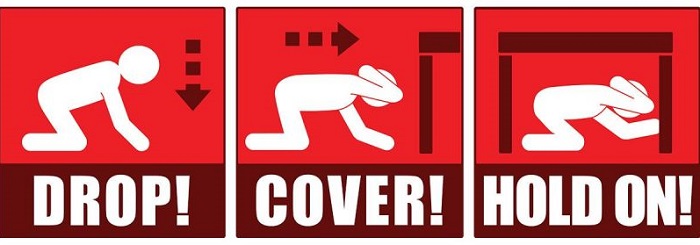
Practice the Drop, Cover and Hold Position

what to do in case of an earthquake

Anyone learning about what to do in case of an earthquake should know an essential position. The phrase drop, cover and hold on refers to one of the best forms of earthquake protection. One begins by dropping to the ground.

People can then proceed to cover their head and neck with their arms. Finally, one needs to simply hold on and try to wait it out. The action works best if one can also get under a desk or other solid structure.

Stop and Familiarize Yourself with the Environment

Planning in advance is an important part of learning what to do in case of an earthquake. But earthquakes often occur when one is in an unfamiliar environment. There’s simply not much time to plan in these instances.

The best way to proceed is by quickly examining the environment. First, notice danger signs such as windows or large objects. Then access whether exit points lead into a safer area. And finally, consider which areas offer the best protection from observed dangers. From there one can start with the stop, cover and hold position.

Don’t Rely on Door Frames

It might seem odd to have a single warning given such importance. But it might well be the single biggest mistake people make during earthquakes. The simple fact is that door frames aren’t proper protection against an earthquake.

There was a time when construction methods made door frames stand up to earthquakes. But they haven’t been especially safe for a very long time now. Despite this fact, people are still told to find door frames during an earthquake. One should feel confident ignoring that advice though. A doorframe isn’t safer than any other area during an earthquake.

Consider the Needs of Every Family Member

Family members are going to be most people’s first concern during an emergency. But this can also pose an unexpected danger. When considering what to do in case of an earthquake it’s vitally important to talk to family members.

Everyone should have a solid plan in case of earthquakes. One will obviously worry about family during those emergency situations. But if one knows that loved ones understand how to protect themselves than there’s no need to panic.

And that in turn keeps one from needing to rush into danger to try and find them. One should also ensure that family members know to keep things like vital medications on hand.

Prepare a Go Bag


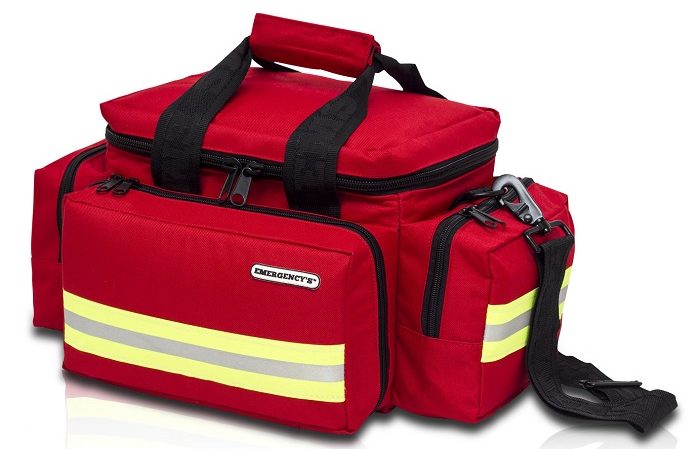
emergency kit bag

The term go bag refers to a pack that one can quickly grab and go out with. It’s often a good idea to have one ready for any emergency as there’s quite a bit of overlap. One should start with the earlier idea of essential medications.

But an emergency go bag should also have non-perishable food, some water and ideally some form of electrical power. A lightweight solar battery is ideal as it can keep a phone working during most emergencies. One might also keep some simple medical supplies like aspirin or bandages in a go bag.

Final Thoughts

In conclusion, one can see that a little preparation goes a long way. Even the most time consuming of these tips should only take a few hours. And going through with them can quite literally save one’s life.

But anything as important as disaster preparedness deserves a lot of attention. Anyone who’s been through an earthquake or has any ideas should comment. Doing so can help others stay safe during these events.

Image Source: 1, 2, 3

  • « Previous Page
  • 1
  • 2
  • 3
  • 4
  • 5
  • 6
  • …
  • 9
  • Next Page »

5 Safety Tips You Need To Know If You Live Near A Nuclear Power Plant

image source: pixabay.com When purchasing a home, there a lot of things to consider. What area of the United States do you want to live? Do you want to be in the country or in the city? Are you going to rent or own, and will it be an apartment or a house? If you […]

Tornado Warning VS Tornado Watch: What You Need To Know

When it comes to severe weather, nothing is as devastating as a tornado when you consider the inch to inch devastation. Tornados often possess stronger winds than hurricanes, and due to the cyclone shape of a tornado, it increases the damage potential. Tornados are also especially dangerous if you are in its path. A single […]

Long Term Water Storage: The Ultimate Guide

While you hope that a calamity like a water shortage or other emergency will never befall in your lifetime, it is always important to be prepared for the worst while hoping for the best. One of the most important aspects of emergency preparedness is ensuring you have a sufficient stockpile of water to get you […]

10 Best Filter Water Bottle Brands To Use During Emergencies

If there is one thing that all hikers and outdoor enthusiasts have in common, it’s that they all agree you should never blindly drink out of a natural water source. That’s because the unfiltered water, although fresh and natural, contains harmful bacteria and waterborne parasites that would likely go undetected by taste alone. With a […]

14 Deadliest Natural Disasters of All Time

What are the deadliest natural disasters of all time by death toll? Which type of deadliest natural disasters has the greatest death count? More importantly, what are some ways the population was affected by those disasters? Were there things that people did to worsen or better the effects of mother nature angrily smashing her surroundings? […]

4 Frostbite Symptoms And How To Treat Them

With the onset of winter comes the risk of getting frostbite. With all of the outdoor recreation that’s available to us in the winter, it is important to learn how to protect ourselves. Knowing the signs of frostbite in the early stages can help you to avoid permanent damage to your skin and underlying tissues. […]

Fire Escape Plan for Your Family: Our Complete Guide

No one ever thinks a tragedy will happen to them. We see events on the news all the time such as accidents, home invasions, and house fires. We rarely plan for these things because we never think that we will be in such a situation. If you do one thing this coming year, whether you have […]

10 Tips for Living Through Power Outages

Most of us don’t think of power outages until we’re searching for flashlights or candles in the dark. Some think the light on their cellphone will be good enough to make it through power outages. That might work if power outages happen only when your phone is already fully charged. But, what about being prepared […]

How To Tell If A Snake Is Poisonous: Your Ultimate Guide

image source: Pixabay Have you ever been startled by a snake in your yard? Snakes are among the most misunderstood and feared animals on the planet, mainly because of the poisonous and potentially deadly bite a snake can inflict on its target. The truth, however, is that most snakes in the United States are non-venomous and […]

Copyright © 2026 ·Outreach Pro · Genesis Framework by StudioPress · WordPress · Log in