Disaster Rally

  • Natural Disasters
    • Earthquakes
    • Hurricanes
    • Tornadoes
    • Fires
    • Floods
    • Tsunamis
    • Other
  • Man-Made Disasters
    • Nuclear
    • Pollution
    • War
    • Other
  • Prepare
    • Plan
    • Supplies
  • Disaster Resources
    • Agencies
    • Aid
    • Medical
    • Rescue
    • How To Help
    • People in need
  • Contact
  • About Us: Disasterrally

What to Do in Case of a Tornado: 7 Things to Remember

People often forget just how common tornado activity really is. In the United States alone, people can expect around 1,000 tornadoes per year. However, tornadoes are just rare enough that people often forget to prepare for them.

In the following article we’ll look over what to do in case of tornado activity. We’ll cover both how to prepare for tornadoes and what to do if caught unawares. The tips will help everyone stay safer in the event of tornado activity.

Considering the Safest Locations

Location is the single most important part of tornado safety. Everyone’s seen video footage of areas where a tornado has leveled almost everything within an area. The first goal of tornado safety is finding one of those sturdy locations.

The best choice is a basement. Just the simple fact that it’s below ground provides significant safety benefits. It lacks any real danger from walls blowing in. And there’s usually little to no risk of windows shattering.

However, if one can’t get to a basement than those same principles should be kept in mind. One should try to find a safe location with as many properties as possible in common with basements. A room should have as few windows as possible, solid walls and lack any risk of the floor giving way.

Coordinating Plans with Family and Friends

One of the most important parts of tornado safety is staying somewhere safe. When considering what to do in case of tornado activity one should keep that fact in mind. And part of that involves considering what might prompt someone to leave a safe location.

Someone’s friends and family are among the most common lures that take them out of safety. Once one has reached safety it’s natural to worry about loved ones who aren’t there. But running out to try and find them will usually just increase overall risk to everyone.

One can get around this problem by simply talking to family members about tornado safety. It’s best to first agree on an ideal location to meet up. Again, the family’s basement is an ideal choice if it’s an option.

But talking over the issue can ensure that one knows they have a place to safely wait it out. This keeps all parties safe and reduces need to actually head out into the storm.

Consider Basic Pet Care

Of course one can’t make plans with pets. But a little preparation can ensure that they’re safe during the tornadoes. When considering what to do in case of tornado activity one should always plan for pet safety.

If one has a basement than it’s a good idea to use it for pet food storage. That way the family pet has a ready supply of food during the event. One should also plan for an appropriate cage or carrying bag for the pet.

During storms most pets will panic and try to find a place to hide. Putting them in an enclosed environment will help to calm them down. They’ll derive a sense of safety by staying in a small enclosed space. And the pet’s owners can make sure that he or she isn’t dashing out into danger.

Emergency Prepardness Kit for your Pet

The Vital Importance of Water

When people consider survival situations they’ll usually think of food options. But most people can safely go around a week without eating. However, most people can only go about two days without water. It’s a far more important resource to plan around than food.

A tornado has a good chance of disrupting water service. And even if it remains functional, one might not be able to actually access an appropriate spigot. This is why one should ensure that water is stored and replenished in one’s basement or other safe location.

It can also be a good idea to keep some bottled water in one’s trunk. When people are caught on the road they can still take the water with them to safe locations.

You’ll Need Battery Power

Physical health should be one’s primary concern during a tornado. But mental health is nearly as significant. When considering what to do in case of tornado it’s important to keep stress in mind. People need something to take their minds off the tornado as they wait it out.

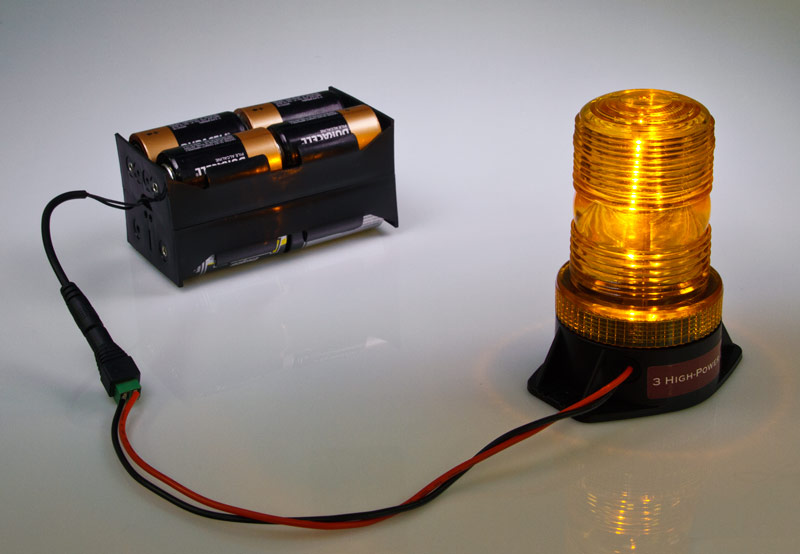
Electricity turns an extended wait in the dark to a far more pleasant experience. One can usually expect a power outage during tornado activity though. As such, it’s a good idea to prepare in advance with rechargeable batteries.
The easiest and most cost effective option are USB chargers. One can charge the batteries through either a USB port or wall socket. And one can then plug USB powered devices into them as a source of electricity.

The most significant advantage there is phone access. A phone provides everything from reading material to flashlights. One shouldn’t rely on a phone as a primary source of news during the tornado though.
Poor signal strength and outages are the norm during a tornado. And it’s further compounded by connectivity issues if one is in a basement. But when a phone’s internet connection is working, it can be immensely valuable.
battery powering a light

Keeping in Touch with Local News

Keeping up to date with a tornado’s progress can be more difficult than one would suspect. We’ve already touched on why smartphones tend to become unreliable during tornadoes. But TV service tends to break down as well. And on top of that it’s limited by the fact that electricity itself is unreliable during tornado activity.

The best solution is a crank powered FM/AM radio. Prices range from around $20 for a barebones model to around $100 for deluxe devices. The latter are usually intended to work during multiple different types of emergencies.

But they’ll usually come with features that are superfluous for tornado prepping. Solar cells, for example, aren’t very useful during a tornado.

Radio is usually the most reliable form of mass communication during tornadoes. Even when electricity, phone lines and the internet are down the radio will usually still work. And with a hand crank there’s no need to worry about power. This instantly ensures that one will have access to reports on the severity and eventual dissipation of a tornado.

Combining Previous Tips into a Single Portable Solution

Most of the tips so far have assumed one can reach a secured area that has been prepared in advance. But one can’t always assume that getting home is feasible. That’s why it’s a good idea to combine some of the ideas into a portable solution.

When considering what to do in case of tornado it’s a good idea to create an emergency kit. The exact contents might vary due to one’s personal priorities. For example, someone who values staying light weight will want to keep water stores low. And someone who wants to keep costs down might go for the cheapest versions of any given device.

But one can usually pack a small charger, some water, a crank radio and food into a fairly small package. One might even do it multiple times to ensure that it’s readily available in one’s car, office or other location.

Final Thoughts

These tips form a basic framework for one’s preparations. But when considering what to do in case of tornado activity it’s important to expect the unexpected. Tornadoes are among the most chaotic natural disasters one will ever encounter.

That’s also why it’s so important for readers to share their own experiences. People who’ve gone through tornado activity should comment with their stories. Real life experiences can often calm people’s worries and concerns. When someone is preparing for a tornado, hearing about people who’ve gotten through them is a big help.


Image Source: 1, 2, 3

The 7 Types of Emergency Management Exercises

Being adequately prepared for an emergency is important for businesses, government agencies, as well as typical families. For larger organizations, management often turns to emergency management exercises for practice. These types of exercises vary considerably in both their complexity as well as their implementation.

With all exercises, they can be classified as either discussion-based or operations-based. In our article, we’re going to be covering the seven types of emergency management exercises that you should familiarize yourself with.

1. Seminars

Seminars are one of the first types of emergency management exercises that we will discuss. With seminars, participants are generally taught the basic core foundation elements that make up the disaster preparedness plan of a business or organization. For most businesses, seminars take place in the form of new hire orientation or onboarding. These types of events do not always have a live instructor thanks to the advent computer-based training modules.

For a seminar to be successful, attendees should walk away with enough basic knowledge to be able to identify emergency exits. They should also understand what various alarm codes mean and other information that is relevant to the type of organization or business that is involved. These types of events are often casual and only require minimal amounts of time to prepare.

people attending a seminar

2. Workshops

Workshops are another one of the types of emergency management exercises that we will discuss. With workshops, the main goal is to work together in a team atmosphere to establish new ideas, processes, and procedures. The most common way to conduct a workshop involves gathering all of the relevant department heads and other important officials.

Once everyone is gathered, a question and answer session is conducted to establish an open dialogue. Using member input, deficiencies in the current emergency response plan are identified and new procedures are developed accordingly. The level of planning with workshops is significantly higher than that of seminars. It also requires much more time to be able to perform these types of events effectively.

3. Tabletop Exercises

Tabletop exercises are another very common tactic that is used. This is especially true for emergency response groups like the Red Cross as well as groups like the National Guard. Similar to workshops, tabletop exercises tend to involve senior staff and appointed officials who play a key role in the development of new policies and procedures.

Where the two emergency management exercises differ is that tabletop exercises seek to develop an effective solution using a predefined hypothetical scenario. The events are typically much more structured than workshops and tend to be used to test current policies and procedures. These types of exercises require copious amounts of time and can last anywhere from several hours to multiple days.

How to Design a Powerful Tabletop Exercise

4. Games

Somewhat similar to tabletop exercises, games are another one of the more effective types of emergency management exercises. Just like with tabletop exercises, games seek to test existing procedures and develop new solutions to hypothetical problems. Where they differ is that games are generally much more structured and have a relatively large set of rules to limit what can be done. With tabletop exercises, the discussions are often much less formal.

Games are especially useful for testing member’s ingenuity and problem-solving skills. Games are a very common exercise method in high-security areas like nuclear power plants and manufacturing facilities. The reason for this is that games can be used to teach members what to do in the event backup systems fail and more.

5. Drills

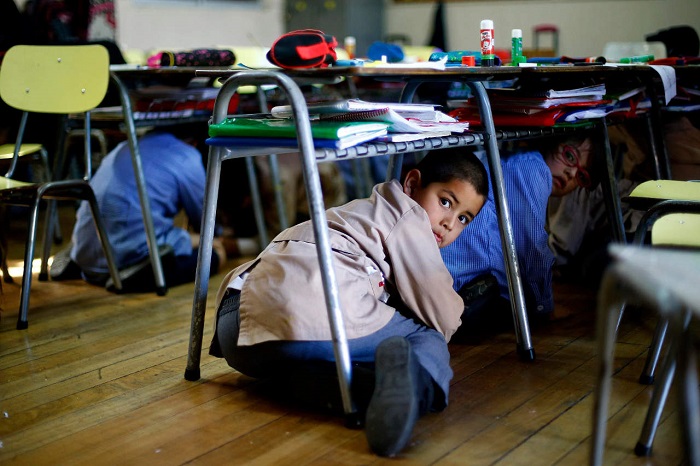
earthquake drill
Students in Santiago during an earthquake drill.

Drills are one of the most common types of emergency management exercises that are operations-based. These types of exercises are common for businesses, schools, government buildings, and more. Fire drills are the most frequently used type of exercise in this particular category.

With drills, the goal is to test the effectiveness of a given policy in a controlled and isolated environment. It has the benefit of providing instant feedback and requires minimum amounts of effort to prepare for. Though drills are mainly planned in advance, surprise drills can be used to provide even more effective feedback as well.

6. Functional Exercises

With functional exercises, the primary goal is to learn how effective an organization is at responding to a disaster even in a given area. Where it differs from other emergency management exercise types is that it mainly focuses on the command structure for a given organization.

For this reason, functional exercises are much more common in strategic environments like military organizations and certain key civic centers. They differ from drills in the sense that they often involve multiple functions at once and that they do not actually result in the deployment of any resources or personnel. Due to their nature, functional exercises are also commonly referred to as command post exercises.

7. Full-scale Exercises

Out of all the types of emergency management exercises covered in our article, full-scale exercises are the most difficult to perform. These types of exercises are reserved for large-scale use by the military and other high-security sectors. With full-scale exercises, multiple agencies work together in a high-stress environment to respond to a simulated emergency or disaster event.

These exercises involve the actual mobilization of personnel and equipment to the simulated area to gauge their effectiveness and response times. Depending on the scenario being practices, the time frame can vary substantially from days to weeks. The scenario itself is often fine-tuned and is fully scripted in advance to practice in a controlled manner.

Summing Up

No matter what types of emergency management exercises you decide to use, the key is to practice them regularly and correctly. By reading our article, you should now have a sound understanding of the seven different emergency exercise methods and how they are best used. Take your time formulating your training plan and remember to update it as needed for maximum effectiveness. If you have any training tips you would like to share, feel free to tell us about them below. Sharing our article is always appreciated as well.

Image Source: 1, 2, 3

How to Prepare for a Natural Disaster: 7 Things to Consider

Making sure that you and your family are adequately prepared for natural disasters is one of the most important things you can do. While it may seem daunting at first, the steps necessary to prepare you and your family are actually quite easy. This article is going to teach you how to prepare for a natural disaster in seven simple steps.

1. Have Multiple Disaster Alert Methods

The first thing you should know when learning how to prepare for a natural disaster is that you should always have multiple disaster alert methods. The most common method people use to learn about disasters is live television. Many of you should have already experienced tests using the emergency broadcast system while watching television. During a real emergency, a similar tone would sound and a message would display with important information about the actual emergency.

However, natural disasters that strike quickly can disrupt power to your area and cut you off from television and landline phones. One great way to overcome this is to opt into emergency messaging programs for your city and state. These programs send out text message alerts to your mobile phone in the event of an emergency. The best place to look for information regarding these types of programs is your state and city official websites.

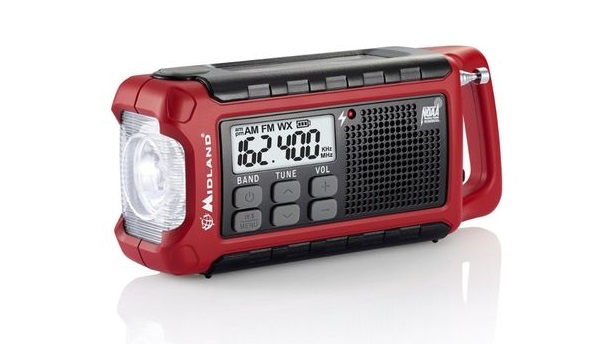
Another ideal solution is to always have an AM/FM radio that runs on batteries to receive updates about natural disasters in your area. You should also consider investing in a NOAA weather radio that is battery powered as well to receive updates for your area.

Midland ER200 Emergency AM FM Digital

2. Prepare An Emergency Survival Kit

The next thing you know about when learning how to prepare for a natural disaster is the types of items your emergency kit should have. To start, you should always have an ample supply of water for each person in your family. Most experts recommend at least a gallon of water for each person per day for at least three days. This means that a family of four would ideally need at least 12 gallons of water in a typical survival kit.

You will also need enough non-perishable food items to last for three days as well. Some recommendations to consider include energy bars, peanut butter, canned goods, dried fruit, and cereal. You should also make sure to have an extra non-electric can opener in your emergency kit as well.

Other things to include in your kit include flashlights, battery charging packs for cell phones, charging cables, first aid kits, local maps for your area, and moist towelettes for sanitation. People who take medication for conditions like high blood pressure should also make sure to keep their medication readily accessible as well in times of emergency. To find out more about building your own emergency survival kit, visit the Ready.gov website for important tips.


3. Know Your Evacuation Routes

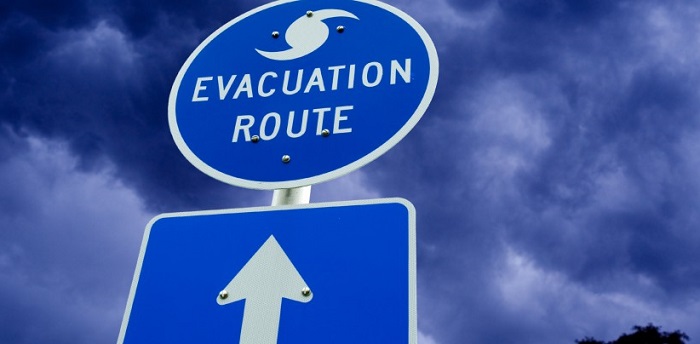
Another important part of learning how to prepare for a natural disaster is the location and types of evacuation routes in your area. This will vary slightly from area to area based on the types of disasters that occur. For example, in places like Florida where hurricanes are common, you will often see blue signs with a white hurricane logo that direct coastal communities to safer locations further inland.

For areas where tsunamis may occur, your best evacuation route will likely end in a location that is at a higher altitude to escape approaching water. No matter what the type of disaster is in your area, you should always have multiple evacuation routes to consider. This is particularly important in case your primary route is blocked for whatever reason.

Hurricane Evacuation Route

4. Establish A Meeting Place

Now that you have an understanding of the importance of knowing your evacuation routes, you should also establish a safe meeting place for your family. The first meeting place you should create is the one located on your property for members of your family that were home during a natural disaster.

Common areas that people regularly use include street corners, community buildings like churches, and local convenience stores. For these types of meeting places, the most important thing is that they are within walking distance of your home that your family can reach quickly and easily.

You should also create a meeting place that is close to each evacuation route you selected in the previous step. These meeting places are to be used by family members that were separated during the disaster event. In the event you take separate evacuation routes, always have a contact method like texting or email via your cell phone to make sure everyone is okay.

5. Understand the Importance of Carrying Cash

The next thing to remember when learning how to prepare for a natural disaster is the importance of carrying cash. During a disaster event, it’s common for things like ATM machines to go offline. Stores and motels often lose the ability to process credit and debit card payments as well. With this in mind, you should always make sure to have some cash already pulled out to cover necessities like gas and to help pay for temporary housing.

carrying cash

6. Keep Your Car Fueled

Another important thing to remember is that you should always keep your car well stocked with fuel in the event of a natural disaster. Most experts recommend keeping your tank at three-quarters of a tank. It also helps if you keep a few gallons of fuel stored safely in your garage in an appropriate canister as well. Just be sure to replace this fuel approximately every three to five months to keep it fresh for emergency situations.

7. Know Your Shelter Locations

Our last and one of the most important tips to remember is that you should always familiarize yourself with the primary emergency shelter locations in your area. Common emergency shelter locations include schools, government buildings, and other reinforced structures. A great resource to check out is the Red Cross website for locations of shelters all across the United States. You should always attempt to contact a shelter in advance to make sure they still have occupancy before traveling there. It also helps to have a backup choice lined up in the event the shelter is at capacity as well.

Final Thoughts

By following the seven steps in our guide, you should be well on your way to understanding how to prepare for a natural disaster. Be sure to consult with your entire family when making your preparation plans to make sure everyone is on the same page. Once your plan is made, make sure to revisit it every six months to a year and make adjustments as needed. If you have any tips you’d like to share, feel free to post them in the comments section.

Image Source: 1, 2, 3

What to Do if Caught in Severe Storms: Essential Survival Tips

Severe storms come in all shapes and sizes, so it’s no surprise that people get confused about the safest course of action. What’s good for one severe storm situation isn’t always good for the next.

This article will explain the safest courses of action for the most common types of severe storms: floods, hail, lightening, high winds and tornadoes, and blizzards. You are often faced with several of these emergencies at once, but if you know what to do in each situation, you can keep your cool and find a safe place to ride it out.

5 Types of Severe Storms and How to Stay Safe

Flooding

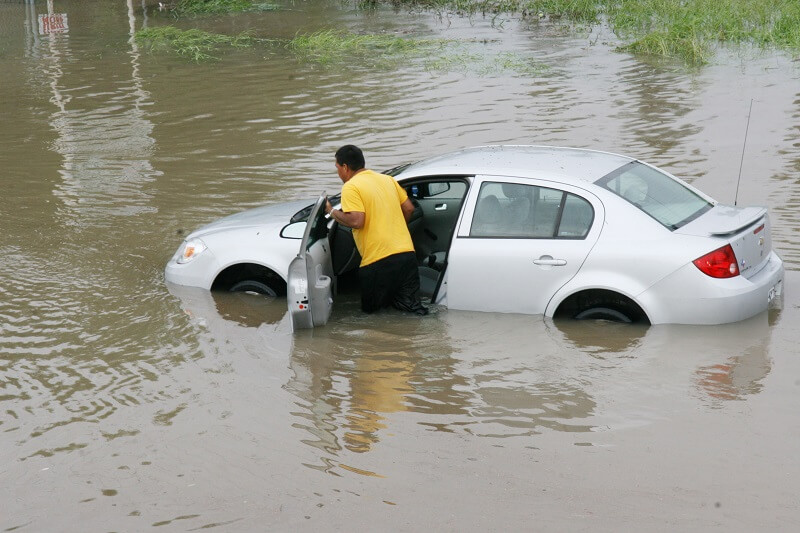
man pushing his car through flood waters
Image Source: Wikimedia Commons

Flooding killed 126 people in 2016 alone. It is by far one of the most dangerous consequence of severe storms that a human can face, and also one of the most preventable causes of death. This is because most flooding deaths occur when a driver tries to move through shallow water and is swept away. The truth is that it only takes 18 inches of water to carry away a small car. Once you are in deeper water, you’re at great risk of drowning because flood water flows so fast it’s like trying to swim through a riptide.

If you are in this situation:

  • Remain calm.
  • Immediately unlock your doors.
  • Remove your seat belt and roll down your windows.
  • If you are wearing a heavy jacket, remove it because it will make it harder to swim.
  • Climb out through the windows if you can and get to high ground.

If you can’t open your windows, you must wait for the car to fill with water to open the doors. Don’t waste your energy trying to open the doors before the water pressure equalizes. You will need that energy to swim. Instead, stay very calm, look for the nearest safe location to swim to. Take a very deep breath at the last minute and push hard on the doors, they will open when the water pressure has equalized.

Hail

how hail looks like
Image Source: Wikimedia Commons

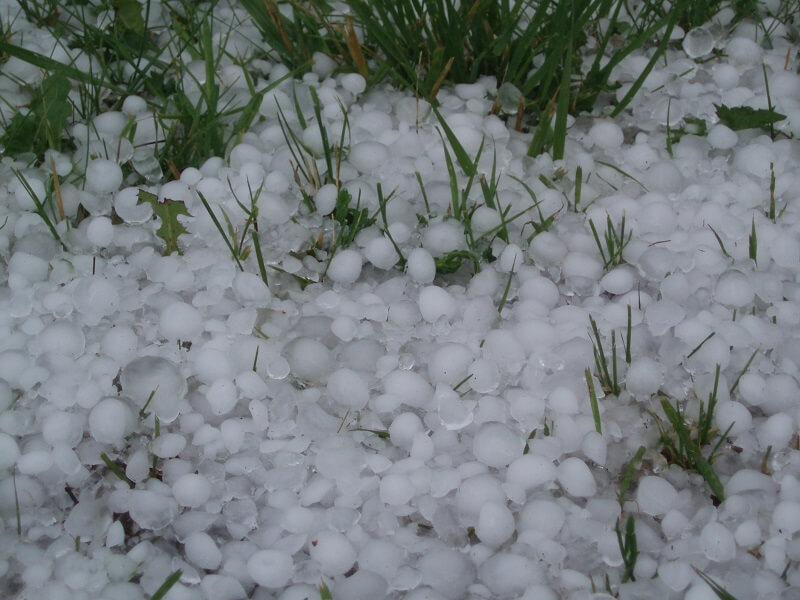
Hail can reach near 100 mph by the time it hits the ground. That means that even small hail can kill if it hits your unprotected head. So, during severe storms, make sure you find shelter before the hail starts. If you are in a building, stay away from windows as sideways falling hail can shatter them and injure you severely.

If you are out in the open with no better shelter, get in your car. DO NOT try to shelter under a lone tree as it will draw lightening. A stand of several trees can be safer if there is no other option. If you are in an open field without even this possibility, get down on the ground in a crouching or fetal position and cover your head and the back of your neck to protect them. Shield your spine as well, even if you can only do so by lying on your side with your hands over your face and neck.

Lightning

how to crouch in the lightning strike safety position
Image Source: Outdoors.StackExchange.com

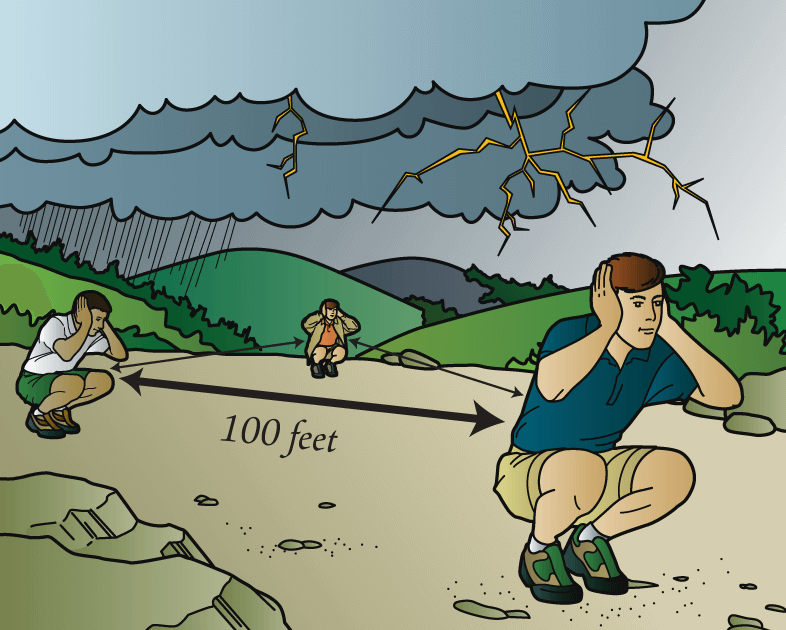
Believe it or not, you can survive a lightning strike, but the best bet is not to get hit in the first place. The obvious is to seek shelter immediately when the storm approaches and wait inside until 30 minutes after you year the last sound of thunder. Lightning can travel for miles.

If you are caught in the open, DON’T hide under a lone tree. If you can hide in an area that is lower than and near to but not too close to a dense growth of trees, this can help, but never hide near a tall isolated object. Also, don’t lie flat on the ground. It just increases surface area for damage.

Instead:

  • Move away from anything metal so you aren’t touching it.
  • Crouch low as you can.
  • Lift up your heels so only the balls of your feet are touching the ground to minimize contact.
  • TOUCH YOUR HEELS TOGETHER (this helps the electricity to only arc from one foot to the other instead of entering your entire body).
  • Cover your ears with your hands to protect them from hearing loss.

Should the hair on the back of your neck stand up, you need to assume the above position immediately.

High Winds or Tornadoes

car facing a tornado
Image Source: Reliable-Remodeler

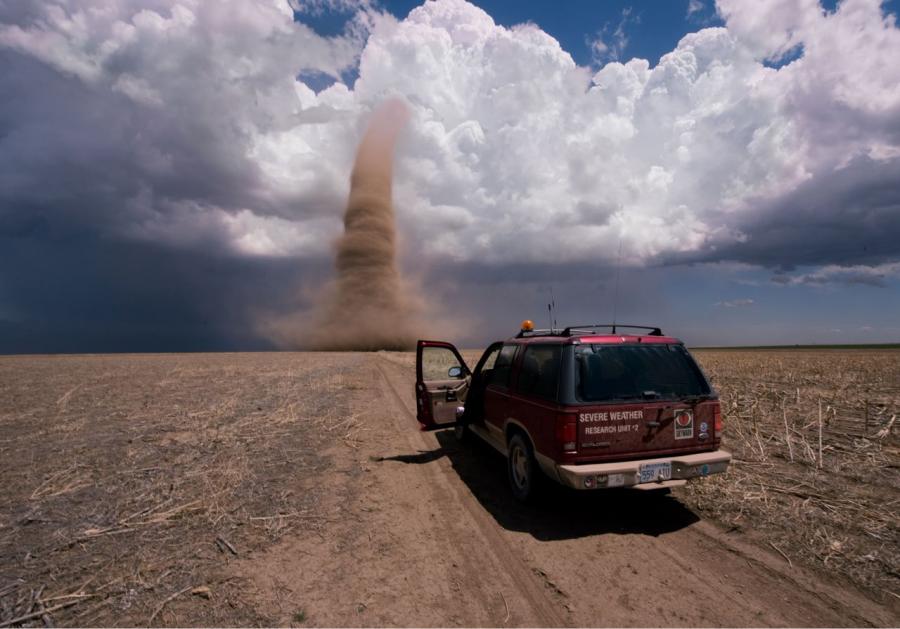
First, if caught outside during these types of severe storms, do not try to seek shelter under a highway overpass. As the wind is pushed through an overpass, it actually increases in velocity, which increases your chances of being swept away.

If you are driving and you can still safely drive, don’t try to outrun a tornado because they can travel at 70mph, which is not a safe speed to drive in a severe storm. Instead, if you are still safely driving, angle away from it at 90 degrees.

If the storm is catching you, you need to exit the car and find shelter. If none is available, you should lie in a ditch as far away from trees, cars and large objects as possible. Protect your head and spine in the same way as you would during a hail storm.

The same advice goes for high winds, AKA straight line winds, which can be almost as dangerous as a tornado. Straight line winds knock over cars and people, so if you are facing these, you need to lie flat in a ditch till they pass.

Blizzards

car stuck in snow after a blizzard
Image Source: SafeBee.com

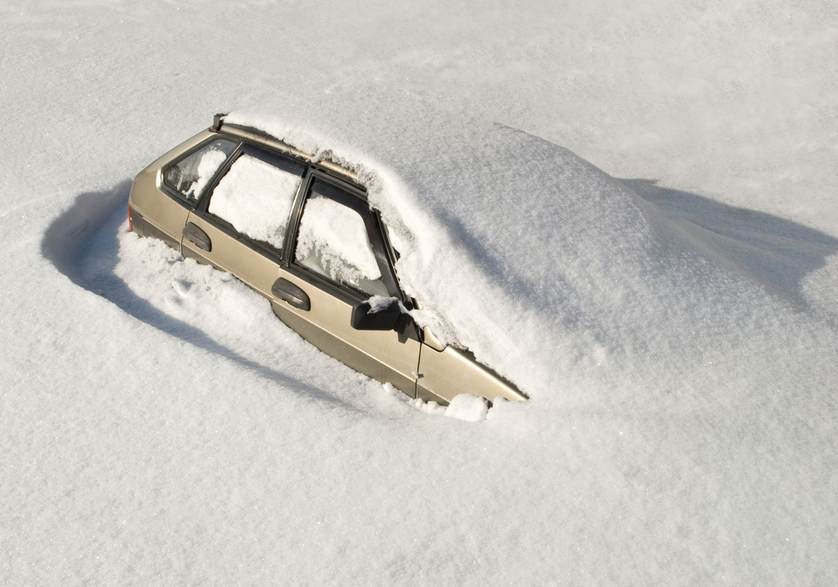
Prevention and preparedness are key to surviving these types of severe storms. If you are caught in your car, turn off the engine to avoid carbon monoxide poisoning and break out your emergency kit which should include prepackaged snacks, water and lots of blankets, boots, gloves and coats. It should also have a well sealed container for melting snow in case you run out of water. You must stay hydrated to stay warm.

You can turn the engine on every few minutes to warm the car and keep it from locking up; just don’t run it continuously. If you are on the side of the road, keep your seat belt on and turn on your hazards. You can still be hit by someone else who is trying to drive through.

If you are not in a car, seek shelter out of the wind and keep moving to keep your body warm. Remember, hydration is the most important thing you will need in this situation. Your body can stay warm more easily if you are well hydrated.

A Word of Ending

These are only basic beginners tips for surviving severe weather. However, they cover the leading causes of death in each situation. All are a very good starting point that you should learn and memorize. The National Weather Service also has a great deal of information on this topic. Weather.gov is another great source. Ultimately, the way to survive severe storms is to stay calm, think clearly and take decisive action to protect yourself at the first sign.

Do you have any severe weather tips that you would like to share? Please comment below!

What Is the OSHA Emergency Action Plan? Tips on Creating One

The safety of workers should be a high priority for any employer. OSHA regulates workplace safety for businesses in the U.S. by providing guidelines for employers and employees. Workplace hazards vary depending on the operations that take place in a particular setting. The threats that chemical factory workers have to deal what are not the same as those in an office building. However, the need for an OSHA emergency action plan in the event of an emergency applies to all settings.

Emergencies such as fire or chemical spills can cause physical injuries and financial losses in large magnitudes. Instituting an action plan that employees can adhere to during such incidents minimizes the risks of damages. Not every employer, however, can come up with a workable OSHA emergency action plan, so a little help goes a long way.

What Is an OSHA Emergency Action Plan?

becoming prepared

An EAP is an OSHA mandated written document that outlines the actions of workers during an emergency. However, an entity with less than ten workers does not have to write down its EAP. When unexpected incidents occur at the workplace, employees may not know the proper way to respond, and that can increase the risks of injuries and property damage. Companies should invest time in creating an OSHA emergency action plan and teaching it to employees. In certain emergencies like fires, individuals must know the specific procedures to follow.

Knowing how to use equipment such as fire extinguishers is also fundamental. An emergency action plan addresses all these elements. Preparedness for emergencies makes work less challenging for first responders and law enforcement officers. When individuals know how to evacuate from a burning building or clean up after a chemical spill, emergency services have an easier time coordination response activities.

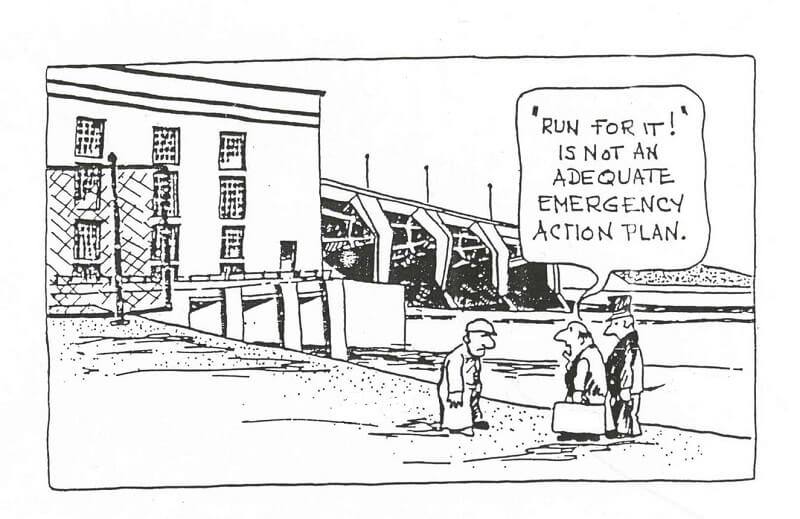
The lack of an OSHA emergency action plan or a poorly organized one is reason enough for a workplace accident to get out of hand. There can be great confusion when workers don’t even know how to operate emergency exits. A comprehensive EAP should be based on the safety evaluations you have already conducted for your organization.

6 Tips for Creating an EAP

comic sketch about the important of an emergency action plan

OSHA Minimum Requirements

Deciding what to include in your OSHA emergency action plan can be a bit daunting, especially when it’s the first time you are drawing up the document. You can begin with some basics, though. An emergency action plan should contain at least the minimum requirements put in place by OSHA. These are:

  • Reporting emergencies – the action plan should detail the different processes to follow in case of certain emergencies like calling the fire department or pulling the fire alarm.
  • How occupants will evacuate including the escape routes- in the event of an incident, your EAP should outline which paths people are supposed to follow when leaving. Exit diagrams are useful in this instance.
  • Processes for employees who have to remain for critical plant operations- if there are devices that can aggravate the situation, some employees may be required to stay behind to shut them down. Highlight how they should proceed.
  • Taking count after an evacuation – you have to ensure that every worker is accounted for in an orderly fashion. The procedure may include taking a roll call.
  • Proper procedures for workers who have to give medical attention- OSHA stipulates at least one worker should have first aid training.
  • The contact information of employees with more information- in instances where people need clarification, they should know which employees to turn to.

Evacuation of the Disabled

When drawing up your OSHA emergency action plan, factor in the evacuation of disabled persons. You can have one area where people with disabilities can gather in emergency cases. Of course, this section should be physically accessible to different types of disabilities. Your EAP also includes how you train workers with disabilities to respond to emergency situations.

Shut Down Protocols

The machinery in your workplace can pose certain risks during emergency situations. During floods, for instance, all electrical equipment should be off. Workers should know how to switch off devices correctly. The plan should name the employees with this responsibility. If training is necessary, then the OSHA emergency action plan should state that as well. List the locations of every utility shut off so that the persons responsible for the processes will not have trouble finding them.

Employee Communication System

In emergencies, workers should be able to communicate effectively even when in different parts of the building. Every worker has to be aware of this warning system. Ensure that you have a special communication signal for the visually or hearing impaired. If some of your workers don’t understand English very well, then make certain the communication system accounts for their needs.

Presence and Maintenance of Alarm Systems

OSHA requires workplaces to have proper alarm systems. It is advisable to install different systems for specific circumstances. For instance, in the event of a chemical or biological contamination, an alarm can trigger a sprinkler system where employees can wash off in an instant. In situations where an emergency needs containing, an alarm can initiate a lockdown. Your OSHA emergency action plan should outline how each of these alarms responds so that people know what means what. For instance, a fire alarm can have a siren and a blare for flood detection.

Employee Training

Laying out the necessary procedures during an emergency is not enough; workers should know how to execute them. Select several of your employees who will undergo training according to the action plan. Have some people who know how to carry out emergency medical aid. Pick some workers to learn how to deal with violence during emergencies. Trained workers are valuable assets in such situations because they know which steps to follow to get everyone to safety. Drills are useful in educating employees on how to respond to emergencies.

Summing Up

An emergency action plan is an essential document for any company. A myriad of variables will determine how detailed it has to be. The type of operations, number of employees, and proximity to emergency services are just a few. Once you have drawn up the EAP, store it in different formats. In case your electronic copies are not available, workers should have hard copies. The various departments in your organization should also go through the EAP to gauge its feasibility. Do you have an OSHA emergency action plan? What makes it effective?

IMAGE SOURCE: 1, 2

  • « Previous Page
  • 1
  • …
  • 3
  • 4
  • 5
  • 6
  • 7
  • …
  • 9
  • Next Page »

5 Safety Tips You Need To Know If You Live Near A Nuclear Power Plant

image source: pixabay.com When purchasing a home, there a lot of things to consider. What area of the United States do you want to live? Do you want to be in the country or in the city? Are you going to rent or own, and will it be an apartment or a house? If you […]

Tornado Warning VS Tornado Watch: What You Need To Know

When it comes to severe weather, nothing is as devastating as a tornado when you consider the inch to inch devastation. Tornados often possess stronger winds than hurricanes, and due to the cyclone shape of a tornado, it increases the damage potential. Tornados are also especially dangerous if you are in its path. A single […]

Long Term Water Storage: The Ultimate Guide

While you hope that a calamity like a water shortage or other emergency will never befall in your lifetime, it is always important to be prepared for the worst while hoping for the best. One of the most important aspects of emergency preparedness is ensuring you have a sufficient stockpile of water to get you […]

10 Best Filter Water Bottle Brands To Use During Emergencies

If there is one thing that all hikers and outdoor enthusiasts have in common, it’s that they all agree you should never blindly drink out of a natural water source. That’s because the unfiltered water, although fresh and natural, contains harmful bacteria and waterborne parasites that would likely go undetected by taste alone. With a […]

14 Deadliest Natural Disasters of All Time

What are the deadliest natural disasters of all time by death toll? Which type of deadliest natural disasters has the greatest death count? More importantly, what are some ways the population was affected by those disasters? Were there things that people did to worsen or better the effects of mother nature angrily smashing her surroundings? […]

4 Frostbite Symptoms And How To Treat Them

With the onset of winter comes the risk of getting frostbite. With all of the outdoor recreation that’s available to us in the winter, it is important to learn how to protect ourselves. Knowing the signs of frostbite in the early stages can help you to avoid permanent damage to your skin and underlying tissues. […]

Fire Escape Plan for Your Family: Our Complete Guide

No one ever thinks a tragedy will happen to them. We see events on the news all the time such as accidents, home invasions, and house fires. We rarely plan for these things because we never think that we will be in such a situation. If you do one thing this coming year, whether you have […]

10 Tips for Living Through Power Outages

Most of us don’t think of power outages until we’re searching for flashlights or candles in the dark. Some think the light on their cellphone will be good enough to make it through power outages. That might work if power outages happen only when your phone is already fully charged. But, what about being prepared […]

How To Tell If A Snake Is Poisonous: Your Ultimate Guide

image source: Pixabay Have you ever been startled by a snake in your yard? Snakes are among the most misunderstood and feared animals on the planet, mainly because of the poisonous and potentially deadly bite a snake can inflict on its target. The truth, however, is that most snakes in the United States are non-venomous and […]

Copyright © 2026 ·Outreach Pro · Genesis Framework by StudioPress · WordPress · Log in