Disaster Rally

  • Natural Disasters
    • Earthquakes
    • Hurricanes
    • Tornadoes
    • Fires
    • Floods
    • Tsunamis
    • Other
  • Man-Made Disasters
    • Nuclear
    • Pollution
    • War
    • Other
  • Prepare
    • Plan
    • Supplies
  • Disaster Resources
    • Agencies
    • Aid
    • Medical
    • Rescue
    • How To Help
    • People in need
  • Contact
  • About Us: Disasterrally

The Definitive Worst Natural Disasters Of All Time

When nature unleashes its fury upon us, it scarcely manages not to take some unfortunate lives too. Some of the worst natural disasters in history have a death toll that rises somewhere in the hundreds of thousands levels. Using this kind of scaling, we scouted history in search for the most damaging natural disasters of all time.
Worst Natural Disasters In History

Source

However, instead of ranking them individually, we’ve decided to find the biggest disaster of each category. So, if you’re curious to find out which tornado, earthquake, avalanche, eruption, etc. wreaked most havoc in its path, read ahead for the definitive list of worst natural disasters of all time.

Avalanche: Peru, 1970

In 1970, Peru was hit by what history now knows by as the Ancash earthquake. The strength of the earthquake led to a destabilization in Mt. Huascaran’s northern slope, which resulted in a grisly avalanche. Afterwards, the landslide advanced at 100 mph toward the villages of Yungay and Ranrahirca. They got buried underneath 80 million cubic feet of ice, rock, and mud which stretched on a territory of approximately 11 miles.

The final death toll of this deadly earthquake and avalanche combo was 20,000 people.

Blizzard: Iran, 1972

On February 3, 1972 the people in northwestern, central, and southern Iran were hit with harshly low temperatures and severe winter storms. These weather conditions lasted for a whole week, during which several villages got buried underneath as much as 26 feet of snow. The newspaper Ettela’at reported that the city of Ardakan and its surrounding villages suffered the most. In fact, several villages claimed no survivors at the end of the blizzard period, including Kakkan, Kumar, and Sheklab.

The final death toll of the week-long blizzard was 4,000 people.

Cyclone: East Pakistan (Bangladesh), 1970

On November 8, 1970 a cyclone started forming above the Bay of Bengal. It started moving north, making the landfall on the coast of East Pakistan (modern-day Bangladesh) on November 11. At that time, the cyclone was at the peak of its strength, ravaging the territory with winds of over 115 mph.

However, the cause of the biggest damage was the storm surge. It massively hit the low-lying offshore islands of the Ganges Delta. The devastating cyclone completely wiped out several villages, destroyed a great number of crops, and then took many lives.  Upazila, Tazumuddin was the most affected by the disastrous prowess of the storm with nearly half of its population losing their lives in the process.

The final death toll of the devastating Bhola cyclone is estimated to have been around 375,000 people.

Earthquake: China, 1556

The Shaanxi earthquake, as history recorded it, is one of the worst natural disasters in history. It was the third one, to be more precise. An earthquake that struck China during the Ming Dynasty affected over 97 counties in various Chinese provinces. Examples are Shaanxi, Henan, Gansu, and others. The calamity affected a 520-mile long area and the most damage came from the precarious methods of living at the time. The majority of China’s population lived, at the time, in loess cliffs. They were artificial caves that easily collapsed at the impact. This would rightfully explain why the disaster took so many lives despite modern research grading its magnitude with a 7.9 on the Mercalli scale.

The final death toll of the most disastrous earthquake in history was of 830,000 people.

Flood: China, 1931

Excluding pandemics and famines, the 1931 China floods stand ahead of the worst natural disasters in history, especially when referring to the 20th century. For several years prior to the floods, China experienced some bizarre climatic behaviors. The country was ravaged by a two-year long severe drought, followed by winters with harsh snowstorms and, ultimately, a massive spring thaw. Therefore, combined with the heavy rains, this raised the water levels of rivers, more specifically the Yangtze and Huai rivers.

The final death toll is still unclear, but most records estimate it to be somewhere between 1 million and 4 million people.

Heat Wave: Europe, 2003

In June 2003, a scorching heat wave spread all across Europe, mostly affecting the Western countries. Then, that same year registered the hottest summer on record since the year 1540. Needless to say, the heat wave unleashed chaos among many of the European countries which had to deal with a major health crisis and considerable crop shortfalls. The most arid period was between July and August that year as a result of a mix between continental hot airs and influence from warm Atlantic waters.

The final death toll of this rampaging heat wave was placed at approximately 70,000 people.

Tornado: Bangladesh, 1989

Bangladesh is a known hotspot for tornadoes, but none have managed to cause as much destruction in its path as the Daulatpur-Saturia tornado, one of the worst natural disasters in the country’s history. The tornado was one mile long, traveling across a 50-mile long territory. Therefore, it mostly traversed the slums and poor areas of Bangladesh. It affected the cities of Daulatpur and Saturia most of all.

The final death toll of the world’s greatest tornado disaster was of roughly 1,300 people.

Tsunami: Greece, 365

Natural disasters have been wreaking havoc since ancient times and the 365 Crete earthquake stands as proof of that. On July 21 of that year, an earthquake with an epicenter near Crete shook the Eastern Mediterranean countries to the core. It caused great destruction in parts of Greece and Libya, as well as in Egypt, Spain, and Cyprus. More disastrous, however, was the tsunami that followed. Many antique minds at the time wrote about the cataclysm, noting how Libya and Alexandria suffered the most.

Moreover, the second worst tsunami disaster in history happened in 2004 in Sumatra. So, it’s safe to say that we advanced technologically but some things are still the same.

The final death toll of the Crete tsunami is estimated to have been between 300,000 and 500,000 people.

Volcano: Indonesia, 1815

Mount Tambora, located on Sumbawa in the Dutch East Indies (what we know as Indonesia today) erupted in April 1815, leaving its mark on history as one of the worst natural disasters of all time. What makes this particular cataclysm so noteworthy is that its aftermaths affected humanity on a global level.

Historians believe the eruption dropped temperatures worldwide significantly. They believe it stood as the source for the Year Without a Summer from 1816. In the same time period following the eruption, harvest failures increased. The climates all over the world experienced erratic instances of extreme weather.

The final death toll of Mount Tambora’s global-scaled eruption is estimated to be around 92,000 people.

Final Words

For some reason, many of us have a strange fascination with natural phenomena. But the sheer scale and implications of the worst natural disasters in history are here to remind us just how terrifying they can be.
10 Most Interesting Blizzard Facts You Can Learn Today

Most of us don’t pay mind to blizzards until we actually get struck by one. However, with the following blizzard facts, we’re going to prove that this wintertime phenomenon is just as fascinating and dreadful as any.

Blizzard Facts
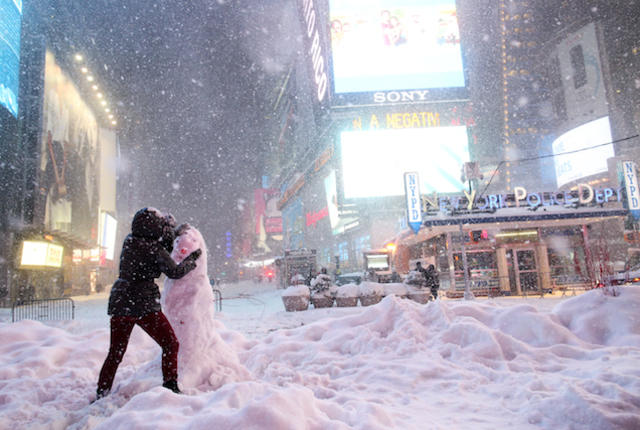
NEW YORK, NY – JANUARY 23: A woman decorates a snowman in Times Square. (Photo by Yana Paskova/Getty Images)

#1 What Makes A Blizzard

We know both the term blizzard and the term snowstorm, but is there anything that differentiates them? Yes, there are actually several conditions that a snowstorm must meet before you can classify one as a blizzard.

  • A large amount of snow needs to fall;
  • Winds must be greater than 35 mph;
  • Visibility needs to be less than the quarter of a mile;
  • These conditions need to last for at least 3 whole hours for the snowstorm to become a blizzard.

So, basically, you get copious amounts of snow blown into your face at high velocity and you can barely see anything ahead of you. It’s the kind of thing you REALLY don’t want to get mixed into.

#2 It’s Also Really Cold

Some people argue that whenever it’s snowing, that means the temperatures aren’t THAT low. This is partly true, unless it’s a blizzard we’re talking about. It wouldn’t be a faithful list about blizzard facts if we left out their deadly potential, after all. It’s pretty common for temperatures to drop below freezing level during a blizzard. As a result, people that get caught in the middle of this vicious snowstorm might end up suffering from frostbite or hypothermia. Many people have died because of these two conditions, resulted from the enhancing effect the snow and wind have on the cold.

#3 They Need Special Invitation

However, a snowstorm doesn’t just develop into a blizzard at random. There are some weather conditions that must be met first. Typically, a blizzard appears when the jet stream pitches at an extreme southern angle. When the cold air that comes from the north clashes with the warm air that’s associated with the south, this gives birth to an unstable effect which triggers the fury of the blizzard.

#4 The First Danger Zone

These days, the fiercest of blizzards can shut down schools or other public institutions. In some instances, the government labels the worst of the worst as federal emergencies. The very first instance for this kind of situation was in 1977. A powerful blizzard affected upstate New York and Southern Ohio. Although the snow gains weren’t significant (only 12 inches in 5 days), it was the violent winds that really turned these two states upside down.

#5 Legendary Blizzard No. 1

Ever wondered when people decided that blizzards warranted shutting down schools? Here’s one of the blizzard facts that might help you clear the fog over this mystery. In 1888, one of the worst blizzards of all time swept across the Great Plains. Whether its approach was known information or not is still unclear, but what’s certain is that the blizzard hit at a time when many children were still in their schoolhouses. In their attempts to return home, many of them lost their lives on the road back home. What would later be known as the Schoolhouse Blizzard took an approximate of 235 lives.

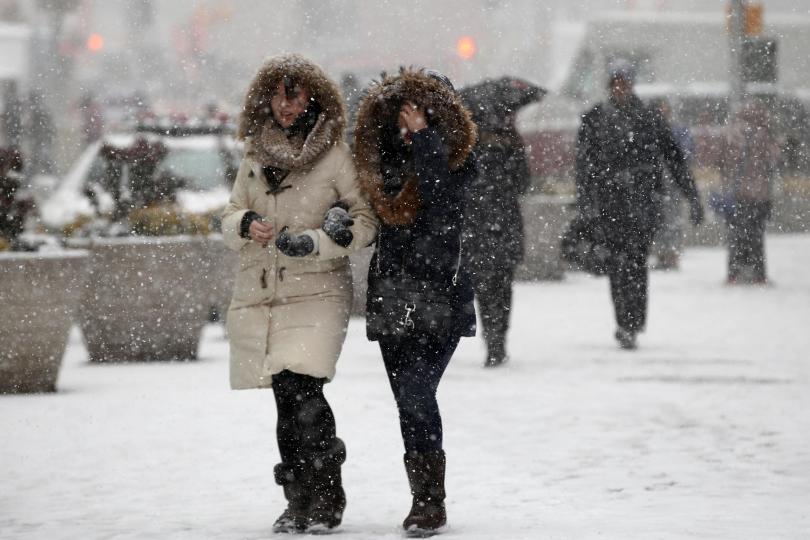
Women Walking In Blizzard

Source

#6 Legendary Blizzard No. 2

That wasn’t the only great blizzard of the year. Also in 1888, New York, New Jersey, Connecticut, and Massachusetts were the victims of the so-called Great Blizzard of 1888. All of these locations encountered a blizzard that covered them with over 50 inches of snow, which ended up paralyzing the normal functioning of society. People were trapped in their houses for as much as a week and thirty even died because of various reasons related to the blizzard.

#7 The Haven Of Blizzards

Blizzard facts show us that the majority of the ones that strike the USA tend to pile up around the East Coast area. This is because the East Coast is home to a type of storms called Nor’easters. The storms gather moisture from the Atlantic, something that results in a considerable quantity of snow. Nor’easters swipe all across the coast, from Maine to Delaware, and they generate blizzards that typically last between 12 and 24 whole hours. For the Nor’easter-type blizzards, experts measure the snow quantity in feet as opposed to inches (there’s just that much snow!)

#8 Named Phenomena

As if blizzards aren’t bad enough while they’re happening, the aftermaths are just as unpleasant. If it snowed prior to a blizzard, it can become a thousand times worse due to something called a whiteout. Whiteouts are instances when strong winds start hurling fallen snow everywhere.

After three days and three nights of whipping winds, cold temperatures, and vicious snowstorms, the terror continues. When big quantities of snow drop, blizzard facts take us to another phenomenon: snowdrifts. They’re the huge mountains of snow that incapacitate us greatly. From steering the car out of the parking lot to getting out of the house for grocery shopping, navigating the streets is instantly tougher.

#9 Survival Tactics

The biggest danger in a blizzard is frostbite. Because of the combination of low temperatures and strong winds, the weather outside can feel even up to 28 degrees colder than it actually is. When in these dire conditions, it only takes approximately 30 minutes before frostbite settles it, endangering your life.

To avoid this as much as possible while you’re stuck outdoors during a blizzard, follow some tips. First, make sure you’re hydrated and properly nourished. If you have no other source of heat, make a fire. Keep your clothes dry and don’t eat snow at any costs.

#10 Precaution Measures At Hand

Having supplies and first aid kits is necessary for any possible unpleasant outcome, blizzards included. If traveling by car during a blizzard or if you get caught while you’re driving, it’s best for you to have a first aid near. You can look up on Google or talk to an expert about the necessities of that kit. Moreover, keep an eye on the weather forecasts. When they issue ‘winter storm warnings,’ it means that a blizzard is heading your way. This may cut off your electricity supplies, including water and heating too. So, make sure you have blankets, canned foods, and flashlights ready.

Final Words

After all these blizzard facts, it’s clearer than ever that these winter storms are nothing you should mess with. They’ve done great damage in the past and no technological advancement could stop them from continuing to do so in the present.

Most Fascinating Facts About Earthquakes

Earthquakes are some of the most disastrous forces on Earth, yet it is this very aspect that makes some of us fascinated by them. For those that share the same peculiar fascination, we’ve decided to share our picks for the most interesting facts about earthquakes. Before we get started, there’s one thing we all know for sure: we’d really prefer it if they occurred as scarcely as possible.

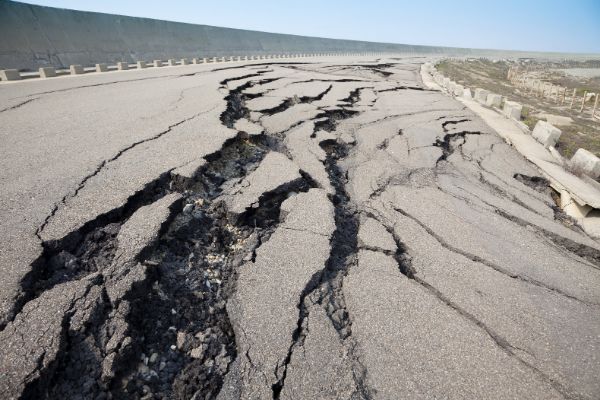
Cracked Road Because Of Earthquake

Source

Fact #1

We weren’t saying that earthquakes are forces to be reckoned with lightly. They kill on a yearly basis approximately 8,000 people. In the past 4,000 years, more than 13 million people lost their lives because of earthquake activity.

Fact #2

It’s fairly easy to explain the phenomenon without referring any of the complicated scientific terms. So, if you’re looking for some great facts about earthquakes for kids too, then resort to the easiest one: explaining what an earthquake is. Long story short, an earthquake happens when there is intense rock movement in the Earth’s crust. The powerful motion releases some shock waves which then travel through the earth and shake us all up – literally.

Fact #3

Earthquakes can occur for other reasons as well. Volcanic eruptions or meteor strikes can also trigger movements in the crust. However, it comes as a given that these occurrences don’t happen that frequently, so the plate activity remains the number one reason.

Fact #4

Earthquakes may strike one place, but they can affect us on a global level. One of the best examples of that is a giant 8.8-magnitude earthquake which hit Chile On February 10, 2010. The disaster moved the entirety of the Conception city 10 feet to the west. Scientists also believe that as a result of the earthquake, days on Earth got shortened and the planet’s rotation changed slightly.

Fact #5

One of the most common facts about earthquakes is regarding the measurement methods. Experts use devices called seismometers to measure the magnitude of an earthquake. The higher on the Richter scale an earthquake is, the more powerful it is. There are some variations to these measurements, however, as you’ll see below.

Fact #6

The depth of an earthquake has a very important role to play in the impact it has on the surface. For example, a 6-rated earthquake with its epicenter 10 kilometers underneath the surface feels differently than one that’s 30 kilometers below. The closer to the surface it is, the more strongly you will feel its effects.

Fact #7

Unfortunately, many earthquakes are also joined by another type of disaster: tsunamis. Any are that’s located near an ocean is also predisposed to a tsunami aftermath. One particularly grave episode in recent memory was Sumatra, when the most damage was caused by the fury of a giant wave.

Fact #8

We have some facts about earthquakes to make you think a little bit too. Earthquakes don’t actually cause directly any damage. The lives lost during these cataclysms happen because of the collapsing of manmade constructions. Try to imagine what an earthquake would be like in the middle of a field as opposed to one in the heart of a city. Tsunamis, avalanches, and landslides are also the direct effects that make earthquakes so deadly.

Fact #9

One of the worst things about earthquakes has to be the fact that they’re not limited to a single occurrence. As we all know, we also get the aftershocks. Well, these aftershocks happen as a result of the displaced crust and fault line trying to adjust to the “shaken” positioning steering from the initial earthquake. Those episodes that are really big have aftershocks even years later.

Fact #10

We’ve mentioned before that tsunamis aren’t the only natural disasters that can follow an earthquake. Avalanches, for example, can be incredibly dangerous and the best example for that is the landslide that occurred in Peru in 1970. After an earthquake, copious amounts of ice, rock, and mud collapsed from the Huascaran Mountain. The avalanche traveled several hundreds of miles and swallowed in its path a number of villages, taking over 8,000 lives in the process.

Fact #11

The biggest earthquake in California’s history struck in 1906, at a time when the well-known Richter scale wasn’t invented. Modern scientists revisited the cataclysm and estimated that, by today’s standards, the earthquake would be a 7.8 on the Richter scale. Standing proof of the fact that earthquakes can do most damage indirectly is the fact that 90% of the collateral damage and lives lost in 1906 happened because of the cracked gas pipes. This led to powerful blazes and to San Francisco burning for three days straight.

Fact #12

Animals can (or should, theoretically) predict earthquakes a few moments before they happen. Science is still trying to attribute a precise explanation to it, though. Some believe that this is possible due to the animals detecting the weak tremors that announce the quake. Others think that it’s the electric signals delivered by the shifting rocks that they pick up on. Those with pets might attest that not all of them can necessarily do this. The ground is shaking, but the pet is fast asleep.

Fact #13

Speaking of premonitory signs, there are some ways to announce an earthquake, especially if it’s a big one. Ponds and canals may start oozing a foul scent because of the release of gases underground in preparation for the quake. Certain gatherings of ground water may also warm up slightly.

Fact #14

The San Andreas Fault, one of the most famous faults in the world, is moving roughly two inches a year. If the movement keeps up at this rate, Los Angeles and San Francisco will be conjoined in the next 15 million years.

Fact #15

In 2011, as some of you may remember, Japan was struck by the worst earthquake in its history, a monstrous one graded 9.0 on the Richter scale. It affected the entire Earth, as the cataclysm shifted the planet’s axis by 6.5 inches and shortened the day by 1.6 seconds. The quake also moved Japan closer to the United States.

Conclusion

All facts about earthquakes should help us draw one major conclusion: they’re abominable forces of nature, indeed, but they’re also strangely fascinating. Until one strikes, that is. And given all the listed grisly aftermaths, we hope that won’t be anytime soon.

What Causes Wildfires And How To Prevent Them

Wildfires are a destructive force of nature that you don’t want to cross paths with. Luckily, there might be a chance to prevent some bursts by knowing what causes wildfires. This is what we’ll be focusing on in the continuation of this article alongside with some solutions.

What Is A Wildfire?

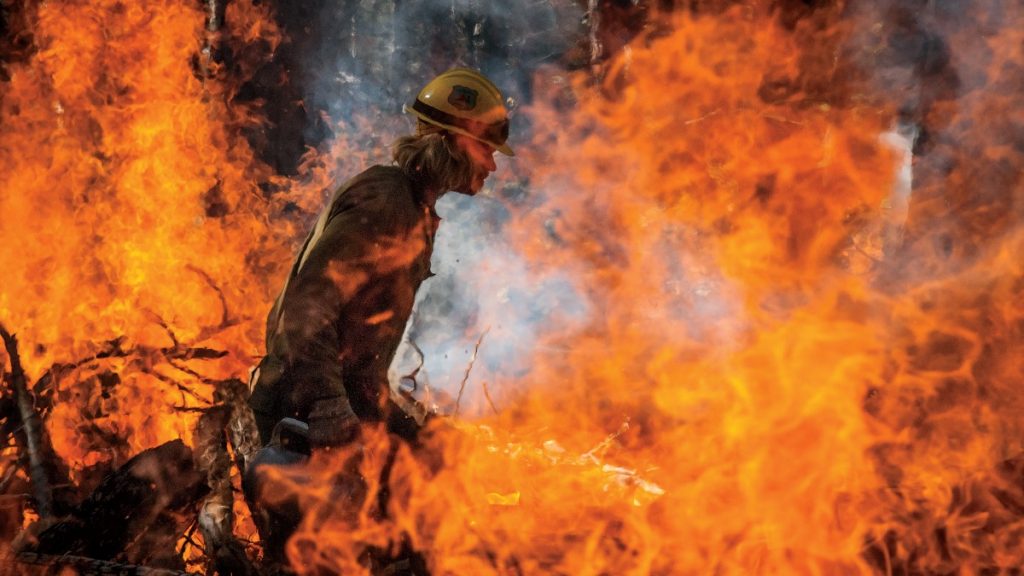
What Causes Wildfire And How To Stop It

Source

Real wildfire isn’t green and able to burn on the surface of water and we should be grateful for that. We say this because they cause enough damage as it is. Wildfires aren’t anything but uncontrollable blazes that have started to spread out on large areas of vegetation. These fires can last for several days straight and they scorch any kind of organic matter in their path.

In the United States, we can talk about approximately 100,000 wildfires starting every year. On an average, millions of acres of land get lost amid the blazes.

For narrower areas, wildfires that mostly affect one particular type of vegetation have their own specific names. We can have forest fires, grass fires, peat fires, or bush fires depending on which type of flora is affected most.

What Causes Wildfires?

Unfortunately, wildfire causes are many and plenty. It doesn’t help that forests and patches with dry vegetation are essentially danger zones. It’s worth noting that wildfires tend to start, most of the time, in areas with dry and hot climates.

Human Actions

Human intervention is what causes wildfires most frequently in the USA. Most of the time it’s because of our indirect actions, though there are some situations where the fire starts with intention. Find below a list detailing what causes wildfires at the hand of any of us.

#1 Campfires

Camping is loads of fun and strumming your guitar while roasting some marshmallows above a campfire can often make the whole experience all the more charming. However, unattended campfires are guaranteed wildfire hazards.

In order to avoid the possible outcomes of a campfire, your first step is ensuring that you’re setting up your tent in a relatively safe area. Igniting a blaze in the heart of the forest with logs and trees all around drastically increases the risk of a wildfire explosion. Moreover, don’t sleep with your fire still lit unless there is someone to watch over it. And don’t forget to put it out when you leave!

#2 Burnings

Many people burn debris and yard junk in order to get rid of it. It’s legal to do so, which should theoretically imply that it’s not dangerous. Unfortunately, at the end of the day, fire is still fire and it can easily get out of hand. Tricky winds may make it bigger and more difficult to keep under control.

If you really have to burn your debris, there isn’t really any way to avoid doing so. You can try to lower the risks of an inferno breaking out by always keeping a source of water nearby. Moreover, it would do to inspect your chosen area beforehand and see that it’s not particularly windy.

#3 Cigarettes

We’ve heard that cigarettes are bad in every possible way. They’re bad for your own health, for the health of people around you, and they’re harmful to the environment as well. When carelessly tossing a still lit cigarette on the ground, you’re turning this harm into a literal business.

Scratch the fact that it’s littering, a cigarette not properly put out can easily develop into a disastrous forest fire.

#4 Fireworks

Fireworks should only be handled by people who know what they’re doing, period. They can cause some serious injuries when not kept under control. And in even worse scenarios, a firework can be what causes wildfires. Always keep your firework shows in open areas with no trees, twigs, figs, bushes, and whatnot around you. Forest fireworks are just a bad idea all around.

#5 Arson

An arsonist sets fire to property, vehicles, and various other things with the express intention of causing damage. Cases of arson amount to approximately 30% of what causes wildfires. There are some people who willingly set fire to their own property and belongings in order to receive damage compensation. We can’t say this applies to forests since they’re public property, so for now we’ll just blame it all on a little bit of… mental instability.

Natural Causes

A human’s action isn’t the only factor that causes wildfires. Mother Nature has a say in all of this as well and, unfortunately, she doesn’t shy away from igniting whole acres of vegetation.

Lightning

Lightning is an extremely dangerous natural phenomenon, but it’s especially dangerous for forests. There is a particular type called “hot lightning” which is known to be the biggest fire-starter whenever a thunderstorm breaks out. Hot lightning can cause sparks that will set its vicinity ablaze, with the flame continuing to burn for a long time and being very difficult to put out.

Heat

During times of extremely arid and hot summer, the sheer power of the heat is enough to start wildfires. This happened in recent times both in the United States and other areas around the world, most notably in Australia.

Wildfire Prevention Solutions

  1. Respect the law. There are specific regulations which refer to the act of burning objects and they also state which substances you are and aren’t allowed to burn. If one particular thing is banned, chances are this is because it’s easily flammable and can accidentally evolve into a wildfire.
  2. Watch weather forecasts before you decide to start any fires, whether it’s burning junk or going camping. Avoid days that are particularly windy and that may pose obstacles in keeping the blaze under control.
  3. Contain your fires. The best example for that is a well-built campfire, which technically doesn’t allow the fire to spread from its source – not incredibly fast, at least. Don’t ever assume that “it won’t happen to you.” Always think one step ahead and ensure you’d be able to easily put out a fire should things go out of hand.


6 Tornado Warning Signs That May Save Your Life

Tornadoes can be irredeemably destructive to any location one strikes. This is why tornado warning signs are extremely important and can often make the difference between life and death. It’s not easy to pick up on the signs of an imminent tornado disaster looming in, but without attention, anyone can be mindful of them and pick some up.

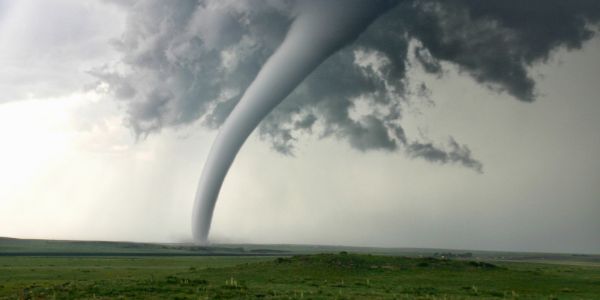
Picture Of Tornado

Source

Thus, for the sake of prevention, we’ve compiled a guide that rounds up the most crucial tornado warning signs you should look out for to avoid any grave life endangering moments.

#1 Listen To The TV

For some, this may sound like an obvious point. For others, this sounds like the beginning of a list of totally pointless tornado warning signs. However, it happens more frequently than you’d believe. Weathermen cast their warnings for approaching tornados and we turn off the TV, perhaps silently hoping that the whirlwind is going to completely circle around us. Couldn’t be more wrong.

Television tornado warnings are usually issued around 13 minutes before a tornado actually strikes a location. Obviously, being a natural disaster and all, it’s not exactly too mindful of hours and minutes, so it tends to hit a certain area significantly sooner. Don’t brush the weather reports off. If you hear a tornado is approaching, barricade yourself. And if it turns out it was a hoax, walk it off and be glad about it.

#2 Funnel-Shaped Cloud

Also from the “obvious tornado warning signs” category, we have the biggest visual cue of them all: the actual process of a tornado beginning to form. As this happens, a funnel-shaped cloud starts gradually approaching the ground. Pretty much all the time, the cloud that it’s formed from is dark and stormy, so you may also look for patches of really dark clouds in the sky.

There’s not really much to go by with this one since it’s as explicit as it gets. You see a funnel starting to swirl from a thunderstorm, you’ll probably need to get as far away from possible from that place. This becomes even more important the harsher the storm is since that intensifies the strength of the tornado too.

#3 Green Skies

If you’re out and about and you notice the sky suddenly turning a morose, dark shade of green then that might be one of the tornado warning signs we’re telling you about. Admittedly, a green sky doesn’t always equate “approaching tornado” but this is why you should always double-check. Whip out your local forecast for information on weather or any possible impending tornados. Also observe the development of the weather conditions. If it’s stormy and windy, it means bad news.

#4 Debris Cloud

You don’t always have the fortune (or misfortune, depending on circumstances) of being around to watch a tornado start to unfold. The best way to tell that a tornado that’s already wreaking havoc in its path is approaching is by keeping an eye out for debris clouds.

Debris clouds are noticeable from afar and they will always mark the fact that there is an upcoming danger closing in on your location.

#5 Calmness After The Storm

This might be a bit of a strange one and sort of add to the confusing delicacy of tornado warning signs. After a mighty storm, you may notice the fact that the atmosphere is oozing of a bizarre (even slightly unsettling) silence. Moreover, the skies may be clear as a blue diamond, but, paradoxically, this might indicate the fact that a tornado might soon start to form.

It’s not exactly easy to interpret this sign, but if you feel like everything around you is too still and calm after a storm, you might need to watch the skies and forecasts.

#6 Strong Noises

Once a tornado has already shaped up, it’s next immediate step is to move across the area and to cause preposterous amounts of damage in its path. As it approaches a zone, a tornado tends to release a series of thundering noises, which even resemble roars, that shake the skies.

Children in particular fear this “tornado roar” the same way they fear the sound of thunders during storm. If a big tornado is closing in, you can hear the sound from a mile away. Also, we can hear a noise caused by the various picked up objects as they crash and hit against each other.

Tornado Safety Measures

You’ve managed to read the tornado warning signs and now it’s time for you to prepare for the imminence of it striking the area you’re at. It’s important to take a look around yourself and consider the location you’re at since it opens different kinds of doors and possibilities.

At Home (With Basement)

If you’re at home when a tornado strikes and your house is equipped with a basement, that’s where you should immediately run off to. Barricade yourself in, but make a mental note of where all the heavy objects are located upstairs. In the eventuality of really strong winds, the floor may collapse and you might risk getting crushed under the weight.

At Home (No Basement)

For homes with no basements, the number one tip we can give you is to avoid windows at all costs. Go to the lowest floor in your house and locate a chamber with no windows such as a hallway. Crouch as close to the floor as possible while making sure to protect your head.

Out In The Open

Having to face a tornado in an open field is a terrifying thought, but don’t lose your rationality. If it’s possible, seek out a close by building (it’s the best if it’s a relatively sturdy one) and take shelter there. Should there be no buildings around you, lay flat down on your stomach and protect your head. Stay away from cars and trees.

Public Area

If you’re at school, follow the protocol procedures and go along with what the supervisors are telling you. For those that are at work, go to the center of the building, find a windowless spot, and engage in the crouched position while protecting your head. In the eventuality of a tornado hit while you’re out on a shopping spree in a mall, locate interior bathrooms and storage rooms. These make fantastic shelters because of their lack of windows.

Conclusion

These windy disasters can strike anywhere, even when you least expect it. This is why you really need to memorize some of these tornado warning signs. A tornado can form surprisingly fast and picking up on what’s happening in time might actually be the deed to save your life. Stay safe and stay wary.

  • « Previous Page
  • 1
  • …
  • 4
  • 5
  • 6
  • 7
  • Next Page »

5 Safety Tips You Need To Know If You Live Near A Nuclear Power Plant

image source: pixabay.com When purchasing a home, there a lot of things to consider. What area of the United States do you want to live? Do you want to be in the country or in the city? Are you going to rent or own, and will it be an apartment or a house? If you […]

Tornado Warning VS Tornado Watch: What You Need To Know

When it comes to severe weather, nothing is as devastating as a tornado when you consider the inch to inch devastation. Tornados often possess stronger winds than hurricanes, and due to the cyclone shape of a tornado, it increases the damage potential. Tornados are also especially dangerous if you are in its path. A single […]

Long Term Water Storage: The Ultimate Guide

While you hope that a calamity like a water shortage or other emergency will never befall in your lifetime, it is always important to be prepared for the worst while hoping for the best. One of the most important aspects of emergency preparedness is ensuring you have a sufficient stockpile of water to get you […]

10 Best Filter Water Bottle Brands To Use During Emergencies

If there is one thing that all hikers and outdoor enthusiasts have in common, it’s that they all agree you should never blindly drink out of a natural water source. That’s because the unfiltered water, although fresh and natural, contains harmful bacteria and waterborne parasites that would likely go undetected by taste alone. With a […]

14 Deadliest Natural Disasters of All Time

What are the deadliest natural disasters of all time by death toll? Which type of deadliest natural disasters has the greatest death count? More importantly, what are some ways the population was affected by those disasters? Were there things that people did to worsen or better the effects of mother nature angrily smashing her surroundings? […]

4 Frostbite Symptoms And How To Treat Them

With the onset of winter comes the risk of getting frostbite. With all of the outdoor recreation that’s available to us in the winter, it is important to learn how to protect ourselves. Knowing the signs of frostbite in the early stages can help you to avoid permanent damage to your skin and underlying tissues. […]

Fire Escape Plan for Your Family: Our Complete Guide

No one ever thinks a tragedy will happen to them. We see events on the news all the time such as accidents, home invasions, and house fires. We rarely plan for these things because we never think that we will be in such a situation. If you do one thing this coming year, whether you have […]

10 Tips for Living Through Power Outages

Most of us don’t think of power outages until we’re searching for flashlights or candles in the dark. Some think the light on their cellphone will be good enough to make it through power outages. That might work if power outages happen only when your phone is already fully charged. But, what about being prepared […]

How To Tell If A Snake Is Poisonous: Your Ultimate Guide

image source: Pixabay Have you ever been startled by a snake in your yard? Snakes are among the most misunderstood and feared animals on the planet, mainly because of the poisonous and potentially deadly bite a snake can inflict on its target. The truth, however, is that most snakes in the United States are non-venomous and […]

Copyright © 2026 ·Outreach Pro · Genesis Framework by StudioPress · WordPress · Log in